

 |
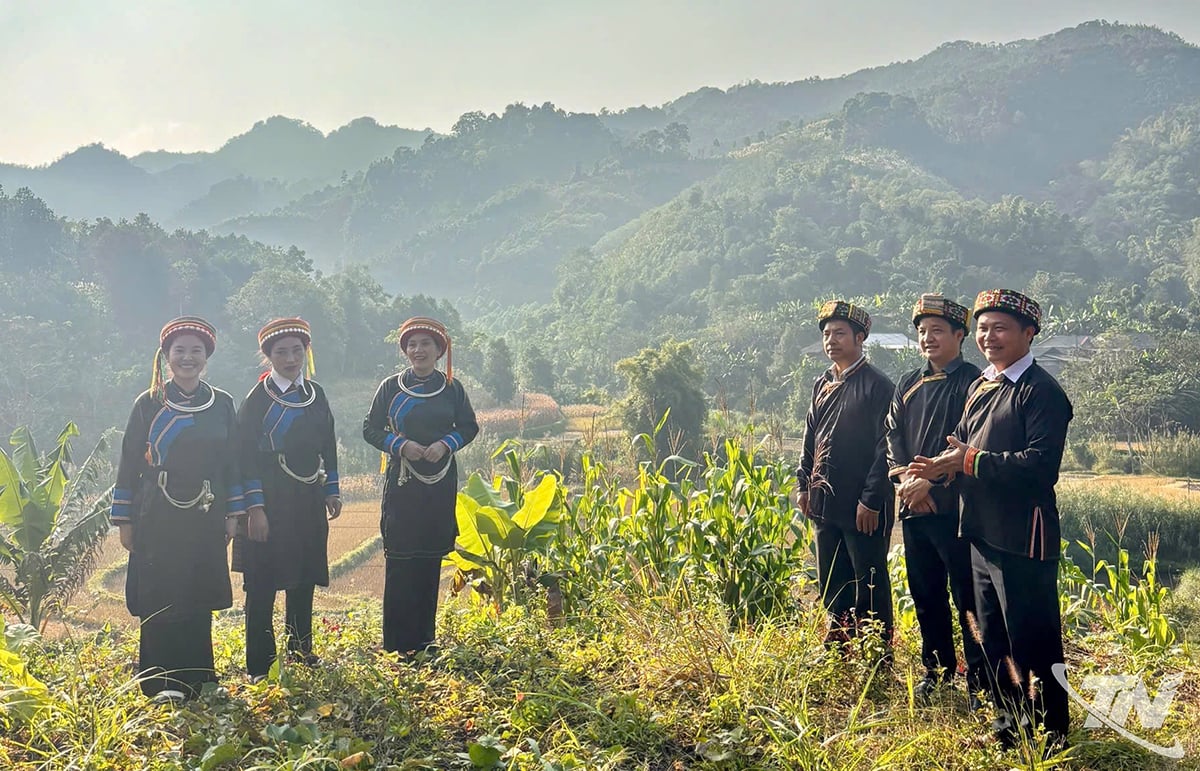
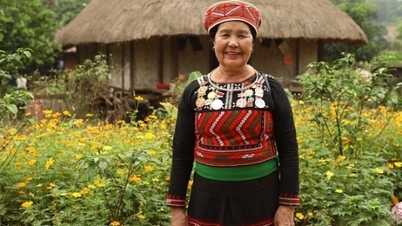
| The Red Dao people sing the Pao Dung song amidst the mountain and forest landscape. |
Sending love through song
The Páo Dung singing of the Dao ethnic group in Bac Kan (now part of Thai Nguyen province) was recognized as a National Intangible Cultural Heritage by the Ministry of Culture, Sports and Tourism in 2020.
This is a form of folk performance with unique artistic and humanistic values, expressed through songs in rituals, festivals, courtship, labor, and daily life, contributing to the portrayal of the distinct cultural identity of the Dao people.
As the sun gradually sets behind the deep green mountains, a vibrant red sunset bathes the peaceful landscape of Ban Cuon 2 village (Cho Don commune) in a rosy hue. In the small kitchen, the fire crackles cheerfully, and the sweet aroma of rice wafts through the three-room house in a cloud of smoke.
Mrs. Hoang Thi Phung gazed out the window and began singing a Pao Dung melody, her poignant voice transporting us back to the time when she was in her twenties…
When Mrs. Phung was a young girl, there was no electricity, and the primary means of transportation was walking. Those were difficult and impoverished times, spent year-round working in the fields. Young people of the Dao ethnic group at that time always looked forward to spring with its vibrant festivals.
During Tet (Vietnamese New Year), besides attending gatherings and playing traditional games like spinning tops, blindfolded tag, and throwing the ball, it's also an opportunity for young people to find partners to sing Pao Dung songs with. Mrs. Phung and Mr. Trieu Tai Kim met in the spring.
Mrs. Phung recounted: "Back then, there were no telephones or motorbikes like there are now, so it was very difficult to meet up. During Tet (Lunar New Year), when we young people had time off, we'd form groups and walk to different regions to find places to sing love songs. We'd travel long distances, sometimes a whole day's journey, arriving when it was already dark. If we saw a house with its door open, we'd ask if the family would allow us to sing and dance, then we'd go in. We'd sit by the fire, drink tea, and sing all night. During the singing and self-introductions, we'd find someone suitable, someone we liked, and we'd respond with a song. Sometimes, we wouldn't dare speak directly in front of a crowd, but through the 'Pao Dung' (a traditional courtship song), we weren't shy; we could express our feelings and ask if they would agree to be with us."
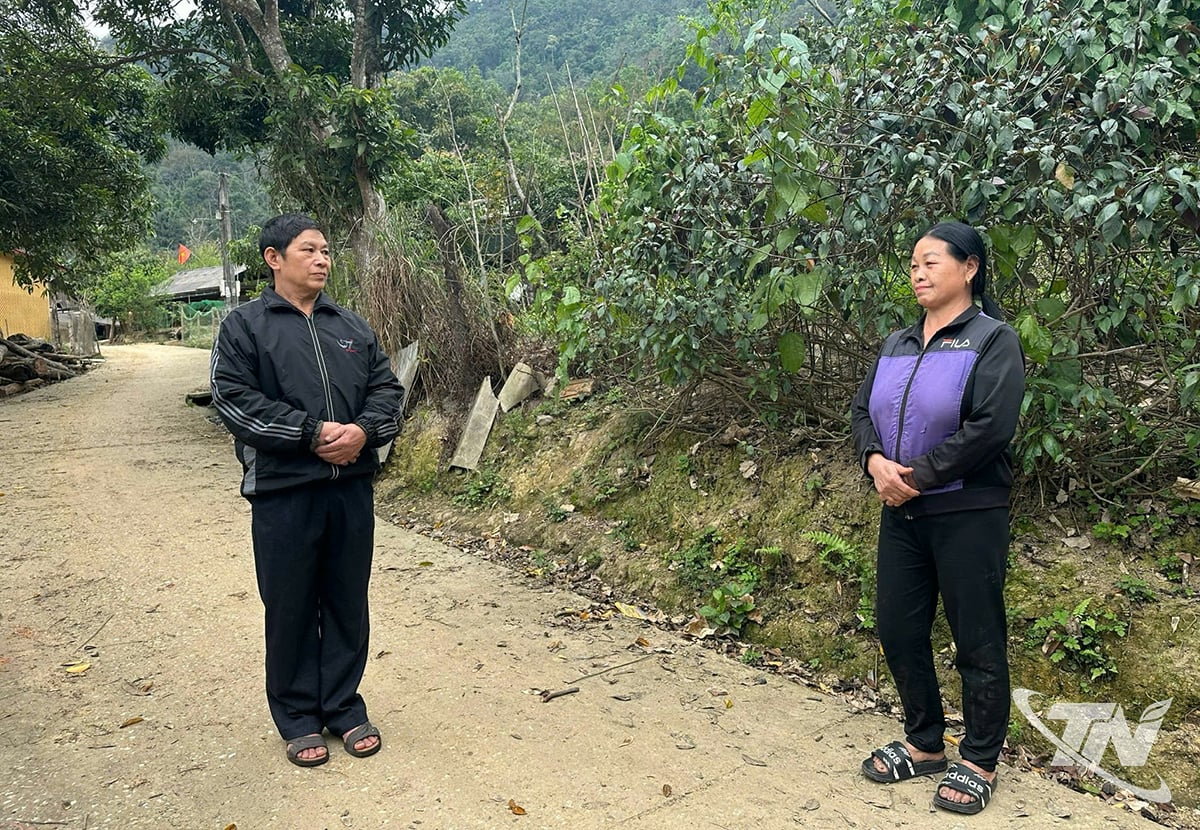 |
| The Páo dung songs brought Mr. Kim and Mrs. Phùng together. |
Their love story began when she walked nearly 30km from Nam Cuong commune to Ban Cuon to sing Pao Dung. After their first night together, it wasn't until the following spring that Mr. Kim had the opportunity to visit Ms. Phung's village to sing love songs.
And so, it took them 4-5 years, meeting once or twice a year, before they finally moved in together. Recalling this special milestone, they sang for us the lyrics that will likely stay with them for the rest of their lives: “Don’t look down on our poor family, let’s live together/Later, we’ll work hard/If we are faithful, we will gradually have a future/If we have such a kind heart, we will live together forever.”
Transmitting cultural identity
Our conversation went on like that, until Mr. Kim placed a large cast-iron pan on the stove and began stir-frying a plate of bamboo shoots with garlic leaves, his voice suddenly becoming somber: "The generation associated with Pao Dung is now long gone."
In the old days, people used Páo dung to express their feelings, whether they were working in the fields or simply enjoying themselves. Yet, nowadays, few young people know how to sing Páo dung. For a time, Páo dung seemed to have "disappeared" from everyday life.
In recent years, traditional culture has received more attention, and the Páo dung singing tradition has been restored. People like me who know how to sing it now get to perform at festivals and cultural programs. Some young people in the village are learning Páo dung singing, but not many, and none of them are boys. I just hope that our ethnic cultural identity will remain…
According to Mr. Trieu Tai Duong, Secretary of the Party Branch of Ban Cuon 2 village, with the passage of time, many traditional customs have gradually faded away. There was a period before 2010 when the villagers hardly sang Pao Dung anymore; young people left home to work elsewhere, the elderly rarely sang, and traditional costumes were stored deep in wooden chests.
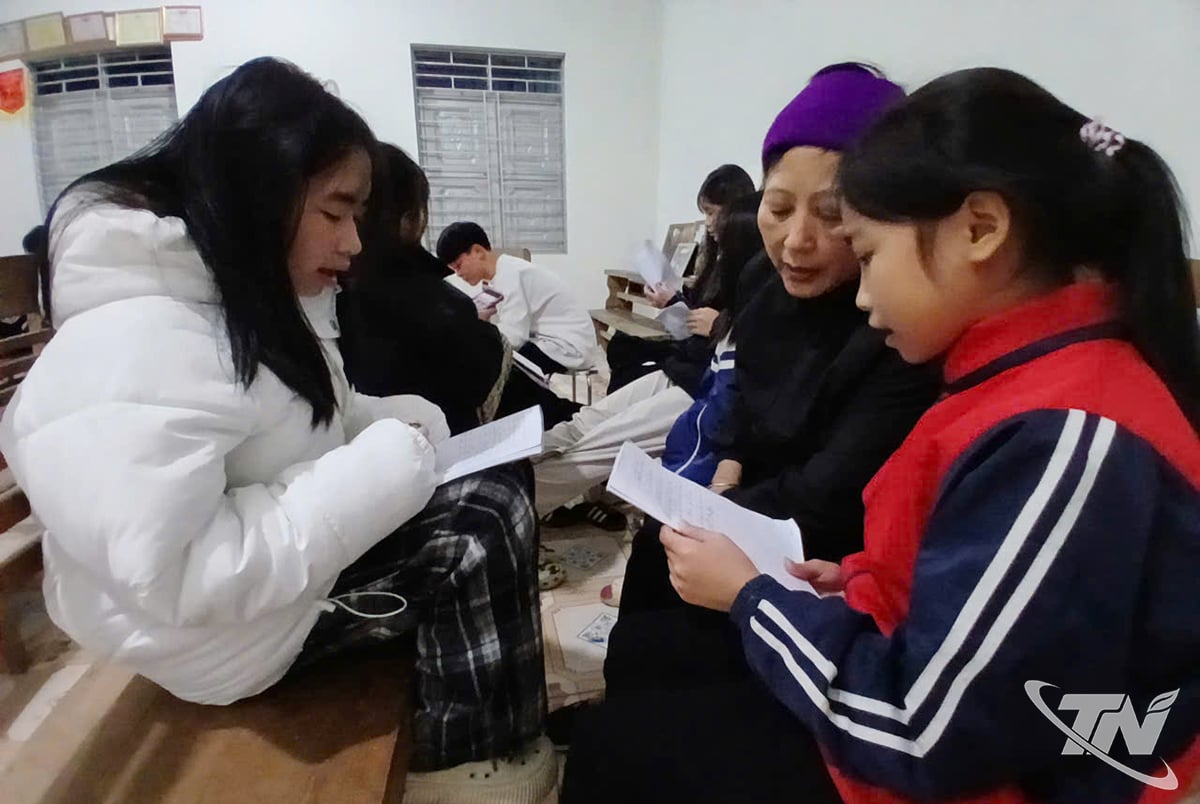 |
| Young students learn to sing Páo dung in a traditional class in Bản Cuôn 2 village. |
Mr. Duong added: After a period of effort to restore the tradition, thanks to the Páo dung singing classes organized with the support of the local government, Ban Cuon 2 village now has nearly 20 people who know how to sing. We Dao people clearly understand that cultural identity is a source of pride and plays an indispensable role in our spiritual life. Furthermore, in the current period, culture is also an advantage for the village to develop community tourism . We hope that the Páo dung dance will be an impressive highlight for tourists when they come to experience this place.
On December 5th, a training course on decorating traditional clothing and singing Páo dung songs of the Dao ethnic group (Red Dao group) was inaugurated in Ban Cuon 2 village. The course was organized by the Museum of Vietnamese Ethnic Cultures in collaboration with the People's Committee of Cho Don commune.
The training course involves 5 Páo dung singing artisans and nearly 50 students. The course will conclude after 10 days, with the aim of selecting core students to continue regular activities in the village and participate in performances at local cultural and tourism events.
From the efforts in this small village in the northern mountainous region, it can be seen that the preservation and revival of traditional cultural values are only sustainable when people are given the opportunity to participate and pass them on.
Along with Ban Cuon 2, many localities with Dao communities in Thai Nguyen are also focusing on restoring their singing, costumes, and festivals to preserve their cultural identity.
Hopefully, more classes will be opened so that the younger generation can learn to sing Páo dung, thus preserving the cultural identity in memory and bringing it to the forefront of festivals and tourism, becoming a shared pride of the province.
Source: https://baothainguyen.vn/van-hoa/202512/thuong-nhau-cat-loi-pao-dung-50128b5/

![[Image] National Assembly discusses the implementation of the socio-economic development plan.](https://vphoto.vietnam.vn/thumb/1200x675/vietnam/resource/IMAGE/2026/04/20/1776696707422_ndo_br_img-20260420-185419-jpg.webp)
![[Photo] General Secretary and President To Lam meets with National Assembly delegates from ethnic minorities.](https://vphoto.vietnam.vn/thumb/1200x675/vietnam/resource/IMAGE/2026/04/20/1776696701056_a1-bnd-8331-3342-jpg.webp)

























































Comment (0)