

The policy of waiving tuition fees for primary and secondary school students is seen as a major step forward in ensuring equitable access to education . However, numerous opinions expressed in parliament and practical experience at the grassroots level have revealed a major issue: the socialized mechanism, if not designed appropriately for different regions, could create an additional financial burden for the very families that need support.
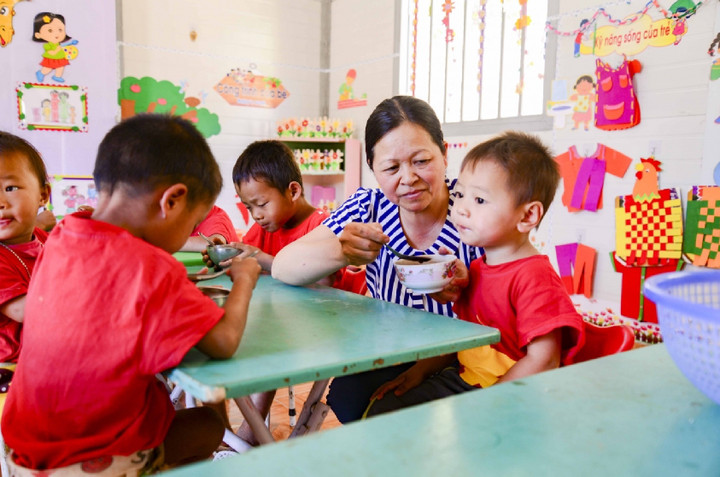
The school's infrastructure projects should be funded by the budget, rather than requiring parental contributions.
Hidden costs weigh heavily on parents.
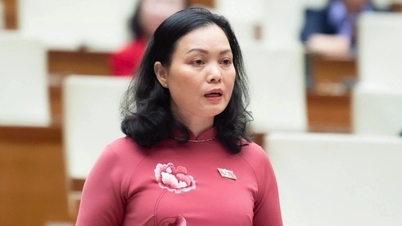
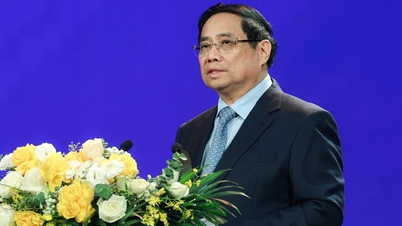
Recently, during a National Assembly discussion, Representative Chu Thi Hong Thai ( Lang Son Delegation) highlighted a noteworthy situation in many mountainous and remote areas, where there are almost no businesses with sufficient resources to participate in the socialization of education. The majority of the population has low incomes, limiting their ability to contribute from the community. Therefore, if the policy continues to apply a rigid socialization rate – typically 10% – without achieving this target from businesses, the pressure to meet the target could easily shift to parents.
According to the delegates' analysis, in many situations, schools and local authorities are forced to solicit contributions from parents to meet requirements for facilities, repairs, and equipment purchases. This creates a paradox: while the State nominally waives or does not increase tuition fees, the total cost of education that families have to pay tends to increase through non-tuition fees such as social contributions, sponsorships, experiential learning fees, and fees for purchasing learning equipment.
The goal of social mobilization is to channel social resources into education, but the implementation must be based on the socio-economic conditions of each locality. Furthermore, essential items such as toilets and minimum equipment should be covered by the budget, instead of requiring parental contributions.
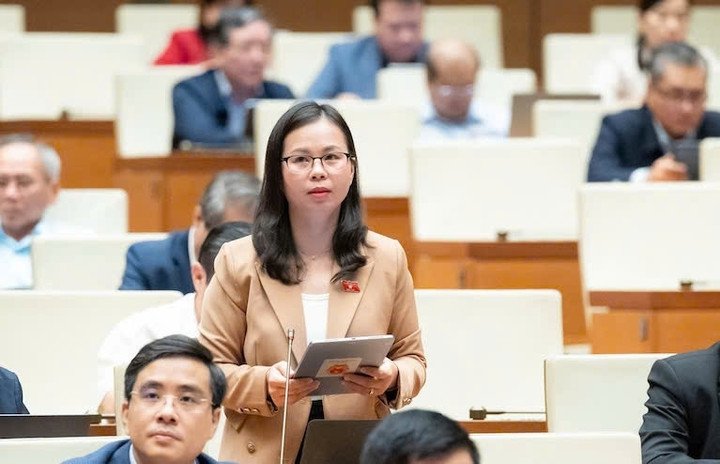
Representative Chu Thi Hong Thai pointed out the paradox: The state provides free tuition, but the total cost of education still increases due to social contributions, sponsorships, etc. (Photo: National Assembly.vn)
Not only in parliament, but also in reality, parents express concerns about tuition fee exemptions while the total cost of education remains high. Ms. Quynh Nga (Hanoi) reflected that even with tuition and meal fees waived, monthly tuition fees still increase, with numerous extra classes; if her child doesn't attend these classes, they feel isolated and struggle in school.
Circular 29 banned extra classes at school, so teachers went to tutoring centers instead, ultimately forcing parents to bear the additional cost of these centers. Before Circular 29, her child's tutoring outside cost 60,000 VND per session; after the Circular came into effect, she now has to pay 70,000 VND per session because she has to cover the extra fees for the tutoring center.
On parent forums, the issue of disguised fee collection has also been raised by many parents. A user with the nickname Sam Nguyen shared that while after-hours childcare is supposed to be charged at 12,000 VND per hour, the school has disguised it as 12,000 VND per 35 minutes per lesson. Furthermore, "voluntary" fees not on the prohibited list are still being collected without transparent receipts. Many parents stated that while tuition fees at public schools have never been high, it is the additional fees that are truly causing pressure.
Meanwhile, Mr. Binh Duong reported that primary school fees are always over 2 million VND per month. This doesn't include additional fees for extracurricular activities with the school, such as math, English, and STEM classes – all sorts of extra charges. Ms. Thai Thi Dung (Hai Phong) shared that although tuition is waived, fees for boarding, meals, and facilities have all increased, sometimes doubling the total cost compared to the tuition fee of just over 100,000 VND.
The above points show that, despite the implementation of tuition fee waivers, the actual costs that parents have to pay have not decreased, and may even have increased, especially in disadvantaged areas. When social mobilization is not carried out in the right way—transparently, voluntarily, and without coercion—parents themselves become a "substitute resource," going against the goal of educational equity.
Income and expenses must be transparent.
To address these shortcomings, education experts propose abandoning rigid social contribution rates, increasing flexibility to suit different regions, while tightening regulations on fees other than tuition, increasing transparency in sponsorships, and ensuring that all voluntary contributions are truly voluntary.
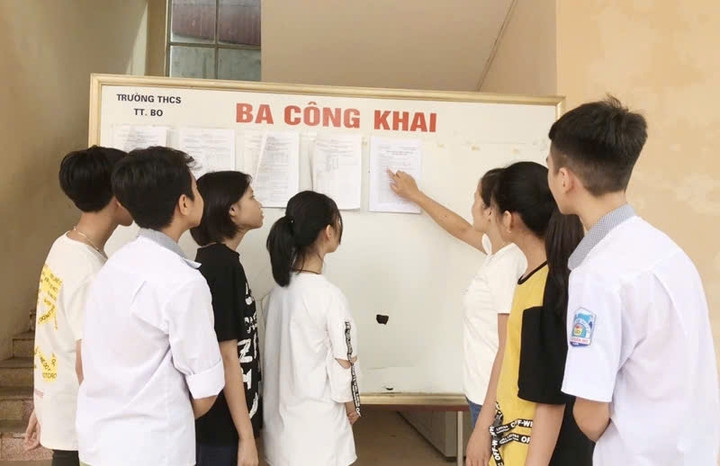
Only when contributions are truly voluntary and locally appropriate can they become a resource to support education, rather than a burden on parents.
"If not properly identified and controlled, the current socialization mechanism could reduce the effectiveness of tuition fee exemption and reduction policies, create additional financial pressure on poor families, especially in ethnic minority areas, and contradict the goal of equitable access to education," said Representative Chu Thi Hong Thai.
Education expert Professor Pham Tat Dong believes that while tuition fee exemption is a humane policy, "additional fees" are the real burden on parents. Every year, the problem of excessive fees resurfaces, with many fees exceeding tuition reaching millions of dong per semester. Many schools even use parent associations as a cover to solicit "voluntary" contributions, which are difficult to refuse. He emphasized that the education sector needs to tighten management and strictly address excessive fees to reduce unnecessary pressure on students' families.
The principal of a high school in Hanoi shared that the broader concept of educational socialization is about finding legitimate and transparent resources. To do it well, from the educational planning stage, the school must determine the content, methods of implementation, and accompanying conditions, and only then can it seek support and cooperation from partners and philanthropists. According to this principal, socialization should focus on supplementary funding such as financial support for construction, investment in learning equipment, experiential activities, practical experiments, and enhancing students' skills and abilities. Essential items must be covered by the budget, avoiding shifting costs to parents.
The tuition-free policy is a significant step forward, but to be truly effective, the accompanying social mobilization mechanism needs to be redesigned to be more practical, transparent, and flexible, especially in disadvantaged areas. Only when contributions are truly voluntary and appropriate for each locality will they become a resource to support education instead of creating an additional burden for parents.
Source: https://vtcnews.vn/mien-hoc-phi-nhung-phu-huynh-van-phai-gong-minh-vi-chi-phi-tang-ar992528.html

![[Image] Close-up of the newly discovered "sacred road" at My Son Sanctuary](/_next/image?url=https%3A%2F%2Fvphoto.vietnam.vn%2Fthumb%2F1200x675%2Fvietnam%2Fresource%2FIMAGE%2F2025%2F12%2F13%2F1765587881240_ndo_br_ms5-jpg.webp&w=3840&q=75)






























































Comment (0)