

Entering a new phase, the capital city continues to focus on the goal of sustainable poverty reduction, aiming for development that is not only rapid but also inclusive and humane.
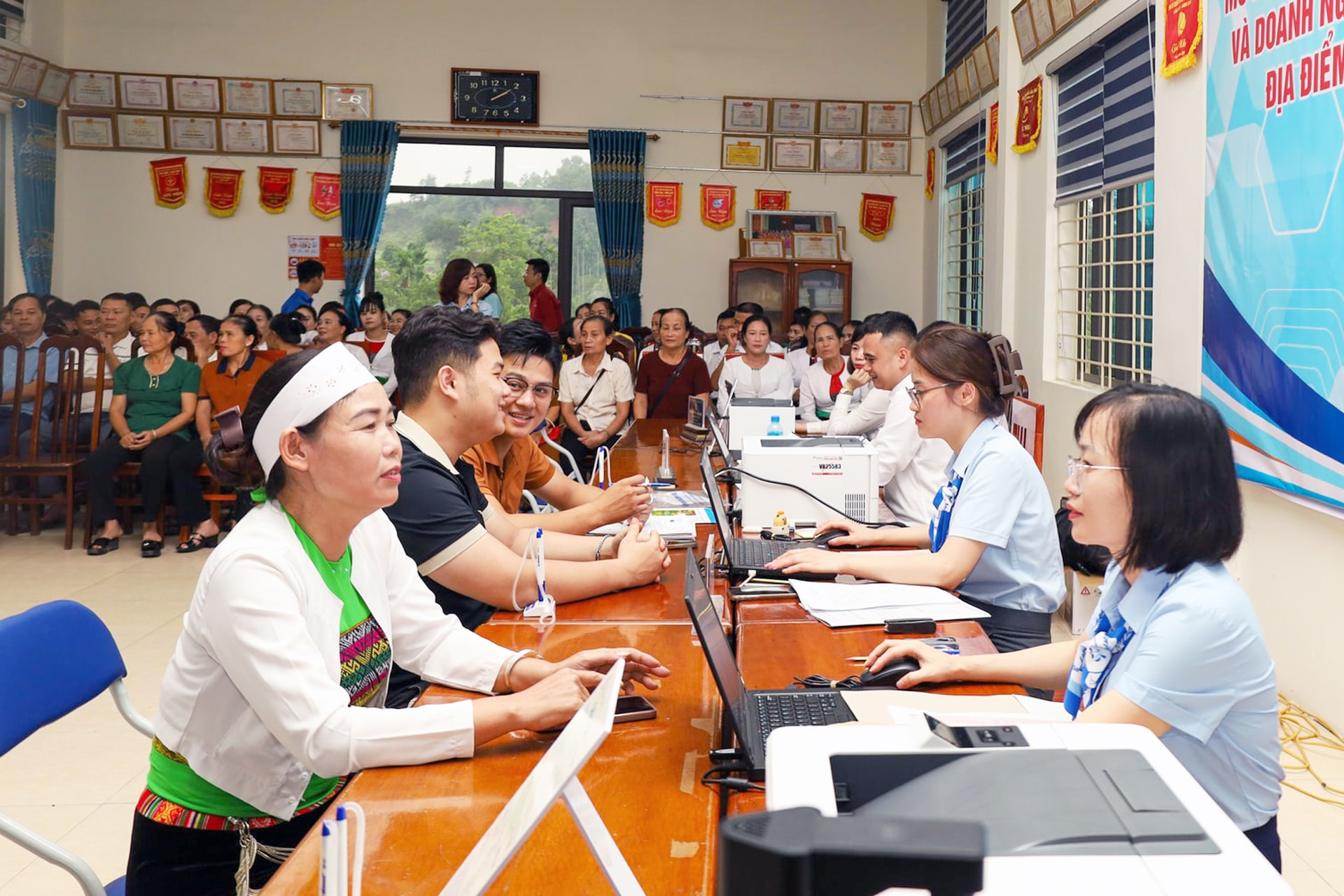
Persistent efforts to maintain poverty reduction achievements.
In Dong Chiem village (formerly An Phu commune, now My Duc commune), Mrs. Dinh Thi Lam faced extremely difficult circumstances. Her husband passed away early, leaving her to raise her children alone in a dilapidated house. However, thanks to the city's housing support policy and the generosity of relatives and neighbors, in 2024 she received a new, spacious home and was officially recognized as having escaped poverty.
Village head Nguyen Dinh Lieu recalled: “More than a decade ago, there was a time when Dong Chiem village had over 100 poor households, accounting for nearly 30% of the population. The reason for the difficult living conditions of the people in Dong Chiem was the low-lying terrain, which flooded whenever it rained, and the fields could only be cultivated for one crop; people lived in a state of food shortage and lack of employment. In 2008, the city and district supported the construction of an embankment, helping the locality to cultivate two rice crops. From relying only on one precarious harvest, the people gradually had a stable food source, and then boldly sought new livelihoods by taking their agricultural products to various streets in Hanoi, contributing to a significant improvement in their family's economy ...”
Dong Chiem has entered a new chapter today. The main road running through the village has been paved with smooth concrete; multi-story houses stand one after another; and children receive a full education. By 2024, after reviewing and evaluating each household, the village will officially have no more poor households. According to Nguyen Quang Duong, Chairman of the People's Committee of My Duc Commune, by the end of 2025, the locality had completed the review of poor and near-poor households according to a transparent assessment process. The results show that the commune has maintained its poverty reduction achievements: No new poor households have emerged; the number of near-poor households is 141, a decrease of 45 households compared to the beginning of the year.
“This achievement is the result of many years of effort. Previously, when the locality was still part of My Duc district, the district proactively mobilized social support to provide motorbikes, savings accounts, cash subsidies, and in one year alone, supported An Phu commune in eliminating up to 80 temporary houses. Since the two-tiered local government model was implemented, My Duc commune has continued to focus on supporting near-poor households, especially in the 13 villages of the former An Phu area,” said Mr. Nguyen Quang Duong.
In the same overall effort, Hong Son commune has made significant progress. A review shows that the commune now has 148 near-poor households, a reduction of 39 households compared to the beginning of the year. A series of housing support projects have been implemented in 2025 for disadvantaged households, such as Ms. Chu Thi Van in Thanh Loi village, Mr. Tran Van Tu and Ms. Dang Thi Luyen in La Dong village, and support for house repairs for Mr. Nguyen Huu Thien in Doan Nu village.
From the city's perspective, Ms. Hoang Thi Hoa, Head of the Rural Development Department (Hanoi Department of Agriculture and Environment), reported that the poverty rate in Hanoi has continuously decreased significantly over the years. At the end of 2021, the entire city had 3,612 poor households, equivalent to 0.16%. A year later, this number decreased to 2,134 households, accounting for 0.095%. By the end of 2023, the number of poor households was only 690, accounting for 0.03%. And by the end of 2024, Hanoi will officially become a locality with no poor households. When the two-tiered local government model comes into operation, all 126 communes and wards in the city will have no poor households; of which 43 units have no poor or near-poor households. By September 2025, localities continued to reduce the number of near-poor households by another 103, strengthening the foundation of social security and contributing to the increasingly vibrant appearance of Hanoi's rural areas.
Specific policies create a solid foundation.
According to Ms. Hoang Thi Hoa, Head of the Rural Development Department (Hanoi Department of Agriculture and Environment), to achieve these results, Hanoi has consistently maintained the view that poverty reduction is an important political task and a requirement for sustainable development. The city has set a poverty line approximately 30% higher than the national standard, thereby creating conditions for better support for vulnerable groups. Resolution No. 17/2021/NQ-HĐND has laid the foundation for specific policies such as monthly cash support at the poverty line level for eligible individuals; health insurance support; tuition fee exemptions and reductions for students from poor and near-poor households; and encouraging households to voluntarily submit applications to escape poverty to create motivation for self-improvement. In addition, Resolution No. 09/2021/NQ-HĐND on social assistance continues to expand projects to improve production capacity, diversify livelihoods, and promote poverty reduction models suitable for each locality.
Entering 2025, the Hanoi People's Committee issued Decision No. 801/QD-UBND with a clear objective: to prevent the emergence of new poor households and strive to reduce the number of near-poor households by 2,519. From March 1st, 2025, after being assigned responsibility for poverty reduction, the Hanoi Department of Agriculture and Environment immediately implemented a plan to guide communes and wards in establishing steering committees to review poor households; compile statistics on housing support needs for new construction or repairs; and simultaneously create a list of near-poor households according to the central government's standards. On the occasion of the 80th anniversary of the successful August Revolution and National Day on September 2nd, the city presented gifts to 687 near-poor households according to the central government's standards with a total budget of over 3.4 billion VND. Alongside this, programs addressing employment, providing loan support, healthcare, and disease prevention and control continued to be promoted.
According to Truong Anh Tuan, Vice Chairman of the People's Committee of Hong Son commune, in addition to resources from the city, the commune has proactively developed production, business, and tourism models suitable to the local characteristics, helping people find jobs and stable income. The commune's Fatherland Front also cooperates with the Social Policy Bank to accelerate loan disbursement so that poor and near-poor households have the opportunity to invest in production and expand their livelihoods.
According to Nguyen Dinh Hoa, Deputy Director of the Hanoi Department of Agriculture and Environment, poverty reduction is a major social welfare policy of the Party and State, carrying profound humanitarian significance. Along with state support, the joint efforts of the entire society are essential. In the coming time, Hanoi will continue to promote awareness, replicate effective models, and promptly encourage collectives and individuals who have made positive contributions to poverty reduction. At the same time, it will prepare the necessary conditions to promptly implement policies when the Government issues new poverty standards for the 2026-2030 period.
Source: https://hanoimoi.vn/hanh-trinh-de-khong-ai-bi-bo-lai-phia-sau-726657.html



![Anticipating future trends: [Part 1] New livelihoods from floating tank frog farming model](https://vphoto.vietnam.vn/thumb/402x226/vietnam/resource/IMAGE/2025/12/13/1765607984017_dsc06888-210118_726-133559.jpeg)












































































Comment (0)