

The program was initiated by UNESCO Vietnam, in collaboration with the University of Sydney, Ho Chi Minh City University of Culture and Da Nang Museum. Following the success in Hanoi and Ho Chi Minh City, this program is expected to become a solid foundation for enhancing creative capacity nationwide.
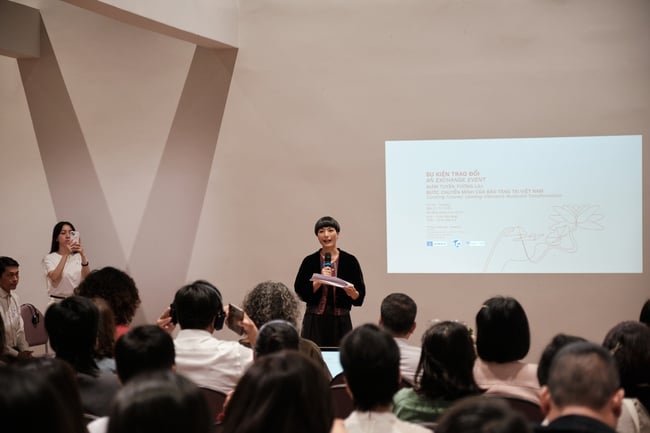
In-depth strategic discussions, moderated by journalist Truong Uyen Ly, took place at the Da Nang Museum. (Source: Organizing Committee)
The “Future Curators” series was born from a core insight: Although curatorial work takes place daily in public museums in Vietnam, the title “curator” does not officially exist in the personnel structure or management regulations. This gap is clear compared to international standards (recognized by the International Council of Museums - ICOM) and the reality of the domestic private sector, where “curator” is a recognized professional position.
Rather than providing a pre-existing definition from the outside, “Future Curators” chooses to start by listening to understand how curating is actually done. At exchange programs held in Hanoi and Ho Chi Minh City, participants described curators not only as a title, but also as storytellers, researchers, community knowledge connectors, artifact caretakers, experience designers, and interdisciplinary collaborators. The program aims to recognize and appreciate the value of these practices, strengthen professional confidence, and open up clear development paths in line with the Law on Cultural Heritage (amended).
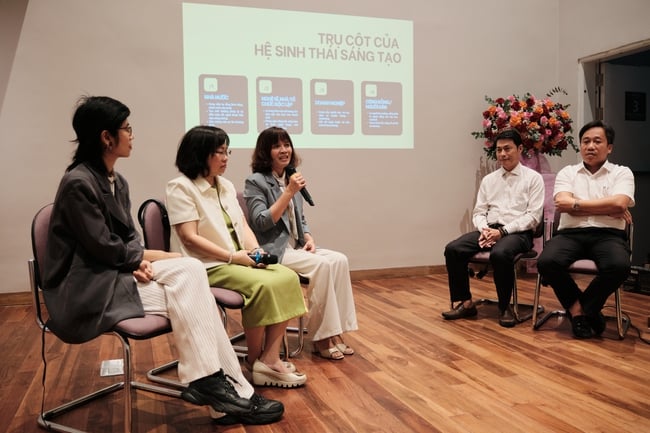
During the event, speakers discussed many issues, notably the role of curators in developing museum audiences. (Source: Organizing Committee)
The event, which featured two main sessions, kicked off at the Da Nang Museum with an in-depth strategic discussion, and continued in Hoi An with hands-on experiences of living heritage. The program highlighted the pioneering role of the Central region in shaping the model of open museums, climate adaptation and creative ecosystem development.
The session at the Da Nang Museum focused on the changing role of museums in the modern context. The keynote address by Associate Professor Jane Gavan (University of Sydney) outlined new directions for the curatorial profession, while warning about the impact of climate change on cultural and heritage institutions.
Following the opening session, the panel discussion on “Curation and Public Development” brought together representatives from major museums in the Central region. Speakers focused on transforming museums into incubators for young artists and independent curators, as well as applying technology and creative content to attract and retain Gen Z/Gen Alpha audiences. Subsequent sessions identified regional cooperation needs, particularly in disaster preparedness and protecting collections from environmental risks.
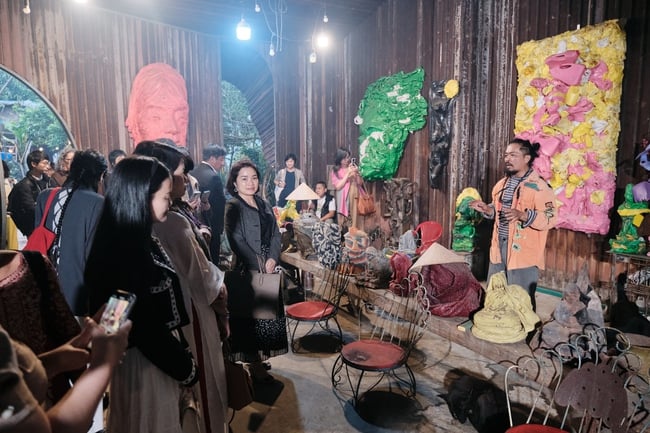
Delegates visited the Rebirth Workshop of artist Nguyen Quoc Dan. This is a unique art space where waste is collected and recycled into works of high aesthetic value. (Source: Organizing Committee)
In fact, Central Vietnam is a region with a multi-layered and dynamic cultural landscape, creating unique challenges and opportunities for creative collaboration. The region is home to numerous UNESCO World Heritage Sites and is home to rich indigenous cultures, placing high demands on the preservation and promotion of living heritage. The rise of independent art spaces and the challenge of climate change have brought the topic of environmental resilience into focus.
Across the central region, museums, independent art spaces and community cultural projects are exploring new forms of collaboration. It is this multifaceted context that led the “Future Curators” event in Da Nang to focus on exploring how museums and cultural spaces can collaborate to promote artistic practice, preserve living heritage and reach creative audiences in the most innovative ways.
Continuing the program, the content in Hoi An is a journey of profound experience of living heritage - a special strength of the Central region, where cultural landscapes rich in heritage intersect with creative community life.
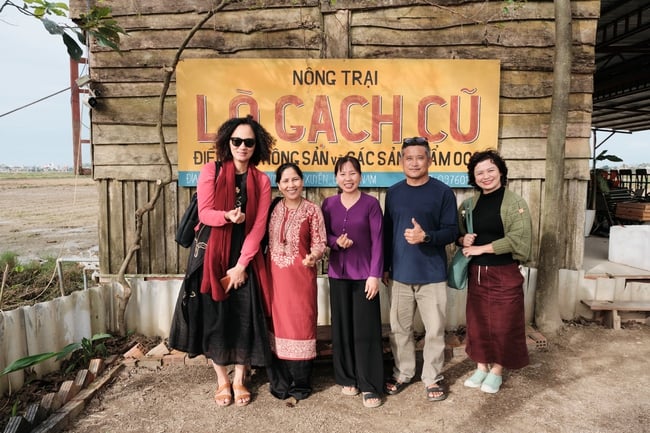
In Hoi An, delegates visited the Old Brick Kiln – a creative space reborn from abandoned industrial architecture. (Source: Organizing Committee)
During the field trip to Hoi An, delegates visited the Old Brick Kiln – a creative space reborn from abandoned industrial architecture. This place serves as a practical research model on space reuse and community-based creative economy in the Central region. The Old Brick Kiln has successfully combined the model of farm tourism, cafe and experience space. This transformation not only turns the once abandoned place into a famous "check-in" spot, but also demonstrates the ability to respond and be resilient of creative spaces in the face of environmental challenges such as flooding.
Following that, the discussion “Living Heritage” took place with the participation of artist Kieu Maily and Dr. Pham Lan Huong (Ho Chi Minh City University of Culture). The experts together clarified the methods of preserving, storing and spreading culture in contemporary life, ensuring that heritage always remains vibrant and attractive.
To visually illustrate the Living Heritage discussions, the field trip visited the Champa Amaravati House of artist Kieu Maily. This indigenous cultural living space, developed from her own family home, is a typical example of the Living Heritage model. Here, Ms. Kieu Maily – a representative face of the young generation of Cham – not only displays cultural artifacts and documents, but also organizes ritual performances, craft workshops and shares indigenous knowledge. This activity illustrates how culture is practiced and passed down in contemporary life, and raises questions about heritage conservation in the face of economic and environmental development pressures.
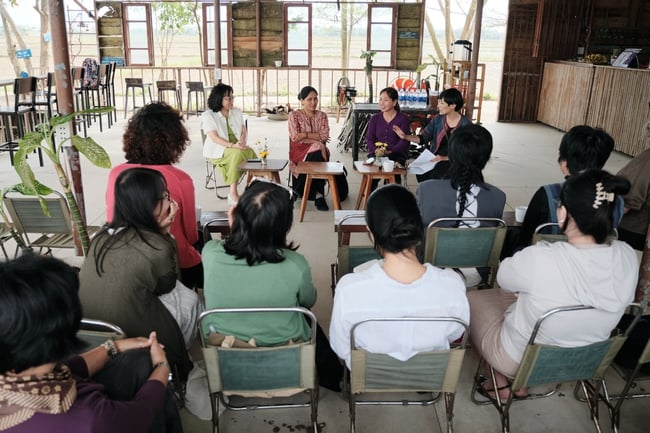
The panel discussion "Living Heritage" featured artist Kieu Maily and Dr. Pham Lan Huong. (Source: Organizing Committee)
The final stop of the journey is the Rebirth Workshop founded by artist Nguyen Quoc Dan. This is a unique art space where waste (plastic, metal) is collected and recycled into works of aesthetic value and a strong community message about environmental protection. The Rebirth Workshop not only functions as a creative laboratory but also serves as a vivid illustration for discussions on environmental sustainability and the possibility of collaboration between independent artists and cultural institutions. The Rebirth Workshop is a vivid illustration for discussions on living heritage, environmental sustainability, community-based art practices, and the possibility of collaboration between independent artists and cultural institutions.
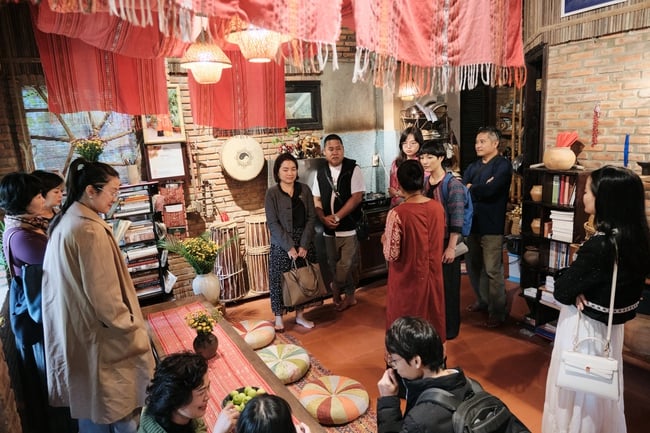
The Champa Amaravati house of artist Kieu Maily. This space for indigenous cultural activities was developed from her own family home. (Source: Organizing Committee)
The event has ended, but the spirit of innovation and networking between cultural organizations in the three regions continues to be strengthened. With the launch of the Curating Futures 2026 Small Grant Fund and new online resources, the Central region in particular and Vietnam in general has opened a new chapter in the sustainable development of heritage and arts, ready for groundbreaking initiatives in the following years. This is a solid stepping stone to transform creative ideas into practical actions, promoting the pioneering role of culture in the global context./.
Source: https://bvhttdl.gov.vn/mien-trung-thuc-day-mo-hinh-bao-tang-mo-va-sang-tao-ben-vung-20251209220440528.htm












![[Photo] Urgently help people soon have a place to live and stabilize their lives](/_next/image?url=https%3A%2F%2Fvphoto.vietnam.vn%2Fthumb%2F1200x675%2Fvietnam%2Fresource%2FIMAGE%2F2025%2F12%2F09%2F1765248230297_c-jpg.webp&w=3840&q=75)










































Comment (0)