

 |
| Doctors advise on nutrition to help children develop comprehensively (Photo: Tam Anh General Hospital) |
The dual challenge and the path toward a healthy future.
Regarding the risk of nutritional imbalance among a segment of the population today, according to Dr. Bui Thi Thuy, Department of Adult Nutrition Counseling, Institute of Nutrition, most cases of dyslipidemia stem from unhealthy diets, sedentary lifestyles, and secondary causes such as overweight, obesity, or metabolic disorders.
According to Professor Tran Thanh Duong, Director of the Institute of Nutrition, the current eating habits of Vietnamese people are unbalanced, as they often consume a lot of meat and animal fat but lack green vegetables and fruits, increasing the risk of overweight, obesity, hypertension, diabetes, gout, and dyslipidemia.
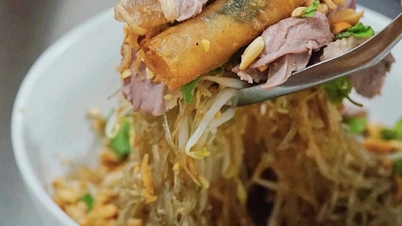
In particular, young people are increasingly consuming excessive amounts of saturated fats, trans fats, ultra-processed foods, and free sugars, all of which increase the risk of early-onset diseases. Foods such as french fries, fried chicken, fried dough sticks, fried pastries, cookies, cakes, industrially produced cakes, chips, instant noodles, sausages, bacon, and sugary soft drinks, which are high in unhealthy fats and sugar, are becoming increasingly common in the diets of many Vietnamese people.
At the 2025 Nutrition and Food Science Conference, Associate Professor Dr. Nguyen Trong Hung warned about the trend of "starvation fear," where many people completely eliminate rice from their meals while consuming excessive amounts of meat, nuts, oils, fruits, and juices.
He emphasized that carbohydrates should still account for about 50% of the dietary energy intake, even for people with diabetes without complications. Eliminating carbohydrates not only causes energy deficiency and makes the body feel hungry quickly, but also creates a dangerous imbalance: excess fat, protein, and sugar, leading to lipid disorders, obesity, and metabolic diseases.
Another habit that needs a warning is the daily consumption of fruit juice. One glass of juice is equivalent to 300-500g of fruit; if you drink juice and eat fruit at the same time, the total sugar intake exceeds the recommended level, easily leading to the risk of diabetes and dyslipidemia. Besides diet, a lack of physical activity is also a significant reason why dyslipidemia is becoming increasingly common and difficult to control.
Nationwide, Deputy Minister of Health Tran Van Thuan warned that the rate of overweight and obesity in urban areas has exceeded alarming levels, while in many mountainous regions, nearly 38% of children remain stunted. This situation not only reflects an imbalance in diet but also signals alarming long-term consequences for health, labor productivity, and human development.
Combining nutrition education and national policies.
To address these issues, the National Institute of Nutrition has established seven nutritional pyramids for each age group and target audience, presented in a visual and easy-to-understand manner. This helps people build balanced diets with carbohydrates at the bottom, providing the main energy source; fats, sugars, and salt at the top, which should be limited; and the remaining food groups appropriately distributed according to the needs of each age group.
The goal for 2030 is to increase the average height of children and adolescents by at least 1.5 cm, and raise the average life expectancy to 75.5 years, including 68 years of healthy life. Currently, the average life expectancy of Vietnamese people is 74.7 years, but the number of years lived in good health is still low; the elderly often suffer from an average of three chronic diseases, most of which are directly related to diet and lifestyle.
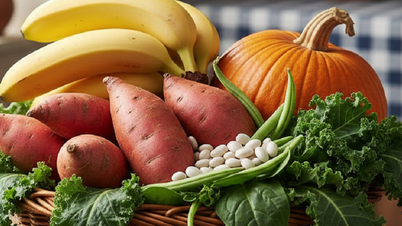
For individuals with dyslipidemia, a proper diet is paramount. Experts recommend reducing saturated fat to less than 7-10% of total energy intake, completely eliminating trans fats, increasing unsaturated fats from fatty fish and vegetable oils; increasing soluble fiber from green vegetables, fruits, oats, and beans; limiting cholesterol intake to less than 200-300 mg/day; and reducing free sugars, salt, and alcohol. Meals should be divided into 3-5 portions per day, eaten at regular times, and combined with regular exercise. Importantly, these recommendations should be individualized according to physical condition, age, and co-existing medical conditions to ensure long-term effectiveness.
To achieve the goal of improving the stature, health, and longevity of Vietnamese people, experts emphasize the need to combine nutritional education, develop sports infrastructure, adopt a national nutrition policy based on the Japanese model, and build regionally appropriate diets. Only when each individual understands the role of scientific nutrition in their own health and the community's health can Vietnam overcome the "double imbalance" and move towards a generation of tall, healthy, dynamic, and creative young people.
Source: https://baodautu.vn/moi-lo-mat-can-doi-dinh-duong-o-viet-nam-d441368.html

























































































Comment (0)