

Bringing integrated services closer to the people.
By July 2025, when the district-level government ceases operation, grassroots public services will be fragmented.
Specifically, the agricultural sector is handled by 8 regional agricultural extension stations. Meanwhile, the regional culture, information, tourism, and sports sector is handled by 18 commune-level centers, under the names of the Regional Culture, Information and Tourism Center; and the Regional Culture, Communication and Sports Center.
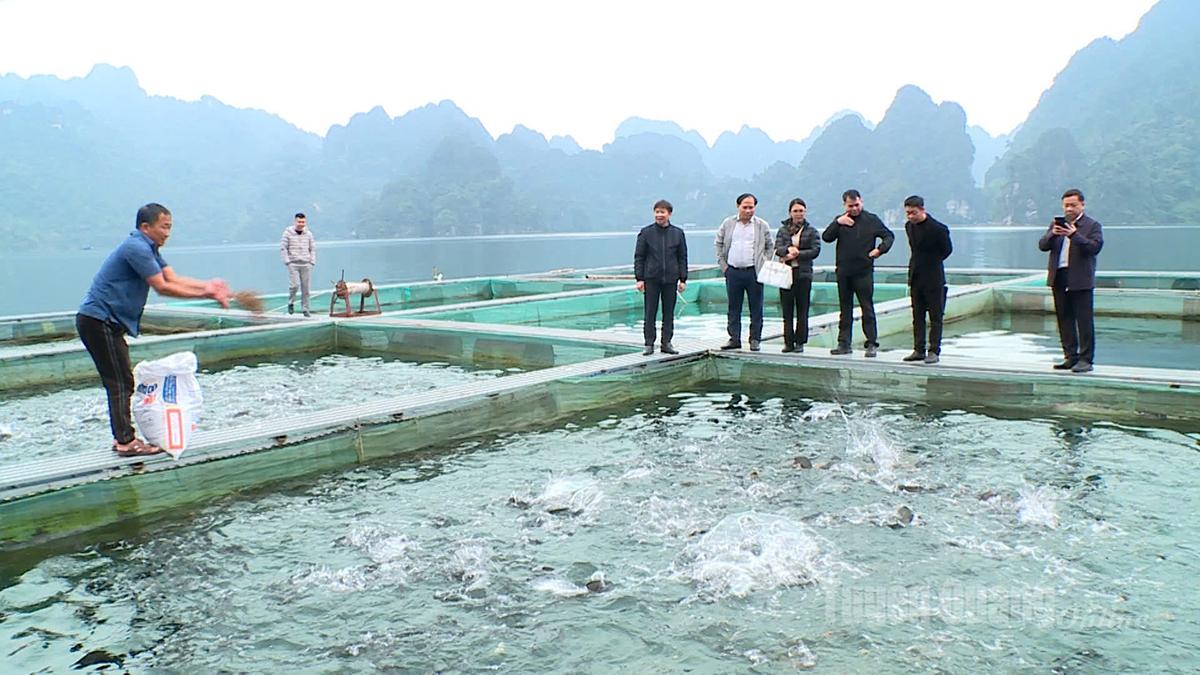 |
| The establishment and operation of Public Service Centers helps ensure that activities at the grassroots level are carried out smoothly and without interruption (In the photo: A model of aquaculture in Na Hang commune). |
The existence of separate public service units has created a gap between service providers and the people – the beneficiaries – because resources are fragmented and people have to seek help from multiple sources.
In light of this situation, on November 4, 2025, the Provincial People's Committee issued a plan to establish and reorganize public service units providing basic and essential multi-sectoral public services under the management of the commune-level People's Committee. The new model put into operation is a truly integrated "two-in-one" model. Each commune-level Comprehensive Service Center is a public service unit with legal personality, its own seal and account, and is directly under the management of the commune-level People's Committee.
These centers simultaneously carry out two core groups of tasks: public services in agriculture such as agricultural and forestry extension, and disease prevention and control for crops and livestock; and tasks related to culture, sports , tourism, and information and communication at the local level. The province requires localities to complete the establishment and reorganization of these units before November 10, 2025.
According to the head of the Department of Internal Affairs, the arrangement and placement of personnel is not simply a matter of mechanical addition, but must ensure that professional qualifications are linked to job positions, that there is a harmonious balance between different specialties, and especially that there is a balance between favorable and disadvantaged areas, so that no area lacks personnel to provide essential public services to the people.
This is a strategic step, ending fragmentation and overlap, bringing essential public services closer to the people, and improving the capacity and efficiency of state management at the grassroots level, in line with the spirit of administrative reform: being close to the people, serving the people.
Quickly get into the rhythm.
By mid-December, the entire province had established and put into operation 124 commune and ward-level Public Service Centers. Services such as technical guidance on crop cultivation, veterinary services, and cultural and artistic activities were implemented right at the commune level. Many units quickly allocated and transferred staff from the province to the grassroots level; for example, the Department of Agriculture and Environment allocated and transferred 142 agricultural extension officers to work in communes and wards.
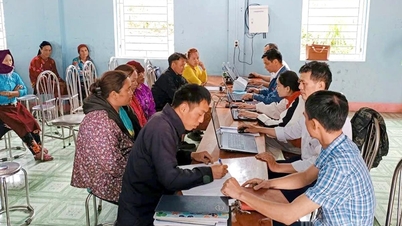
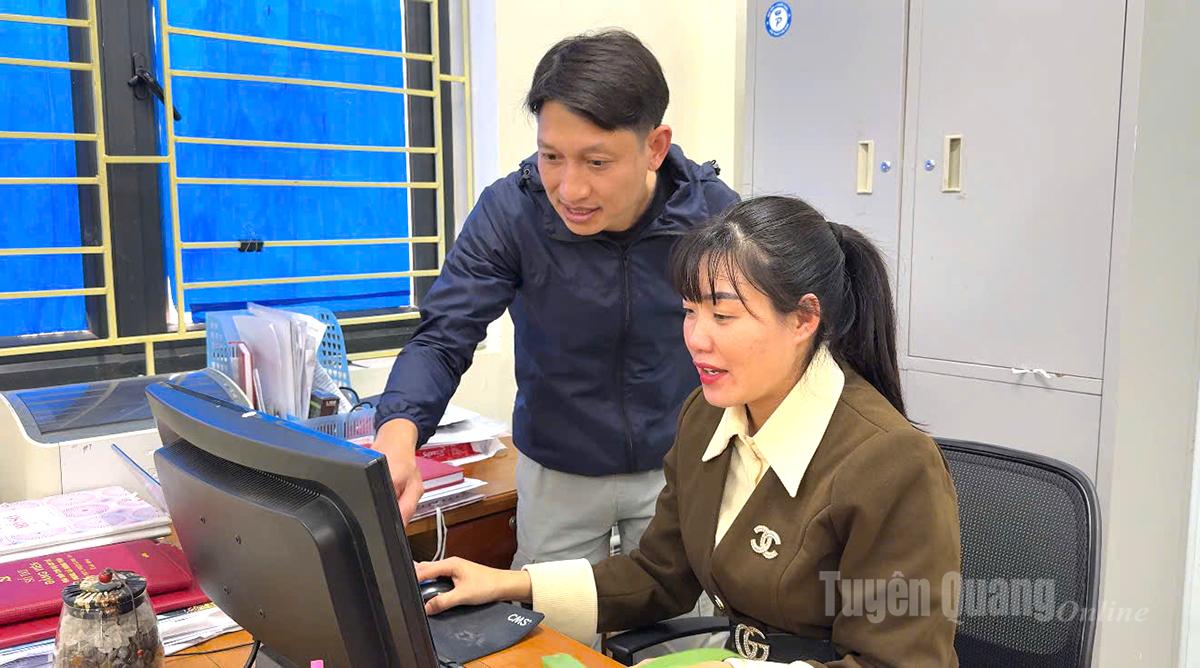 |
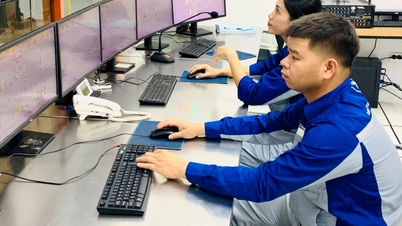
| Officials at the Hong Thai Commune Public Service Center quickly got to work. |
In the early days of operation, the reality in the localities showed positive changes mixed with objective difficulties.
The Son Duong Commune Public Service Center is one of the earliest established units in the province. Immediately after its establishment and operation with 8 staff positions (5 permanent staff, 3 contract staff), the departments quickly began carrying out their professional duties.
Comrade Duong Thi Son, Director of the Center, said: Information and propaganda activities are maintained continuously and without interruption. On the commune's general information page, the unit maintains sections on Towards the Party Congress at all levels, Documents - Policies, Studying and following the thoughts, ethics, and style of Ho Chi Minh , and Digital transformation. At the same time, a new section on the election of National Assembly and People's Council representatives at all levels for the 2026-2031 term has been added. In addition, news articles reflecting the atmosphere of labor and production at the grassroots level, and the advantages and difficulties in the operation of the two-level local government are continuously updated, ensuring that the most complete and accurate information reaches the people.
Since the end of November, the Son Duong Public Service Center has recruited two additional officials in the field of agricultural extension. This department has also quickly developed plans and opened training courses for farmers in the villages; coordinating with relevant units to find locations and build demonstration models of new rice varieties in several villages such as Tram, Mang Ngot, Lang Ca… Comrade Pham Cao Tuan, an agricultural extension officer in Son Duong commune – formerly the Deputy Director of the Agricultural Extension Station Region I – said: “Due to the large area and numerous villages, while the staff performing the task is only two people, to ensure smooth information flow, we created a Zalo group to disseminate knowledge about agricultural extension. At the same time, we also require villages to immediately inform agricultural extension officers when there are pests, diseases, or abnormalities in agricultural production so that timely and effective control measures can be taken.”
The Vi Xuyen Commune Public Service Center was established with 17 staff members and began operations at the end of November. Unlike other commune-level public service centers, the Vi Xuyen Commune Public Service Center received additional staff from the Vi Xuyen Martyrs' Cemetery Management Board to perform management tasks within its designated area. According to Mr. Nguyen Tien Hung, Chairman of the Vi Xuyen Commune People's Committee, the center's operations have adapted quite quickly to the current situation. For the remaining vacant positions, the Commune People's Committee is developing a plan to recruit part-time staff under contract to ensure the effective provision of local services.
However, not all units have immediately adapted to the new mechanism. For example, in Hoa An commune, the newly established Public Service Center has only 4 staff members. Being newly established and without a Director yet to be officially approved, all activities at the Center are still quite slow and unfamiliar. The agricultural extension officer is currently being seconded to the Commune Economic Department to assist, as the department still lacks civil servants with expertise in this field.
The human resources and organizational structure problem
Currently, the number of allocated personnel for the Public Service Centers in communes is 644 employees and 13 contract workers providing support and services under Decree No. 111/2022/ND-CP. Upon review, there is a shortage of approximately 1,200 personnel to ensure each Public Service Center has 15 employees.
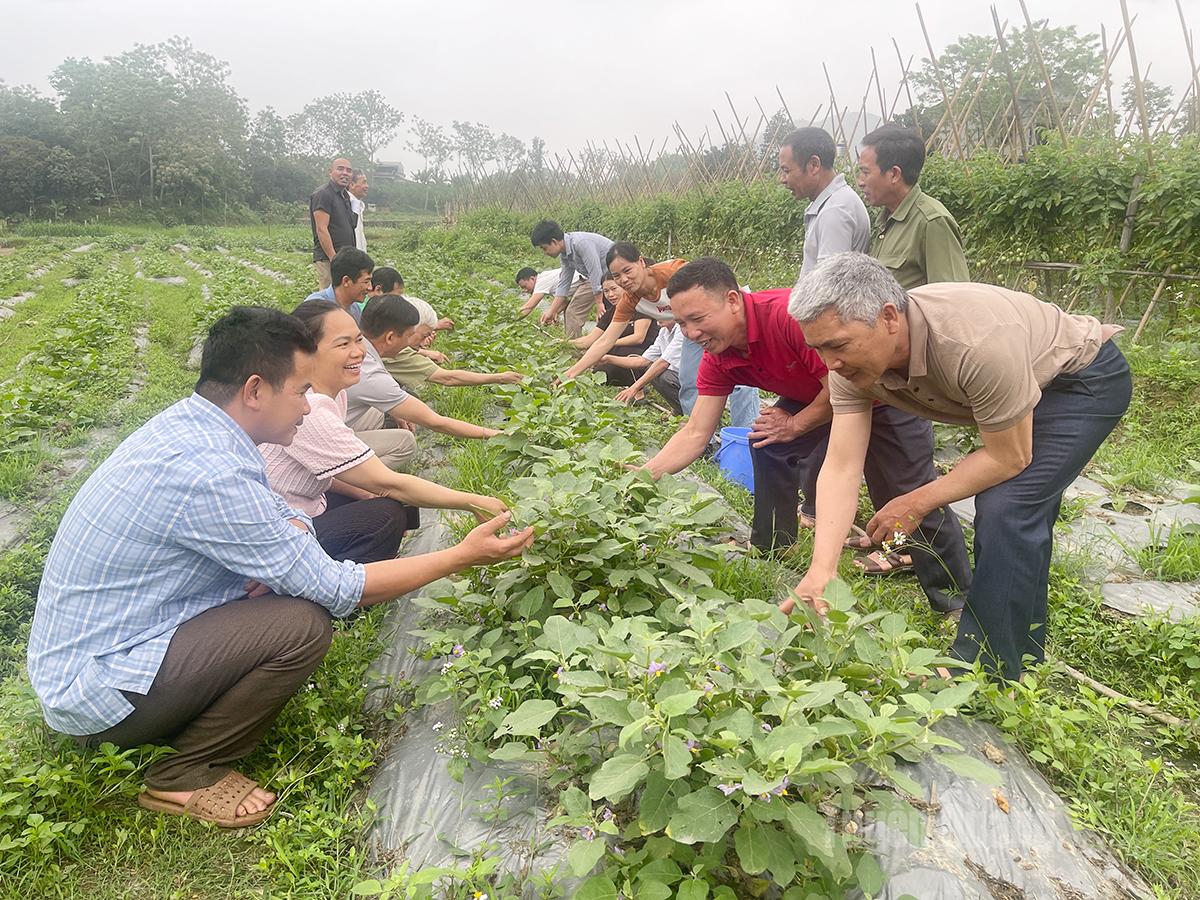 |
| Agricultural extension officers during a field training session in Thai Hoa commune. |
According to Comrade Do Anh Tuan, Director of the Department of Internal Affairs: Currently, the Department of Internal Affairs is guiding localities to consolidate the remaining personnel according to three options: applying the Resolution of the Provincial Party Standing Committee on transferring 81 officials from departments and agencies; recruiting a team of semi-professional officials; and conducting competitive examinations to fill the vacant positions. The Department continues to monitor, direct, and guide the People's Committees at the commune level to complete the remaining procedures to finalize the organizational structure and job position regulations of the centers, ensuring organizational stability and timely provision of basic and essential public services to the people, especially in remote and disadvantaged communes; gradually improving the quality of services, using people's satisfaction as a measure. At the same time, it will organize inspections and evaluations of the effectiveness of the centers' operations, especially regarding difficulties and obstacles, in order to promptly advise on solutions and adjustments as appropriate.
According to the plan, after the centers become fully operational, the province will conduct an evaluation to adjust staffing levels to suit the realities of each locality during the 2026-2030 period. Areas currently allocated higher staffing levels than the prescribed limit (due to historical factors) will gradually reduce staffing according to the streamlining plan.
The reality is that the regional agricultural extension stations have now been dissolved, with extension officers being transferred to work directly at public service centers, while the regional veterinary and plant protection stations remain operational.
Comrade Pham Cao Tuan, an officer at the Son Duong Commune Agricultural Extension Station, believes that in the long run, without adjustments and changes, agricultural extension, veterinary, and plant protection activities at the grassroots level will be affected to some extent. Currently, after assessing the situation at the grassroots level and discovering issues related to livestock diseases or plant protection, commune agricultural extension officers report to the Department of Agriculture and Environment. The Department then directs the regional stations to handle the matter after receiving the report. This inadvertently creates an additional intermediary step, which somewhat hinders the handling of issues at the grassroots level.
To address this issue, the Department of Agriculture and Environment is currently working with local authorities to develop specific coordination regulations, ensuring that the work is carried out smoothly and effectively.
In practice, the initial operation of the Public Service Centers at the commune and ward levels inevitably faced difficulties and obstacles, ranging from infrastructure to operational procedures. However, with flexible leadership and a sense of responsibility from the staff, the model promises to create a solid foundation for a service-oriented administration: modern, efficient, and truly close to the people.
Tran Lien
Source: https://baotuyenquang.com.vn/xa-hoi/202512/moi-xa-mot-trung-tam-dich-vu-cong-a506750/









































































Comment (0)