

Final article: Institutional breakthroughs, optimizing the investment environment
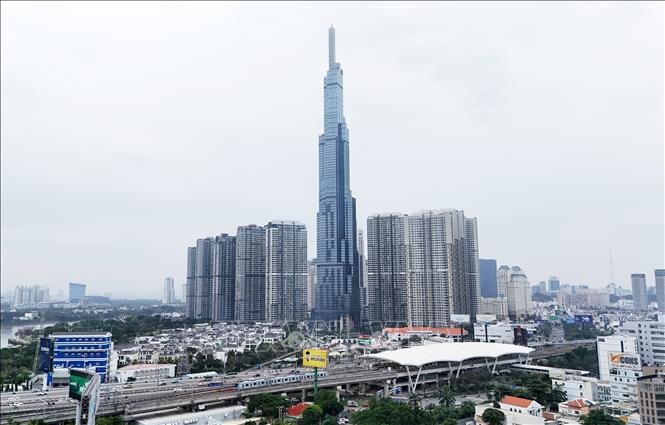
Particularly in the context of the National Assembly considering and approving amendments to Resolution 98, this will create institutional breakthroughs, helping the city optimize its investment environment and prepare to welcome a wave of high-quality foreign direct investment (FDI).
"Champion" in attracting FDI
According to data from the Foreign Investment Agency ( Ministry of Finance ), in the first 10 months of 2025, Ho Chi Minh City surpassed Bac Ninh to become the "champion" in attracting foreign direct investment (FDI) with over US$5.5 billion, an increase of nearly 29% compared to the same period in 2024. This marks a new milestone for Ho Chi Minh City in attracting FDI.
According to the Ho Chi Minh City People's Committee, in 2025, the city is estimated to attract approximately US$8.16 billion in foreign investment, including investment registration certificates and capital attracted through capital contributions, share purchases, and acquisitions of domestic enterprises. Compared to 2024, this figure represents a 15.8% increase in the number of foreign investments and a 21.1% increase in total investment capital.
This result demonstrates the strong recovery momentum and breakthrough potential of the country's leading economy amidst ongoing global economic instability. It also serves as proof of the exceptional efforts of the city's authorities at all levels in administrative reform, streamlining the apparatus, building infrastructure, improving the investment environment, and strengthening confidence among international investors.
Mr. Erick Contreras, Vice President of the European Chamber of Commerce (EuroCham), observed that with its FDI attraction results, Ho Chi Minh City continues to affirm its role as the economic engine of Vietnam. The European business community considers this impressive growth as a strong testament to their confidence in Vietnam's reforms and the pioneering role of Ho Chi Minh City.
Sharing the same view, Mr. Kim Nyoun Ho, President of the Korean Chamber of Commerce, affirmed that the efforts of the Ho Chi Minh City government to improve transportation infrastructure, build a smart city, and move towards a sustainable and environmentally friendly living environment have brought many advantages to member businesses of the Korean Chamber of Commerce.
“Since its establishment in 2003, the Korean Chamber of Commerce has had approximately 1,000 active members in Ho Chi Minh City as well as provinces and cities in central and southern Vietnam. Throughout those 22 years, we have had the opportunity to directly witness the city’s economic growth, especially this year with its historic turning points,” shared Mr. Kim Nyoun Ho.
Furthermore, international organizations have frankly pointed out the "bottlenecks" in mechanisms and infrastructure that need to be removed to strengthen confidence and improve the quality of FDI investment in Ho Chi Minh City. Mr. Okabe Mitsutoshi, Chief Representative of the Japan External Trade Organization (JETRO), stated that over 62% of Japanese businesses consider complex administrative procedures and an incomplete legal system as "bottlenecks" that need to be addressed immediately. Accordingly, JETRO suggested that the city government continue to promote the simplification and increased transparency in administrative procedures, such as import procedures, labor permits, and visas.
"If these issues are resolved quickly, the level of satisfaction of Japanese businesses with Ho Chi Minh City's investment environment will be enhanced, thereby promoting and attracting more new, higher-quality investment projects," Mr. Okabe Mitsutoshi affirmed.
Representatives from the American Chamber of Commerce (AmCham) also acknowledged that infrastructure plays a crucial role in building confidence among foreign businesses in Ho Chi Minh City. “When the policy framework is complete and stable, AmCham member businesses are ready to participate in investing, financing, and implementing projects that help Ho Chi Minh City improve its infrastructure system, especially seaports, airports, logistics, and urban transportation. This simultaneously brings practical benefits to the city and to investors,” the AmCham representative emphasized.
Institutional development - A "new coat of paint" for megacities.
After the merger, Ho Chi Minh City is the largest city in the country with a population of nearly 14 million people (including visitors, the total is about 20 million), contributing more than 23% of the national GDP and about one-third of the national budget. The current Resolution 98 has created an important foundation, but many regulations no longer meet the requirements of governing a city of this new scale.
Chairman of the Ho Chi Minh City People's Committee, Nguyen Van Duoc, stated that as the city aims to become the economic and financial center of the region, a leader in smart cities, green transformation, and attracting high-tech investment, the legal framework must precede and pave the way to create room for development, rather than maintaining the status quo.
“The city must be given full authority in planning, attracting investment, and operating the innovation ecosystem. The longer the revision of Resolution 98 is delayed, the more opportunities Ho Chi Minh City loses. As urban competition and international integration deepen, any city that does not proactively innovate will be left behind,” Chairman Nguyen Van Duoc observed.
According to Associate Professor Dr. Nguyen Huu Huan, Senior Lecturer at the Ho Chi Minh City University of Economics, Resolution 98, while opening a new institutional path for the city, still does not provide a complete institutional framework for a metropolitan governance model on par with Tokyo or Seoul.
“The biggest challenge right now is the gap between ‘the power granted’ and ‘the capacity to exercise that power.’ This implies that without superior mechanisms and commensurate management capacity, Ho Chi Minh City will find it difficult to maintain its leading economic position,” Associate Professor Dr. Nguyen Huu Huan analyzed.
With this revision and amendment of Resolution 98, Associate Professor Dr. Nguyen Huu Huan hopes to create a version 2.0 of Resolution 98 with a vision specifically for a megacity. The ultimate goal is to strengthen management capacity so that Ho Chi Minh City can maximize the use of special mechanisms, leading and creating strong momentum for the Vietnamese economy.
Sharing the same view, Dr. Tran Quang Thang, Director of the Institute of Economics and Management of Ho Chi Minh City, emphasized the necessity and urgency of amending and supplementing Resolution 98 to address existing problems and create new impetus for the economic development of Ho Chi Minh City. The main goal of the amendment is to create institutions that will further decentralize power and authority to Ho Chi Minh City, especially in the areas of finance, planning, and human resource management. This will help unlock social resources and attract high-quality foreign investment.
It can be said that the outstanding efforts of Ho Chi Minh City's authorities at all levels in stabilizing and smoothly operating the two-tiered government apparatus have been a powerful impetus leading to remarkable economic results for the city in 2025. To maintain its position as the leading economic hub of the country and develop to the level of an international megacity, Ho Chi Minh City needs a broader and stronger "new look" to create an international playing field, ready to welcome high-quality foreign investment flows, and increase resources for the city's development to reach its full potential.
Source: https://baotintuc.vn/kinh-te/kinh-te-tpho-chi-minh-sau-cu-huych-tu-chinh-quyen-2-cap-bai-cuoi-20251211104548267.htm

![[Photo] Prime Minister Pham Minh Chinh holds a phone call with the CEO of Russia's Rosatom Corporation.](/_next/image?url=https%3A%2F%2Fvphoto.vietnam.vn%2Fthumb%2F1200x675%2Fvietnam%2Fresource%2FIMAGE%2F2025%2F12%2F11%2F1765464552365_dsc-5295-jpg.webp&w=3840&q=75)


![[Photo] Closing Ceremony of the 10th Session of the 15th National Assembly](/_next/image?url=https%3A%2F%2Fvphoto.vietnam.vn%2Fthumb%2F1200x675%2Fvietnam%2Fresource%2FIMAGE%2F2025%2F12%2F11%2F1765448959967_image-1437-jpg.webp&w=3840&q=75)



































![[OFFICIAL] MISA GROUP ANNOUNCES ITS PIONEERING BRAND POSITIONING IN BUILDING AGENTIC AI FOR BUSINESSES, HOUSEHOLDS, AND THE GOVERNMENT](https://vphoto.vietnam.vn/thumb/402x226/vietnam/resource/IMAGE/2025/12/11/1765444754256_agentic-ai_postfb-scaled.png)










































Comment (0)