The return
I returned to the Tien River just as the north wind was beginning to blow. Early in the morning, a thin mist covered the canal banks, and smoke rose from the rooftops in wisps. Aunt Bay was lighting the fire, the red flames shimmering in the wind. She smiled gently and said, "The north wind has come early this year, my child. I'm sure this rice crop will be bountiful, and the melons by the dike will soon be bearing fruit." I sat by the straw-fired stove, watching the smoke drift lazily. Outside, coconut trees leaned over, and the wind rustled through the banana grove. In the early season chill, old memories came flooding back: the lively days of draining the ponds, the fragrant smell of straw smoke and the scent of freshly harvested rice.
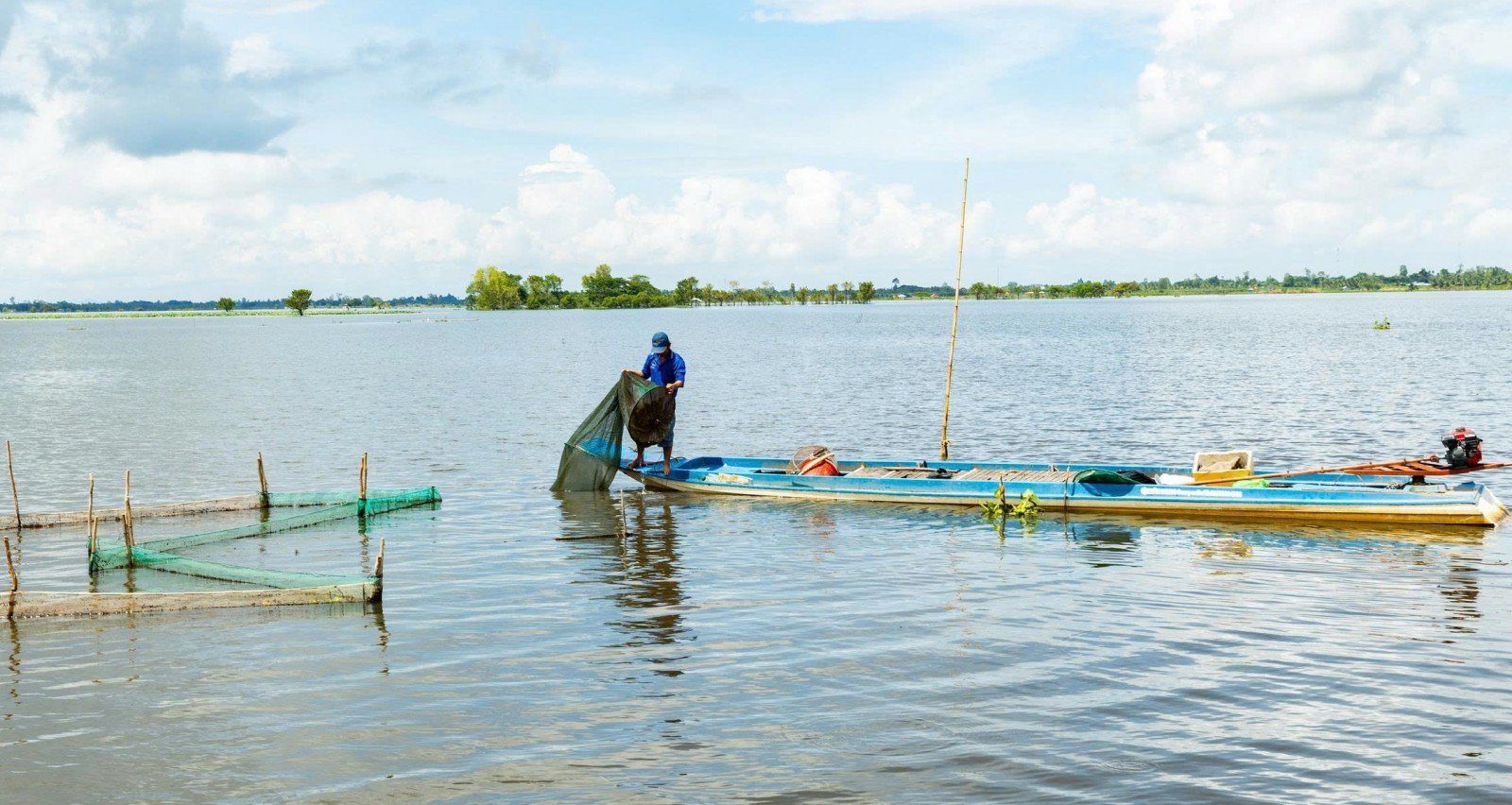
The snakehead fish follow the floodwaters into the rice fields. Photo: THIEU PHUC
Around the tenth lunar month each year, the north wind brings the cold air from the north southward, signaling a change of seasons. The north wind season is also the time for harvesting the floating rice crop, draining the ponds, pounding flattened rice, and weddings. In the rice fields, snakehead and tilapia fish, carried by the receding water, are all plump and meaty.
Amidst the sun and wind of the border region, Chairman of the People's Committee of Vinh Xuong Commune, Bui Thai Hoang, shared: “Vinh Xuong holds a special position in developing border trade and safeguarding national sovereignty. The local government and people are striving to transform this upstream border region into a dynamic development area, turning disadvantages into advantages to connect the Mekong Delta with Cambodia and the Greater Mekong Subregion.” Over the past time, thanks to the concerted efforts of the entire political system, Vinh Xuong is changing day by day. Transportation and production infrastructure are being gradually improved, and the lives of the people are significantly enhanced. The will of the Party and the aspirations of the people are intertwined, turning this border region into a new growth pole of the province.
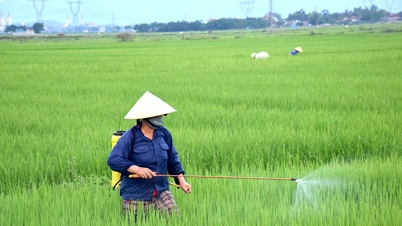
Leaving the commune's Party Committee office, I followed the Tien River to visit Uncle Nam Hoanh. That afternoon, he invited me to visit the rice fields. The dirt road wound along the canal bank, the grass swaying in the afternoon breeze. The fields before us stretched endlessly. In the areas within the dikes, the rice was in its young, sweet-smelling stage. Uncle Nam smiled kindly: "In the old days, when the north wind blew, everyone would rush to drain the ponds to catch fish for Tet. It was so much fun then; there was a lot of mud, but no one was bothered, and laughter echoed throughout the village."



The song "Green Betel Leaf"
As evening fell, Ms. Bay Tiet sat by the water's edge, untangling her hair and smiling: "Every evening when the north wind blows, if I don't sing, I feel so nostalgic for my homeland. I sing to ease the burdens of life." Then she softly began: "We love each other, splitting a betel nut in two. A single green betel leaf symbolizes our destined love. Every evening, after the market closes, I still cherish the memory of my past love…" Her singing drifted on the wind, blending with the sound of water lapping against the shore. Ms. Bay stopped singing, took a sip of tea, and whispered: "A woman from the Mekong Delta, when she loves someone, she loves them truly. That kind of love is like a green betel leaf; the more you chew, the spicier, the stronger, the harder it is to forget."
Sitting in that setting, I felt the wind rustling through her hair, and my heart sank. Her singing conveyed not only a sad love story but also the unwavering loyalty and resilience of the women of the riverine region—women who always knew how to wait, how to be patient, and how to preserve their gentle beauty amidst a life full of changes. “Life for women in our village is hard, but we don’t complain. As long as we live, we will love and care for our husbands, children, and neighbors,” Aunt Bay confided.
The simple saying encapsulates a profound philosophy of life. Their love is not boisterous or boastful, but quietly flowing like the Tien and Hau rivers, permeating every meal, every hearth, every lullaby. Women in the Mekong Delta are like lotus flowers growing in mud, like water hyacinths drifting on the vast river, seemingly fragile yet possessing an extraordinary vitality. They endure the hardships of rain and sun, yet maintain their gentle beauty, loyalty, and compassion, just like the rivers of their homeland. They are the roots of genuine love, loyalty, and beauty amidst a life of constant change.
Hearts warmed again.
As night fell, the entire village was bathed in the soft yellow light of street lamps. On the river, the water reflected the crescent moon. I sat by the riverbank, listening to the north wind rustling through the thatched roof like an old lullaby. I quickly jotted down in my notebook: "Vinh Xuong in the season of the north wind returns; the land and sky are chilly, but people's hearts remain warm."
The sky gradually brightened. I left Vinh Xuong in the gentle northerly breeze. The Tien River sparkled in the early morning sun, boats and canoes gliding downstream, their engines roaring and laughter echoing. I glanced back at the receding riverbanks, seeing the figure of Aunt Bay hunched over the fire, Uncle Nam Hoanh lighting the smoke from burning the fields. The melody of "Green Betel Leaves" still lingered between the two banks of the river.
Vinh Xuong bids farewell with the wind, with the smoke of burning straw, with genuine smiles as warm as a village hearth. I suddenly understood that the affection of the people of Vinh Xuong is not boisterous or pretentious, but surprisingly generous, magnanimous, and loyal. They are poor but not stingy, hardworking but not complaining, living uprightly like the Tien and Hau rivers, loving others as they love themselves. The north wind not only signals the new harvest but also reminds people that, amidst the hustle and bustle of life, there are still hearts that know how to keep each other warm, like the fire in the straw hearth of the aunts and mothers, like the song "Green Betel Leaves" still echoing in the long night.


Goodbye Vinh Xuong, the upstream region where the Mekong River flows into Vietnam. I carry with me the gentle northerly breeze and the simple affection and kindness of the local people and officials. In that place, every inch of land, every canal bank, every house is imbued with the sweat and dedication of the border residents. I believe that one day Vinh Xuong will rise to become a growth hub of the province, fulfilling the aspirations of those who are tirelessly keeping this upstream region green and peaceful.
MINH HIEN
Source: https://baoangiang.com.vn/mua-gio-bac-ve-a466253.html