

Lesson 4: The economy needs a truly strong and specialized agency to represent state capital.
Based on the practical experience of the State Capital Management Committee in enterprises after 6 years of establishment, experts believe that the role and functions of the Committee need to be strengthened while maintaining the independence of the state-owned enterprise system.
"Enhancing the role and functions of the State Capital Management Committee in enterprises"
Associate Professor Dr. Tran Dinh Thien, former Director of the Vietnam Institute of Economics.
The economy has just gone through six years of significant and unpredictable changes, but it is also during this time that 19 corporations and general companies under the State Capital Management Committee (the Committee) have achieved remarkable results. This demonstrates the great efforts and, to some extent, proves the effectiveness of the model of a specialized agency representing the state's ownership of capital.
 |
| Associate Professor Dr. Tran Dinh Thien, former Director of the Vietnam Institute of Economics. |
However, we must face the reality that this model still faces many difficulties.
For example, the independence of the capital ownership role between the committee assigned this function and other agencies and member enterprises is crucial. Without clear definition, effective management becomes very difficult.
There are matters on which the Committee has to seek advice from a specific departmental unit within the Ministry. Operating within that framework is very difficult for the Committee. In reality, we have regulations and institutions that make it impossible to do many things well, even with the necessary capabilities.
Going forward, the priority is to accelerate the restructuring of state capital to clearly define the model of the Committee, ensuring faster and more efficient operation. This involves defining state assets, along with the functions and responsibilities of the capital representative agency, while business management remains the responsibility of the enterprises.
Experience has shown that the greater the empowerment and accountability, the stronger the performance of the agencies. Therefore, it is necessary to strengthen the role and functions of the State Capital Management Committee in enterprises, linking it with the independence of the state-owned enterprise system as a strength of the economy.
"Moving towards a model of independent agencies subject to oversight by the National Assembly and the Government."
Dr. Nguyen Duc Kien, Economist
The establishment of the State Capital Management Committee in enterprises separated the functions of capital ownership and state management. After six years of operation, this model has shown some positive aspects.
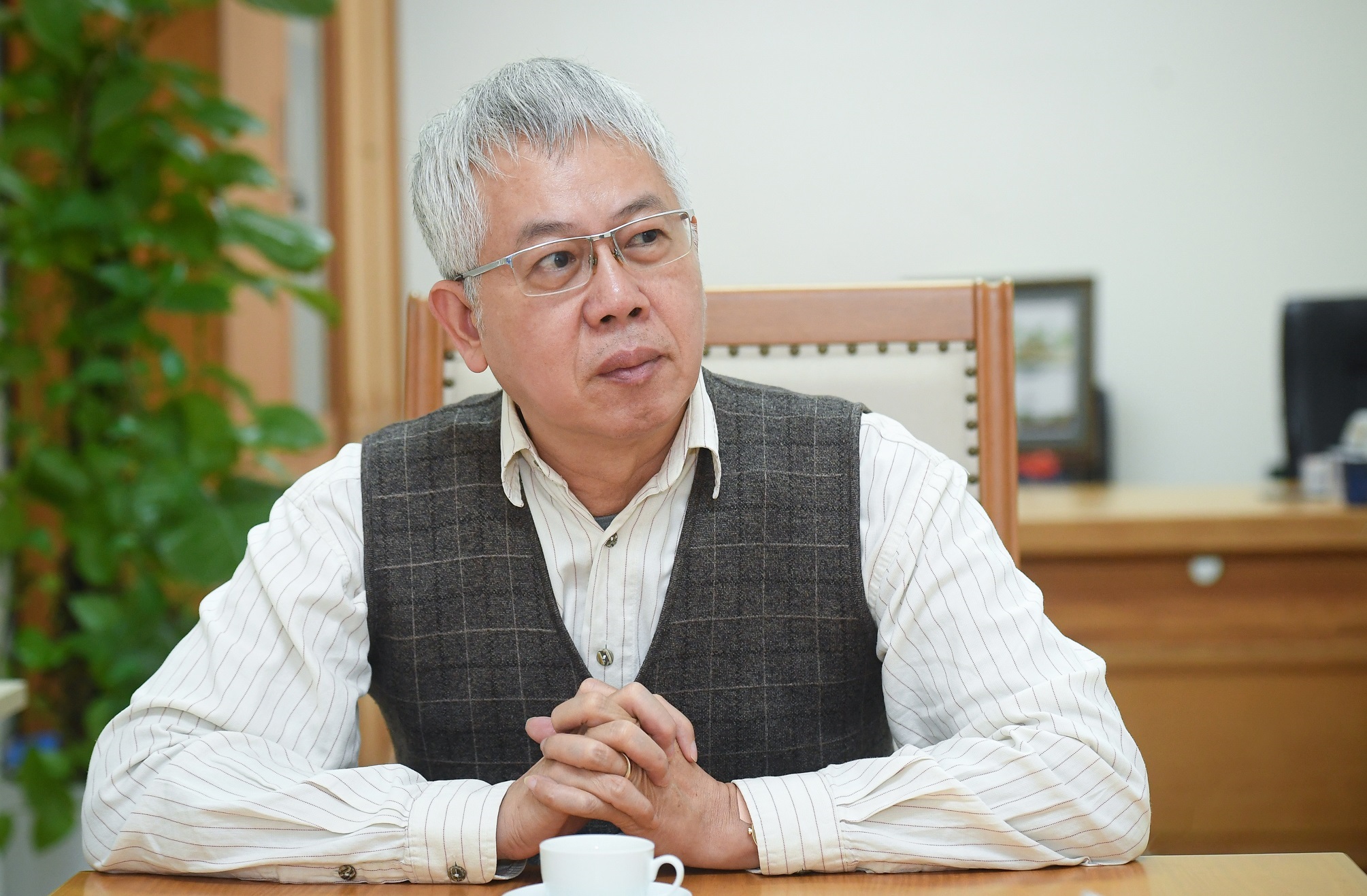 |
| Dr. Nguyen Duc Kien, Economist. |
Firstly, the relocation should not disrupt the production and business operations of the corporations and conglomerates.
Secondly, to fulfill the role of representing the voice of state-owned enterprises in presenting issues to competent authorities, especially clearly identifying the shortcomings that state-owned enterprises face in the socialist-oriented economy.
Thirdly, support and help state-owned enterprises mature even during difficult times and the pandemic.
Many state-owned enterprises have recorded good growth rates and contributed to providing the material conditions for the Government to manage the economy. Notable examples include the Vietnam Electricity Group (EVN), which decided to reduce 23,000 billion VND for struggling businesses. ACV reduced 8,700 billion VND in landing, taxiway, and runway fees to support aviation and transport businesses.
These examples demonstrate the significant role that the state-owned enterprise sector plays in contributing to macroeconomic stability. Furthermore, state-owned enterprises also serve as a physical tool for regulating the economy during times of volatility and instability. For instance, flights bringing Vietnamese citizens abroad back home due to the Covid-19 pandemic were operated and funded by Vietnam Airlines.
However, it must also be clearly understood that evaluating state-owned enterprises must always be viewed from two perspectives: fulfilling political tasks and conducting business operations.
This is the time to further improve the structure of the State Capital Management Committee in enterprises. Specifically, there is a need for specific regulations on the rights and functions of the Committee in the draft Law replacing the Law on Management and Use of State Capital Invested in Production and Business in Enterprises (Law 69/2014), which could eventually become an independent agency subject to the supervision of the National Assembly and the Government.
The best solution is radical reform, creating laws to ensure the Committee operates according to the law (similar to the State Audit model), clarifying its functions and roles, and granting it specific and clear powers.
If conditions prevent this from happening, the law must be amended in a more reasonable way, based on expert suggestions, the actual operation of state capital representative agencies, and feedback from businesses.
This is also an opportunity to outline specific steps to implement the Resolution of the 13th National Congress of the Party, an opportunity to focus intellectual efforts and change outdated regulations. Institutional factors can be addressed to ensure that national assets operate efficiently and are internationally competitive.
To achieve this, it requires that the fundamental issues of the Committee be clearly defined and codified into law, such as its functions, position, and role. This must be coupled with decisive action in restructuring state-owned enterprises.
"The state is also an investor, bound by the rules of the market."
Mr. Nguyen Ba Hung, Chief Economist of the Asian Development Bank ( ADB)
Regarding the state-owned enterprise sector, we need to clarify the question: Where do we want state-owned enterprises to go, and then find appropriate solutions.
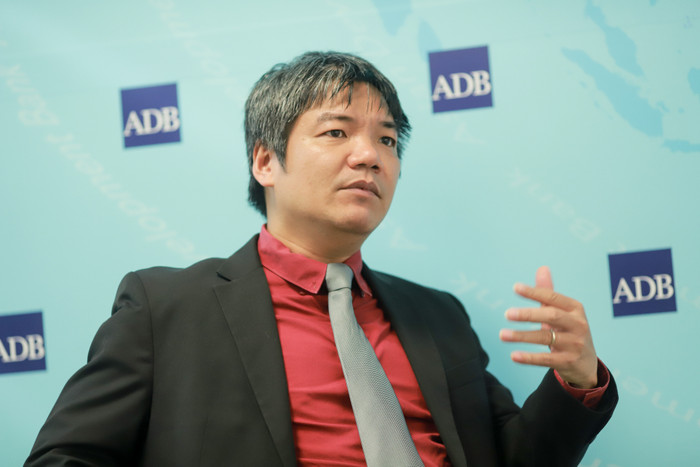 |
| Mr. Nguyen Ba Hung, Chief Economist of the Asian Development Bank (ADB). |
In reality, there are many groups of state-owned enterprises with different characteristics. Some groups play a crucial role in economic security, such as oil and gas, electricity, and petroleum; some groups play a public-social role, such as urban environment, irrigation, water supply and drainage, and parks and green spaces; and some groups are entirely market-driven, such as pharmaceuticals, steel, food, chemicals, and fertilizers.
Therefore, it is necessary to categorize them and have different regulations and management methods because each group of businesses requires different restructuring solutions.
The separation of state management and state capital management, linked to the representative agency of state ownership such as the State Capital Management Committee at enterprises, needs to be further promoted. Accordingly, excluding specific industries and sectors, state capital should be managed and operated like capital from other economic sectors; the state is also an investor, adhering to market rules.
When deciding to maintain state-owned enterprises in certain sectors, the question that needs to be answered is: why should they be maintained? If not measured in terms of profit, then their effectiveness for the economy must be measured.
For example, in the energy sector, it is necessary to clarify their role in energy security; otherwise, this will hinder investment in the system, leading to electricity shortages and failure to keep up with development needs.
Experience in the UK shows that the railway industry took 15-20 years to restructure. Accordingly, the state owned and managed the rail and signaling system, and privatized the trains. Railway companies bid for route licenses, creating competition in service, so since 2004 their trains have offered better service, including Wi-Fi… Thanks to the convenience of the railway, the state has, on the one hand, collected operating fees and invested in infrastructure, and on the other hand, it has encouraged population decentralization to the suburbs, achieving the state's strategic macroeconomic goals.
The profits of state-owned enterprises are currently transferred to the state budget, but consideration must also be given to their reinvestment. In this case, we return to the question: what is the purpose of retaining the profits?
If there are other strategic benefits, the owner should have the right to withdraw those profits. If the State Capital Management Committee at the enterprise has the tools to invest, it can withdraw capital and put it into those tools. The unit representing the owner should have additional rights regarding capital increases and withdrawals.
The world already has successful models, and Vietnam has the advantage of observing and learning from them to apply.
Source: https://baodautu.vn/bai-4-nen-kinh-te-can-co-quan-chuyen-trach-dai-dien-von-nha-nuoc-dung-nghia-du-manh-d227958.html
![[Photo] Prime Minister Pham Minh Chinh holds a phone call with the CEO of Russia's Rosatom Corporation.](/_next/image?url=https%3A%2F%2Fvphoto.vietnam.vn%2Fthumb%2F1200x675%2Fvietnam%2Fresource%2FIMAGE%2F2025%2F12%2F11%2F1765464552365_dsc-5295-jpg.webp&w=3840&q=75)





































































Comment (0)