

 |
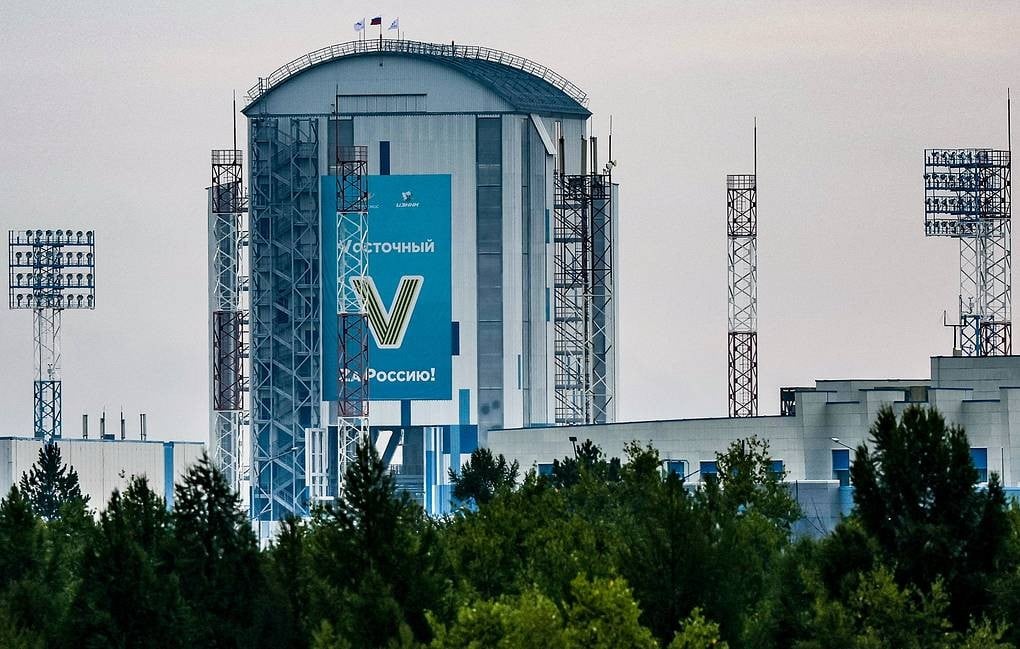
| Russia's Lunar-25 spacecraft launched its journey to the Moon from the Vostochny space station on August 11. (Source: TASS) |
According to a TASS (Russia) correspondent reporting from the space center, the spacecraft took off from the Vostochny facility in Russia's Far East on August 11.
The Fregat booster rocket lifted off from the third stage of the spacecraft 564 seconds into flight. The Luna-25 spacecraft will then separate from the booster rocket about an hour after launch. The journey to the Moon is expected to take 5.5 days.
Notably, if deployed as planned, Lunar-25 would land two days before India's Chandrayaan-3 spacecraft, thus becoming the first spacecraft to land on the Moon's south pole.
The spacecraft will spend 3 to 7 days at an altitude of approximately 100 km above the lunar surface before landing in the Boguslawsky crater area. The Manzinus and Pentland-A craters have been planned as alternative landing sites.
The primary goal of this mission to Earth's natural spacecraft pole will be to perfect soft-landing technologies. This could be the first spacecraft to land near the Moon's south pole.
Luna-25 has nine main scientific instruments, eight of which are from Russia and one from the European Space Agency (ESA). The ESA-developed instrument is Pilot-D, used for orientation. The Russian instruments help Luna-25 study the composition, structure, and physico-mechanical properties of the surface soil, dust, and plasma exosphere surrounding the Moon's south pole.
The lander is equipped with several cameras. They will capture a time-lapse video of the landing and a wide-angle HDR image of the moon. Luna-25 will continuously utilize its cameras at pre-programmed intervals and according to signals from Earth.
Source






























































































Comment (0)