

 From the captured high ground, our troops monitored enemy activity daily. We used direct fire (rev-fire weapons, bazookas) to destroy each bunker. Meanwhile, sniper teams eliminated those who came to repair fortifications, observe, or move around within the outpost. The enemy's barbed wire consisted of many layers, in some places 50-100 meters thick, but each night we cut a little or used explosives to destroy a section. By April 18th, the outpost north of the airport had no barbed wire left.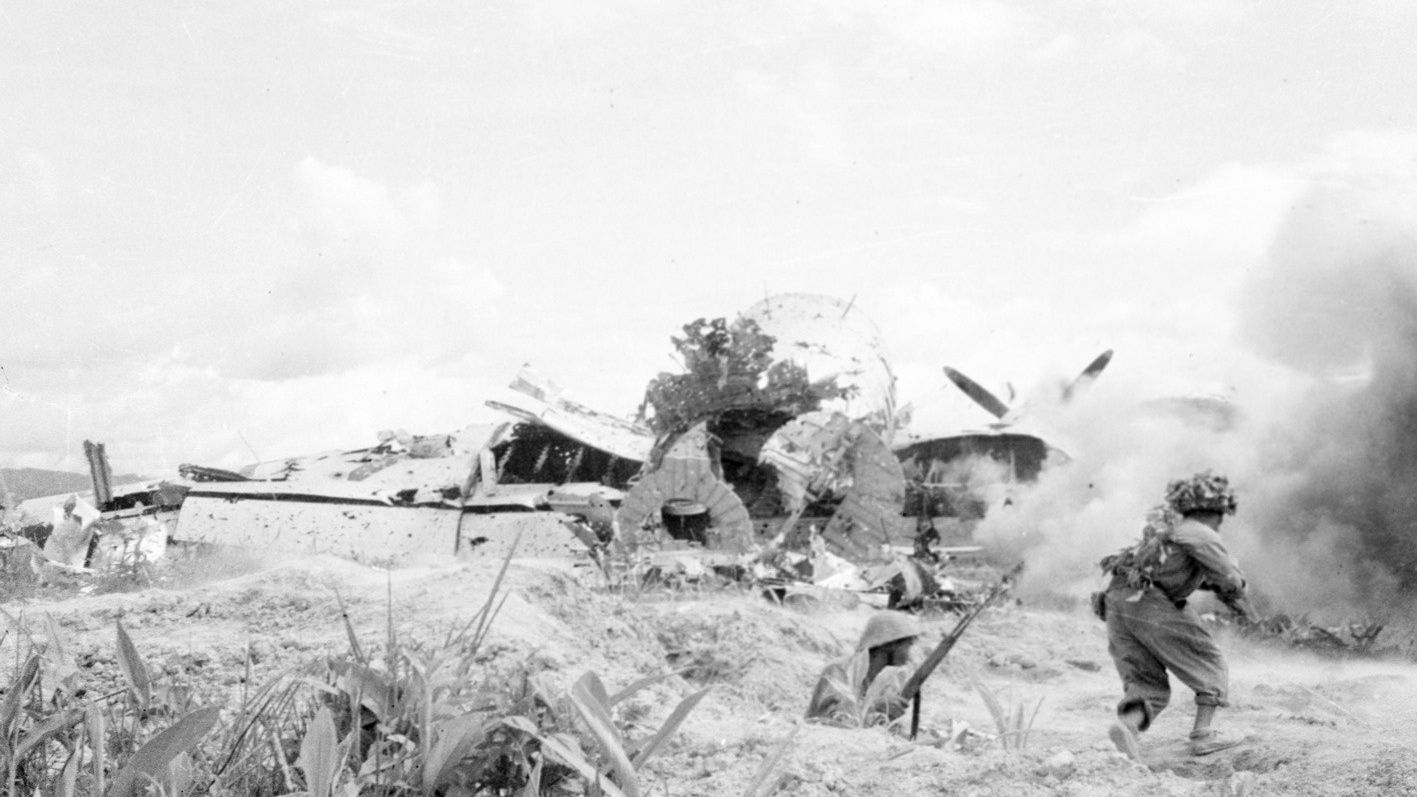
Our assault units attacked Muong Thanh airfield and took control of it from the afternoon of April 22nd, cutting off the supply lines to the fortified complex.
The enemy defending the outpost panicked and tried to retreat, but we intercepted them, killing over 100 and capturing 30. At 8:00 AM on April 18th, we had taken control of the northern outpost (an important stronghold protecting the airport), and our position advanced another 700 meters towards Muong Thanh.
On the night of April 18th, Regiment 165 launched a decisive attack on outpost 105.
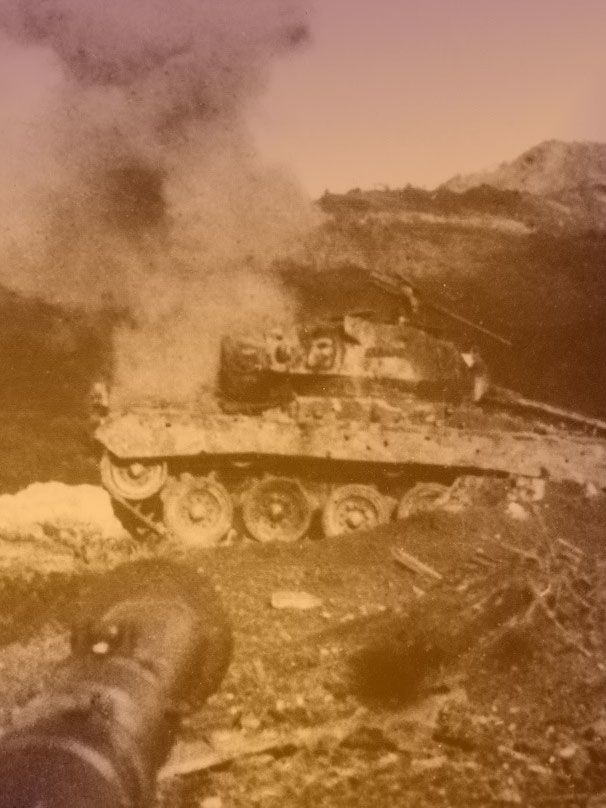
When the enemy deployed tanks to fill the trenches, the 36th Regiment, 308th Division, defending our trenches, was forced to retreat and use sniper rifles to fire at the enemy. When the aiming device malfunctioned, soldier Tran Dinh Hung calmly aimed at the target through the barrel, loaded the ammunition, and set a tank on fire. Comrade Hung's heroic deed completed the trench filling operation, forcing the enemy to retreat.
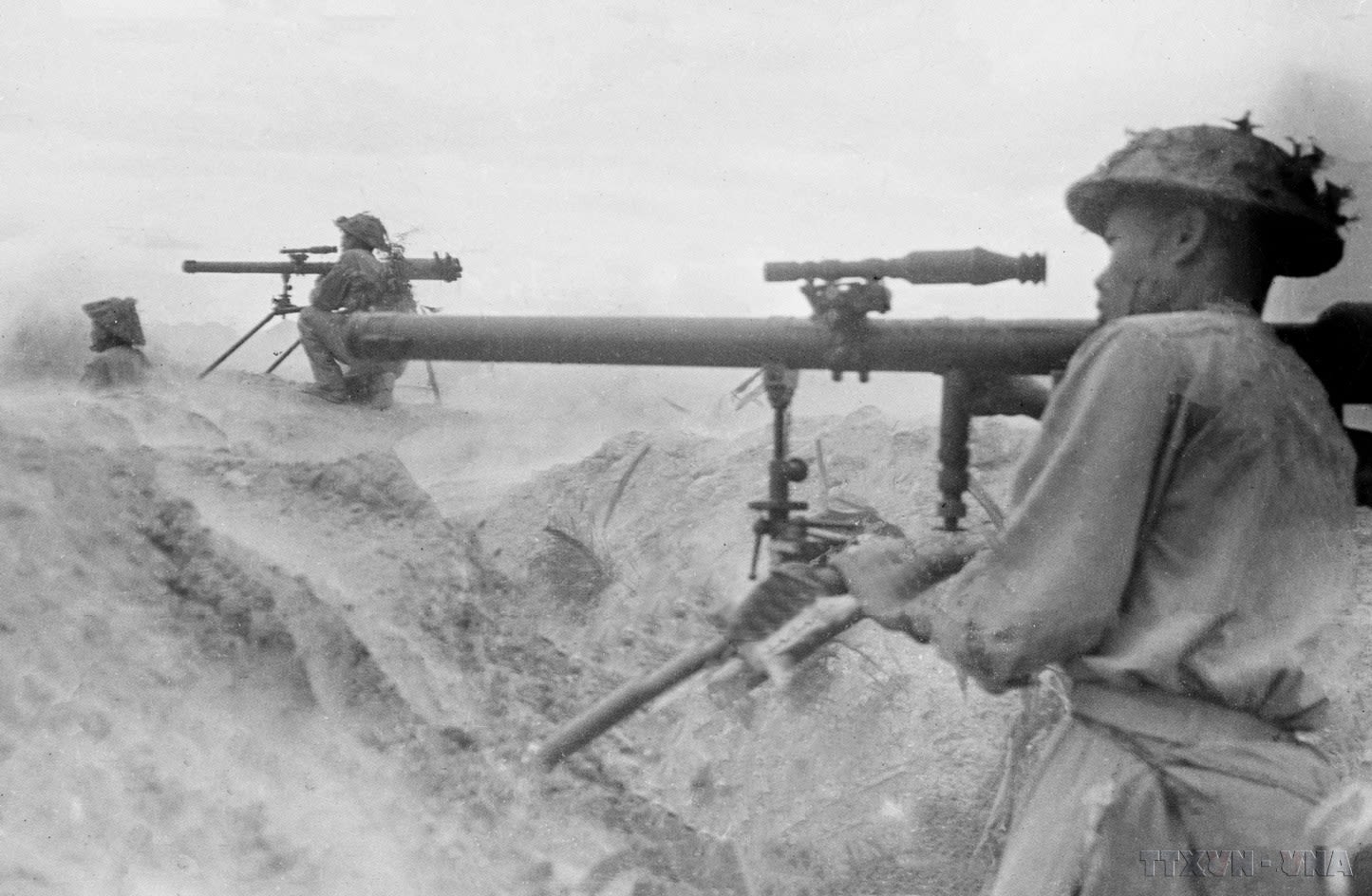
A DKZ gun unit provided cover for the assault force advancing on the central area of the Dien Bien Phu fortified complex.
The soldiers of the 36th Regiment also began to encounter a new difficulty. As the trenches approached the enemy's stronghold, the "scarecrow" became less effective; it could no longer block flanking fire or grenades thrown from within the fort, and it also revealed the soldiers' positions, resulting in some wounded. The speed of trench digging slowed down. The new recruits, who were guerrillas operating behind enemy lines, suggested digging underground tunnels all the way to the enemy's bunkers, which would both reduce casualties and maintain secrecy.
Initially, officials were hesitant to use this method because they feared it would prolong the preparation time. However, after a trial excavation by a team, they found it was no slower than digging open trenches, as they could excavate even during the day. The trench excavation method was accepted, although it was arduous, it avoided casualties.
The enemy side:
General Navarre returned to Saigon, and General Patridge announced that a US delegation would soon be sent to study the implementation of the Vautour (Vulture) plan, should the Pentagon approve his conclusions after his visit to Saigon.
The US aircraft carrier Spaipan transported 28 Corsair aircraft, sourced from the Philippines, to Da Nang airport.
The British government declared that it would not participate in the negotiations preparing for the Geneva Conference, nor would it provide any military support or intervention, however minimal, for the Battle of Dien Bien Phu.
At Dien Bien Phu:
Facing imminent annihilation, the enemy north of the airfield secretly withdrew at 3 a.m., but because our troops had dug trenches across the airfield, they were surrounded and deprived of water and food. Following their commander's orders, the retreating soldiers fired short bursts of bullets and threw clusters of grenades at us before fleeing.
Of the 120 soldiers, only about 60 remained, covered in blood and mud, managing to run 1,500 meters to take shelter at Huguette 2 outpost, arriving at 8 a.m. on Easter Sunday. The last outpost at the northern end of the airfield no longer existed.
After Huyguette 7 and Huyguette 6 were destroyed, Huyguette 1 became the outpost north of the central area. Located deep within the area, Huyguette 1 was commanded by Captain Chevalier and defended by the 4th Company of the 13th Foreign Legion Half-Brigade, which had previously rotated with a company of the 2nd Foreign Legion Infantry Regiment. Losing this position was unacceptable, as it meant losing the airfield. De Castries was forced to move two infantry platoons and two tanks, along with a Foreign Legion platoon, from the central area, under artillery support, to fill the trenches.
From Huguette 2, the enemy moved about 100 meters under the unfinished trench (due to an attack by our troops while digging the trench) and were also surrounded by the 36th Regiment's trench battle formation. The Foreign Legion soldiers here put up quite fierce resistance.
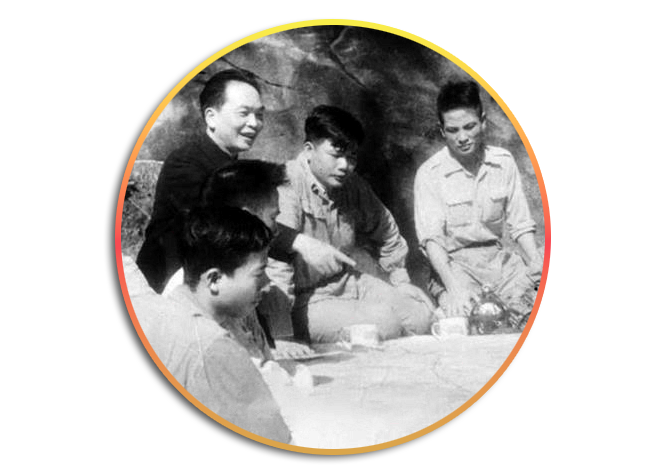
Recalling the days of fighting at Dien Bien Phu, Colonel Dinh Ngoc Tuong, Deputy Political Commissar of the Engineering Corps, wrote in his article "Engineering troops in the Dien Bien Phu Campaign" (Proceedings of the Scientific Conference "The Dien Bien Phu Victory - Historical and Contemporary Values (May 7, 1954 - May 7, 2019)): To meet the requirements of combat, the widespread use and development of the combined strength of all forces participating in ensuring mobility routes throughout the combat process facilitated the timely and secret conduct of the campaign. In the Dien Bien Phu Campaign, the engineering force ensuring mobility routes consisted of only one 151st Engineering Regiment, capable of repairing and restoring only a few existing roads; meanwhile, the need to ensure roads for artillery towing into the battlefield, and for transporting logistical supplies for hundreds of thousands of people for 5 months in sparsely forested mountainous areas, during the rainy season, and under constant enemy attacks. Therefore, In addition to the 151st Engineering Regiment, we mobilized up to 5,000 volunteer youth, civilian workers, and transportation personnel, as well as civilians, to participate in ensuring the safety of the road, spread out along nearly 250km."

Nhandan.vn
![[Image] Close-up of the newly discovered "sacred road" at My Son Sanctuary](/_next/image?url=https%3A%2F%2Fvphoto.vietnam.vn%2Fthumb%2F1200x675%2Fvietnam%2Fresource%2FIMAGE%2F2025%2F12%2F13%2F1765587881240_ndo_br_ms5-jpg.webp&w=3840&q=75)























![[Image] Close-up of the newly discovered "sacred road" at My Son Sanctuary](https://vphoto.vietnam.vn/thumb/402x226/vietnam/resource/IMAGE/2025/12/13/1765587881240_ndo_br_ms5-jpg.webp)






















































Comment (0)