

(Chinhphu.vn) - Local leaders must uphold their responsibility in disaster and incident prevention and control because they are the direct commanders on the spot and can make the wisest and most reasonable decisions at the time of an incident or disaster.
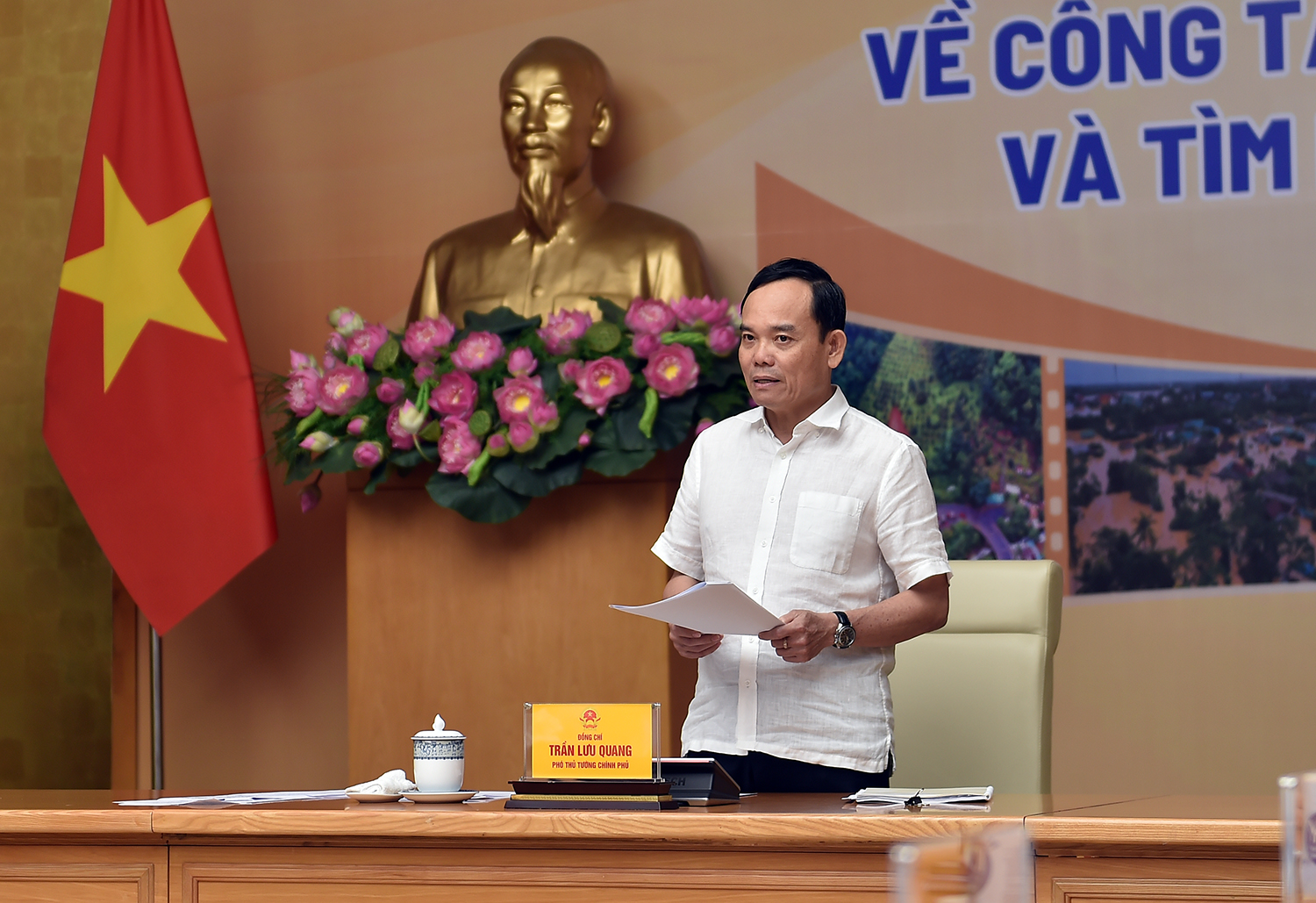
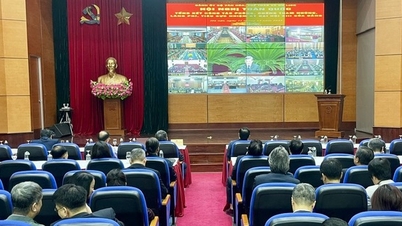
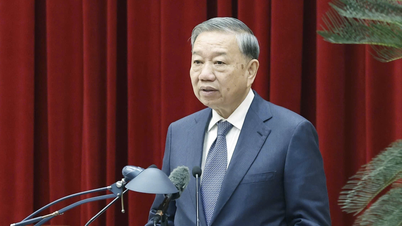
Deputy Prime Minister Tran Luu Quang speaks at the national online conference on natural disaster prevention, control, search and rescue in 2023 and deployment of key tasks in 2024 - Photo: VGP/Hai Minh
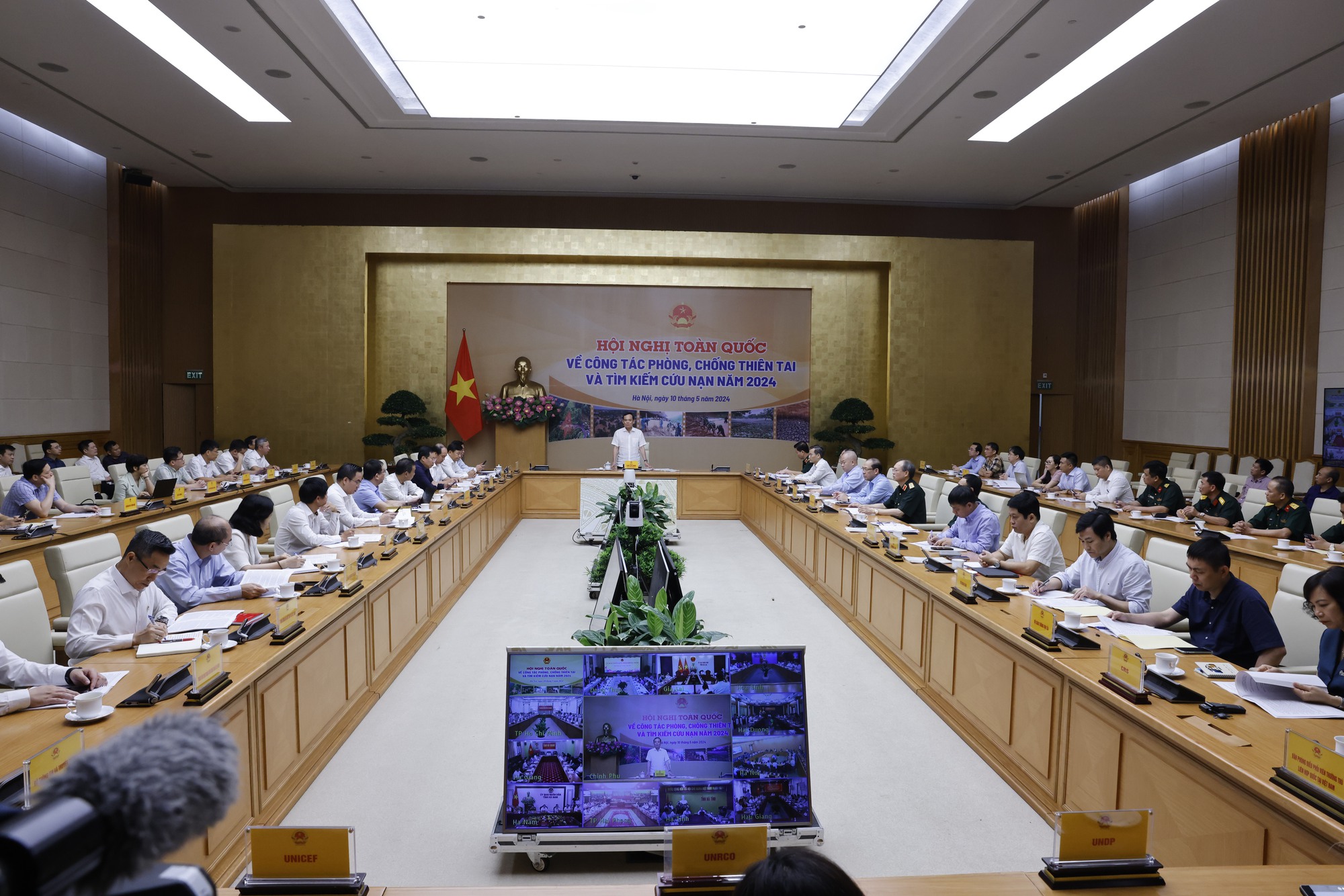
On the morning of May 10, at the Government Headquarters, Deputy Prime Minister Tran Luu Quang chaired a national online conference on disaster prevention, control, search and rescue in 2023 and deployment of key tasks in 2024.
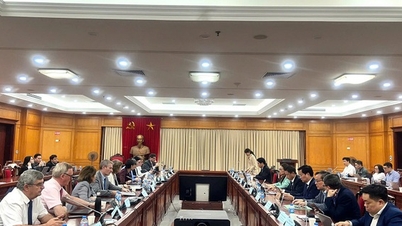
Attending the Conference at the Government Headquarters were Minister of Agriculture and Rural Development Le Minh Hoan, leaders of central ministries and branches, UN Resident Coordinator in Vietnam Pauline Tamesis, representatives of development partners and organizations UNDP, UNICEF, JICA.
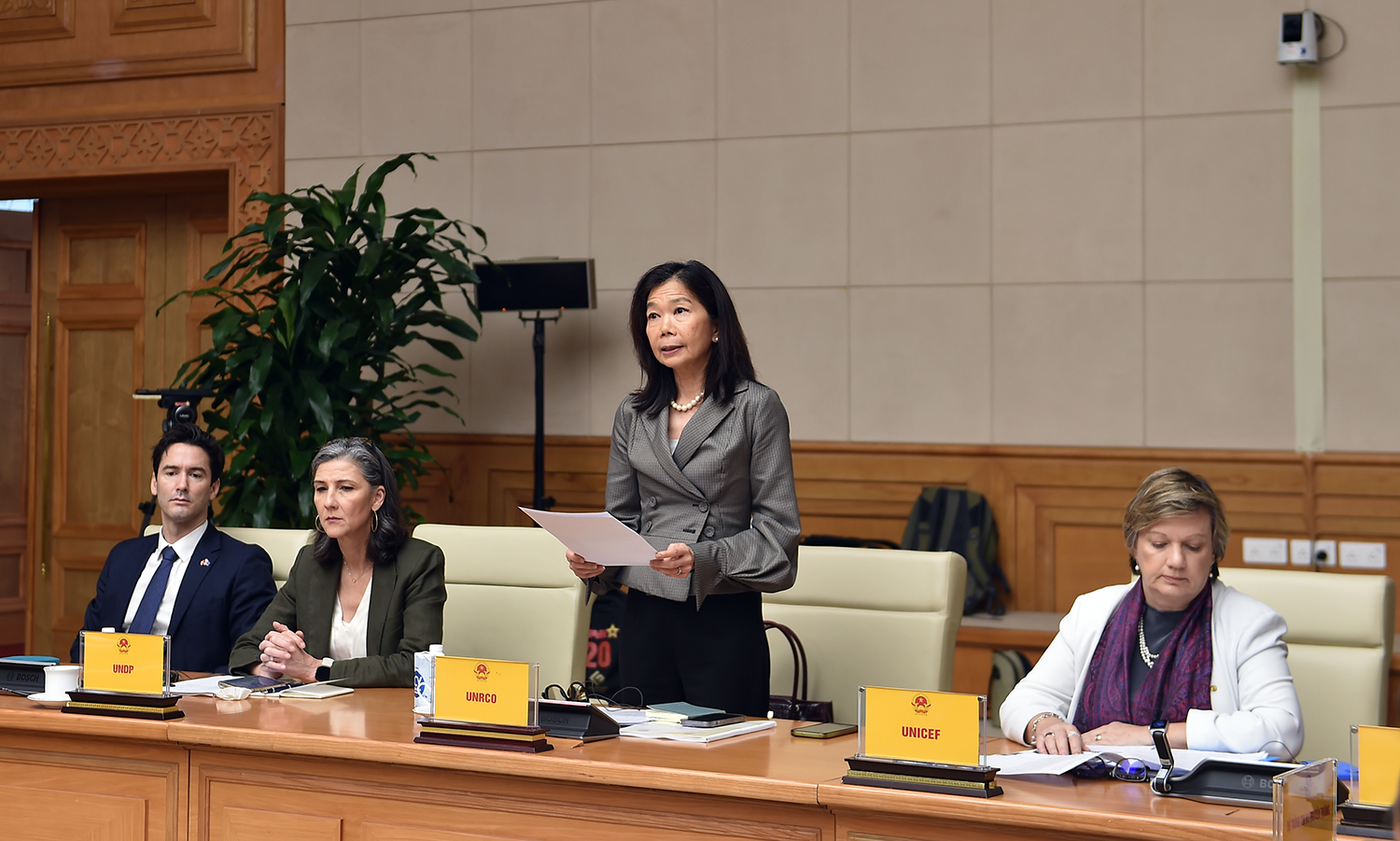
UN Resident Coordinator in Vietnam Pauline Tamesis stressed that one of the UN's priorities is to fund the institutionalization of early actions in disaster management - Photo: VGP/Hai Minh
The world lost 260 billion USD due to natural disasters
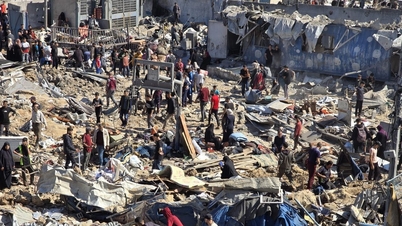
According to the Report at the meeting, in 2023, the world and the region experienced many major natural disasters with wide-ranging impacts, exceeding historical levels, causing very serious damage to people and property, typically the earthquake on February 6 in Turkey that killed over 55,000 people, economic damage of over 163 billion USD or flash floods due to dam failures in Libya that killed and left missing over 12,300 people, the strongest snowstorm in 100 years in 20 states in the West and Central of the United States, or the hottest year in history...
Swiss reinsurance group Swiss Re estimates that total economic losses caused by natural disasters worldwide last year could reach $260 billion.
In the early months of 2024, heavy rains caused flooding and dike breaches on Russia's Ural River, submerging 6,000 homes and forcing thousands to evacuate; heavy rains, floods, and landslides in Guangdong killed 48 people and displaced 110,000.
In Vietnam, natural disasters in 2023 occurred extremely in all regions with 1,964 natural disasters of 21/22 types, especially heavy rains causing landslides, flash floods, floods, and widespread inundation. It was an unusual year when the number of storms and tropical depressions was much less than the average of many years and no storms made landfall.
The year 2023 also saw more maritime accidents, building collapses, chemical incidents, toxic and radioactive contamination, oil spills, fires, and explosions, all of which were more serious than the previous year.
The whole country recorded 5,331 incidents and natural disasters, causing 1,129 deaths and missing people; economic damage due to natural disasters is estimated at over 9,324 billion VND.
In the first months of 2024, a number of serious natural disasters occurred across the country, such as severe cold in the Northern and Central regions; drought, saltwater intrusion, landslides and flooding due to high tides in the Mekong Delta, the most serious of which was in the Ca Mau region.
Notably, record-breaking heatwaves were recorded at 110 out of 186 weather stations nationwide; earthquakes were recorded in provinces and cities such as Hoa Binh, Lai Chau, Tuyen Quang, Hanoi, and Kon Tum.
Since the beginning of the year, natural disasters have left 14 people dead or missing, with material damage estimated at over 399 billion VND.

Localities attend the Conference online - Photo: VGP/Hai Minh
Disaster relief assistance hits record high
Regarding the work of overcoming the consequences of natural disasters, in 2023, the Government decided to support 8,500 billion VND from the central budget reserve for 43 provinces and cities to overcome the consequences of natural disasters.
Of the total support funds, the Government has allocated 4,000 billion VND to 13 localities in the Mekong Delta to implement projects for preventing and controlling riverbank and coastal erosion.
Along with the support, working groups have been established, chaired by the Steering Committee and the Ministry of Planning and Investment, to inspect the use of support resources for localities.
Localities have also prioritized and used resources for disaster prevention and control activities with a total budget of over 3,070 billion VND.
The Ministry of Agriculture and Rural Development has supplied 100 tons of rice seeds, 67 tons of corn seeds, 10 tons of vegetable seeds; and 56 tons and 10,000 liters of disinfectant chemicals for livestock, poultry, and aquaculture to localities to promptly stabilize production.
According to Deputy Minister of Agriculture and Rural Development Nguyen Hoang Hiep, the Government has never allocated as much budget for natural disaster prevention and control as in recent times.
Deputy Prime Minister Tran Luu Quang requested to strengthen inspection and supervision work, especially before the flood season - Photo: VGP/Hai Minh
Weather forecast for the whole country in the coming time
The General Department of Hydrometeorology said that in the coming time, natural disasters are likely to become complicated, unpredictable and extreme.
It is forecast that there may be many severe heat waves in many regions across the country with temperatures higher than the average of many years.
After El Nino, the impact of La Nina in the last months of the year can cause heavy rain and floods, especially in the Central region, accompanied by landslides and flash floods in mountainous areas.
The ENSO phenomenon will maintain a neutral state until June with a probability of 80-85%, then likely to transition to La Nina state with a probability of 60-65% and likely to last in the last months of 2024.
From April to June 2024, heat waves are likely to increase in intensity and gradually expand to other parts of the Northern, North Central and Central regions.
In the Northern and Central regions, hot weather and intense heat are likely to occur more frequently than the multi-year average in July and August, with precautions against exceptionally severe heatwaves.
The heat tends to decrease from the second half of August in the North and from September in the Central region.
Forecasts indicate that the drought will continue in the Central Highlands and Southern Vietnam until the first half of May; Central Vietnam is likely to experience prolonged drought from April to August.
From the end of June, there is a possibility of storms and tropical depressions appearing in the East Sea; there are about 11-13 storms in the East Sea, of which 5-7 storms are likely to affect the mainland. Storm and tropical depression activity is likely to be concentrated in the second half of the storm season from September to November.
At the meeting, localities requested the central government to continue providing financial support to localities to overcome the consequences of natural disasters in 2023, build resettlement areas to relocate people in emergency situations, and upgrade critical reservoirs, dams, and dike sections.
Local authorities also requested that central ministries and agencies develop and submit to competent authorities for promulgation Decrees and Decisions to replace Decree No. 02/2017/ND-CP and Decision No. 01/2016/QD-TTg, which have expired.
Ha Tinh province, one of the localities with the most reservoirs in the country (348 reservoirs with a total capacity of about 1.6 billion m3 of water), wishes to soon implement the project to build Trai Doi reservoir, which has been approved by the Prime Minister.
Ha Tinh also hopes that central ministries and branches will help the province research comprehensive solutions to enhance flood drainage capacity and minimize flooding in the Ngan Sau river basin.
Thua Thien Hue province has requested central ministries and agencies to allocate resources for the early implementation of inspection and evaluation of safety management of irrigation and hydropower dams and reservoirs.
Dak Nong province proposed focusing on increasing forest cover and the quality of forest cover; and developing a strategy to reorganize agricultural production to better adapt to weather instability and natural disasters.
Ca Mau province is facing three challenges at the same time: coastal erosion, lack of domestic water in the dry season while 90% of groundwater is used, and the risk of forest fires; it is recommended that when reorganizing the civil defense steering committee according to the Civil Defense Law, which will take effect from July 2024, it is necessary to pay due attention to the role of sectors and fields, especially the agricultural sector.
Speaking at the conference, the UN Resident Coordinator in Vietnam, Pauline Tamesis, emphasized that one of the UN's priorities is to fund the institutionalization of early action in disaster management.
Ms. Pauline Tamesis suggested that Vietnam needs to integrate early actions into its institutional framework and policy mechanisms, and ensure sufficient financial resources are available to implement these early actions in disaster management.
For early action in disaster management, accurate and reliable disaster data and information, along with the ability to analyze that data, are crucial in understanding the most vulnerable groups, especially women and children.
Ms. Pauline Tamesis also recommended that Vietnam further strengthen empowerment and prioritize community participation in disaster risk management.

Deputy Prime Minister Tran Luu Quang and delegates took a souvenir photo at the Conference - Photo: VGP/Hai Minh
Creating a favorable legal corridor for disaster prevention, control, search and rescue
Concluding the Conference, the Deputy Prime Minister highly appreciated all levels and sectors for closely monitoring the situation; being proactive in directing response and overcoming consequences relatively well on the general level of the whole country compared to many previous years; the quality of hydrometeorological forecasting has improved a lot, which is very encouraging; policy mechanisms have been adjusted very promptly, especially the birth of the Law on Civil Defense... contributing to minimizing damage caused by natural disasters and incidents in recent times.
However, the Deputy Prime Minister frankly acknowledged that the awareness of officials and people is still incomplete in some areas; not all places are doing a good job of inspection, supervision, and urging, even before the natural disaster and flood season.
Monitoring, forecasting, and early warning work also has issues that need to be rectified and improved; some legal regulations are not clear, overlap, or are not suitable, some of which were issued 15 years ago.
On a national level, the resilience of infrastructure is still limited, so it needs to be gradually invested in and developed.
Regarding the tasks in the coming time, the Deputy Prime Minister requested to focus on preparing to perfect the apparatus for natural disaster prevention, control, search and rescue according to the Law on Civil Defense, ensuring that the new apparatus operates faster, stronger and more effectively. The Ministry of National Defense will closely coordinate with relevant ministries and branches to soon develop a Decree guiding the implementation of the Law on Civil Defense.
The Deputy Prime Minister instructed ministries and agencies to continue refining and amending legal documents; and to boldly propose new regulations to create a complete and favorable legal framework for disaster prevention, control, and search and rescue operations.
We need to improve and make communication more effective in raising awareness among everyone, especially those in positions of responsibility, through social media or text messages….
The Deputy Prime Minister requested that inspection and supervision be strengthened, especially before the rainy season; and that disaster and incident response scenarios be regularly reviewed, calculated, and updated to be as close to reality as possible.
The hydro-meteorological forecasting agency must continue to improve the quality of forecasts to be as timely and accurate as possible, the Deputy Prime Minister requested.
The Deputy Prime Minister also suggested that each locality focus on improving its management capacity; increase the delegation of authority and raise the responsibility of local leaders because they are the direct commanders on the spot, and can make the wisest and most reasonable decisions at the time of incidents and natural disasters.
The Deputy Prime Minister emphasized the need to mobilize investment resources and other resources for natural disaster prevention, control, search and rescue, focusing on mobilizing social resources for overcoming the consequences of natural disasters and incidents in the spirit of promoting the tradition of sharing in times of difficulty and adversity.
Deputy Prime Minister Tran Luu Quang hopes that international organizations will continue to accompany Vietnam, especially in exchanging and sharing information and experiences with other countries; supporting professional training, especially in accurate forecasting; and paying attention to investing in projects to build infrastructure, equipment for natural disaster prevention and control, and search and rescue using non-refundable aid and preferential loans./.
Hai Minh - Government Portal
Source: https://baochinhphu.vn/nguoi-dung-dau-dia-phuong-phai-neu-cao-trach-nhiem-trong-phong-chong-thien-tai-102240510142856613.htm
![[Photo] Prime Minister Pham Minh Chinh holds a phone call with the CEO of Russia's Rosatom Corporation.](/_next/image?url=https%3A%2F%2Fvphoto.vietnam.vn%2Fthumb%2F1200x675%2Fvietnam%2Fresource%2FIMAGE%2F2025%2F12%2F11%2F1765464552365_dsc-5295-jpg.webp&w=3840&q=75)


![[Photo] Closing Ceremony of the 10th Session of the 15th National Assembly](/_next/image?url=https%3A%2F%2Fvphoto.vietnam.vn%2Fthumb%2F1200x675%2Fvietnam%2Fresource%2FIMAGE%2F2025%2F12%2F11%2F1765448959967_image-1437-jpg.webp&w=3840&q=75)









































![[OFFICIAL] MISA GROUP ANNOUNCES ITS PIONEERING BRAND POSITIONING IN BUILDING AGENTIC AI FOR BUSINESSES, HOUSEHOLDS, AND THE GOVERNMENT](https://vphoto.vietnam.vn/thumb/402x226/vietnam/resource/IMAGE/2025/12/11/1765444754256_agentic-ai_postfb-scaled.png)












































Comment (0)