

Some problems during the visa application process are entirely avoidable if travelers are careful and honest when filling out their applications.
Many tourists, despite having sufficient financial means, face difficulties and rejections when applying for overseas travel visas. When embassies send visa rejection letters, most tourists only know the general reasons: "suspicions about returning to Vietnam" or "unreliable purpose of entry." The reasons for visa rejection are quite diverse, but most can be avoided if you have a genuine purpose and ability for your overseas trip.
Disorganized files
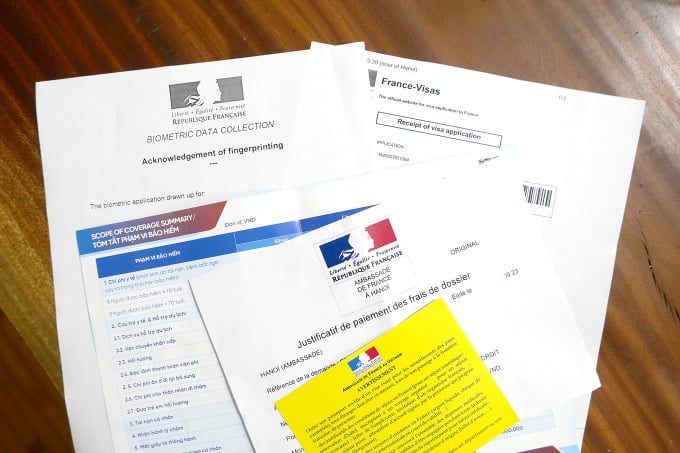
When applying for a European visa, a long travel history is a plus for travelers. (Photo: Provided by the interviewee)
Preparing your application is like putting the key into the "visa lock." A good application means you've found the right key, and vice versa.
First, you need to carefully read the visa application instructions on the official website of the respective embassies in Vietnam. These instructions usually include a complete list of required documents, the quantity of each item, whether notarization is necessary, whether original copies need to be submitted, and the required size of passport photos. If you follow the instructions precisely, your application will already meet more than half of the requirements.
However, many travelers are still confused when preparing their documents: they need to submit notarized English documents but only submit notarized Vietnamese documents, they need to submit a salary slip with a red stamp but only submit a photocopy, they need a passport photo with a white background but submit a photo with a blue background, and they mistakenly buy a low-level travel insurance package despite the high required coverage.
Organizing your documents in the correct order as instructed is also a way to impress the visa officer. Some travelers submit dozens of pages of documents but arrange them haphazardly, causing the officer to lose patience or be unable to read all the papers, increasing the risk of visa rejection.
The information doesn't match.
A fundamental requirement for visa applications is that all information in the documents must match. Many travelers are careless and provide inaccurate information, and even a small discrepancy can cast doubt on the purpose of their trip. For example, the expiration date on the insurance certificate may not match the departure and return flight dates, the number of days booked in the hotel may be less or more than the number of days you will be in the country, or the duration of your leave may be shorter than the duration of your trip.
Ensuring your application is accurate, consistent, and transparent isn't difficult; you just need to be meticulous and focused throughout the process. The visa application form must be filled out completely and carefully, with all information such as date of birth, passport number, and registered address matching your original documents down to the last letter and number.
Travel history is too thin.
While not a deciding factor, having traveled to many countries before will be an advantage in your visa application. If you apply for a visa to countries with strict requirements like the US, Australia, or Europe on your first trip abroad with a blank passport, your chances of getting a visa may be affected.
Therefore, for your first overseas trips, you can visit neighboring Southeast Asian countries that have visa-free policies for Vietnamese tourists and are quite attractive, such as Thailand, Malaysia, Indonesia, and Cambodia. After that, you can move on to South Asian, East Asian, and Northeast Asian countries with more lenient visa policies, such as India, China, South Korea, and Japan. Once your travel history is extensive, it will be easier to obtain visas from countries with stricter requirements.
Unclear proof of financial resources or personal background.
Many tourists believe that being wealthy, having a family, and a career makes it easier to obtain a visa. In reality, tourists with low incomes, who are single, or even those not employed by any organization, can still obtain a tourist visa, as long as they can clearly demonstrate their financial stability and personal background.
On your application, you need to demonstrate that you have sufficient funds to cover the trip and a sound personal financial situation. It's not necessary to have multiple savings accounts, land titles, or vehicle registration papers, but your personal bank statements (issued by the bank) should show monthly income and expenses that are commensurate with the amount you intend to spend on the trip. Many tourists apply for European visas with monthly spending accounts of only a few million dong; this makes it difficult for visa officers to believe they have enough money for travel and a genuine purpose for their trip.
Students, self-employed individuals, and anyone else can apply for a visa, provided they clearly demonstrate their identity with all relevant documents showing they have a stable life in Vietnam: student ID card, certificates, awards, and prizes from competitions or community activities, products or services offered, online stores they manage, and letters of recommendation from partners or employers. These documents are often not on the embassy's list of required materials, but including them will greatly enhance the visa applicant's trust in you.
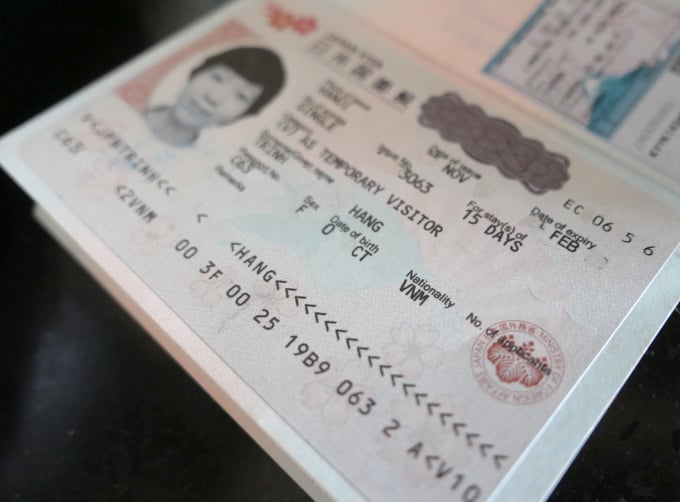
Tourists should invest time in creating a well-planned itinerary, visa application letter, and other documents that are transparent and truthful in order to have their application approved. (Photo: Provided by the interviewee)
Too lazy to make a schedule.
On travel forums and groups, you may frequently encounter tourists asking for itineraries to copy into their visa applications. This is a mistake that can easily lead to visa rejection, as you may easily miss or mix up details in the itinerary. Since you didn't create the itinerary yourself, you won't notice any inconsistencies.
Planning your itinerary is crucial for every trip, so take the time to prepare it in detail and thoroughly. Visa officers will look at it to assess your true purpose for the trip – whether it's genuinely for tourism and whether you're serious about it. A reasonable and detailed itinerary is best: which airline you'll fly to the destination, flight number, arrival and departure times from Vietnam, how you'll travel between locations by train or bus, how long you'll spend in each city, hotel addresses in each location, addresses of each attraction, ticket prices, and opening and closing times. Some travelers get visas even with very simple itineraries because other elements of their application are already strong enough. However, if your application is weak, a detailed itinerary is essential.
Too lazy to write a visa application letter.
Similar to the travel itinerary, many travelers simply copy visa application letters from the internet to include in their applications, unaware that this is a significant drawback. Writing the letter is relatively simple; you just need to clearly state the purpose of your trip, why you chose that country as your destination, and commit to returning after your trip. Within a single page, you can build trust with the visa officer through your sincerity and honesty – the most important condition for visa approval.
Trinh Hang
Source link























































































Comment (0)