

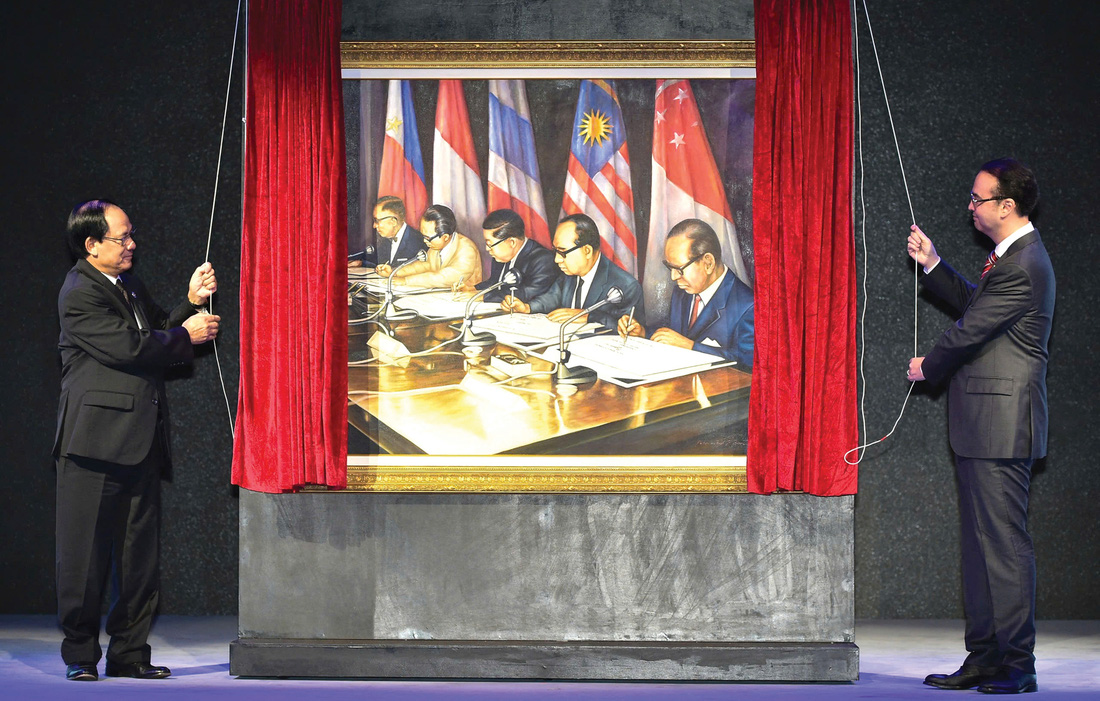
ASEAN Secretary-General Le Luong Minh (left) and Philippine Foreign Minister Alan Peter Cayetano unveil a painting depicting the ASEAN founders at a conference in Manila in August 2017 – Photo: AFP
On the occasion of Vietnam's National Day on September 2nd, Mr. Le Luong Minh, Vietnam's first diplomat to serve as ASEAN Secretary-General and twice chaired the Executive President of the United Nations Security Council, shared with Tuoi Tre newspaper interesting stories about the diplomatic profession and the milestones of the country's integration.
For ASEAN, what is right must always be in the interest of peace , stability, and development of the region as well as each member state.
Former ASEAN Secretary-General LE LUONG MINH
Balancing individual and collective interests
* How is ASEAN different when you were Secretary-General compared to ASEAN today, sir?
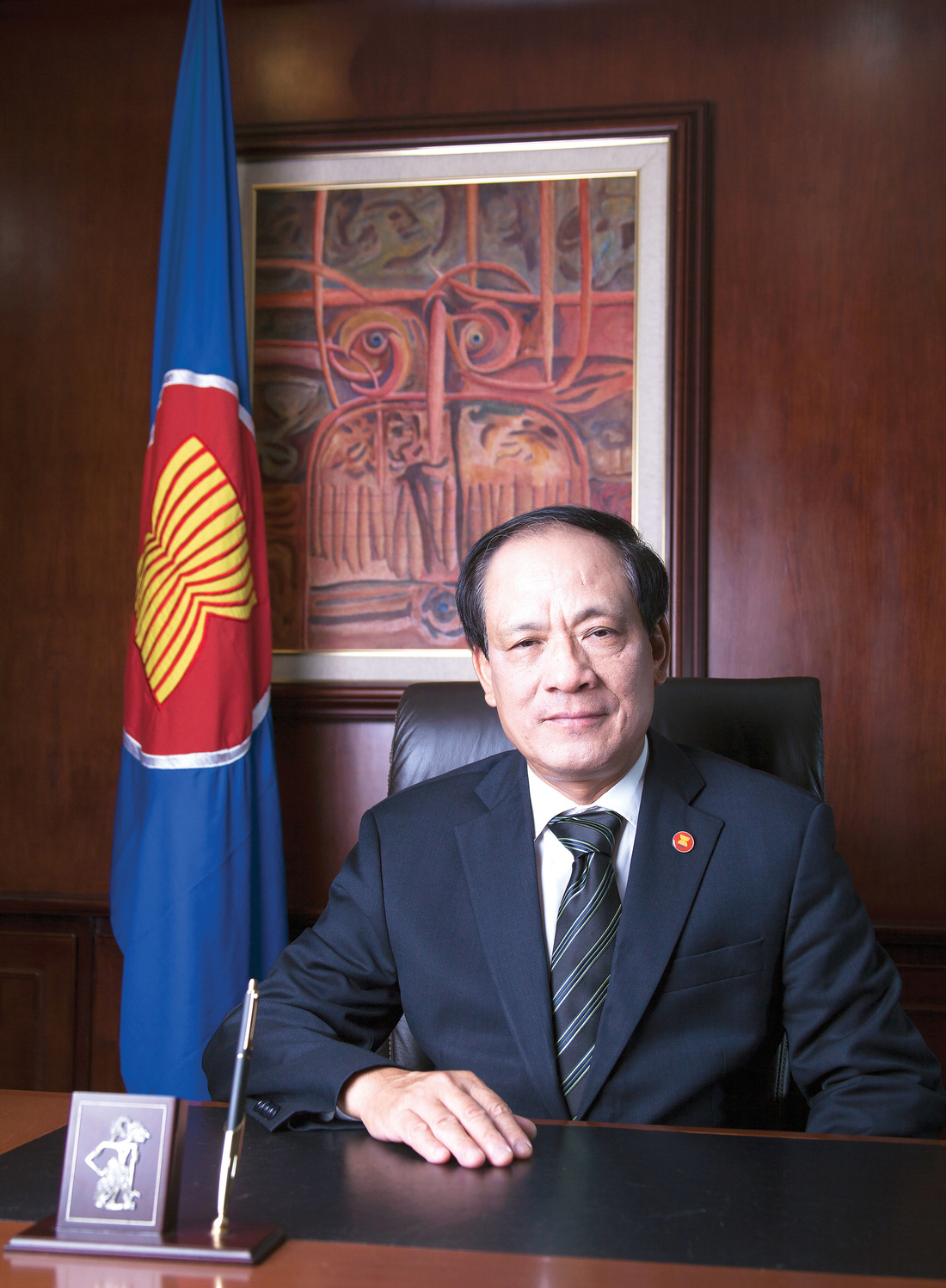
Former ASEAN Secretary-General Le Luong Minh
– When I began my term as ASEAN Secretary-General in January 2013, ASEAN was only halfway to establishing the ASEAN Community in 2015, with a combined GDP of only about US$2.3 trillion, making it the seventh largest economy in the world.
Currently, ASEAN's total GDP has reached approximately US$3.8 trillion, making it the fifth largest economy in the world.
ASEAN is also in the final stages of realizing the ASEAN Vision 2025, and has completed the content of the ASEAN Vision beyond 2025 to 2045. Overall, in the economic field, ASEAN has made remarkable progress despite also suffering the severe consequences of the COVID-19 pandemic.
However, in the security and political sphere, the situation has become much more complicated due to the conflict in Myanmar, with many dangerous consequences such as the emergence of sensitive ideas and proposals that threaten the integrity of the ASEAN Way.
During my term as Secretary-General, ASEAN, through its mediation and conciliation efforts, successfully resolved the consequences of border disputes between two member states, helped Myanmar gradually stabilize under the leadership of a reconciliation government and become a major destination for foreign investment, and helped Thailand quickly restore democratic mechanisms after the 2014 political upheaval.
Currently, ASEAN is striving to implement the Five-Point Consensus on Myanmar, but it is proving very difficult as the conflict in Myanmar intensifies.
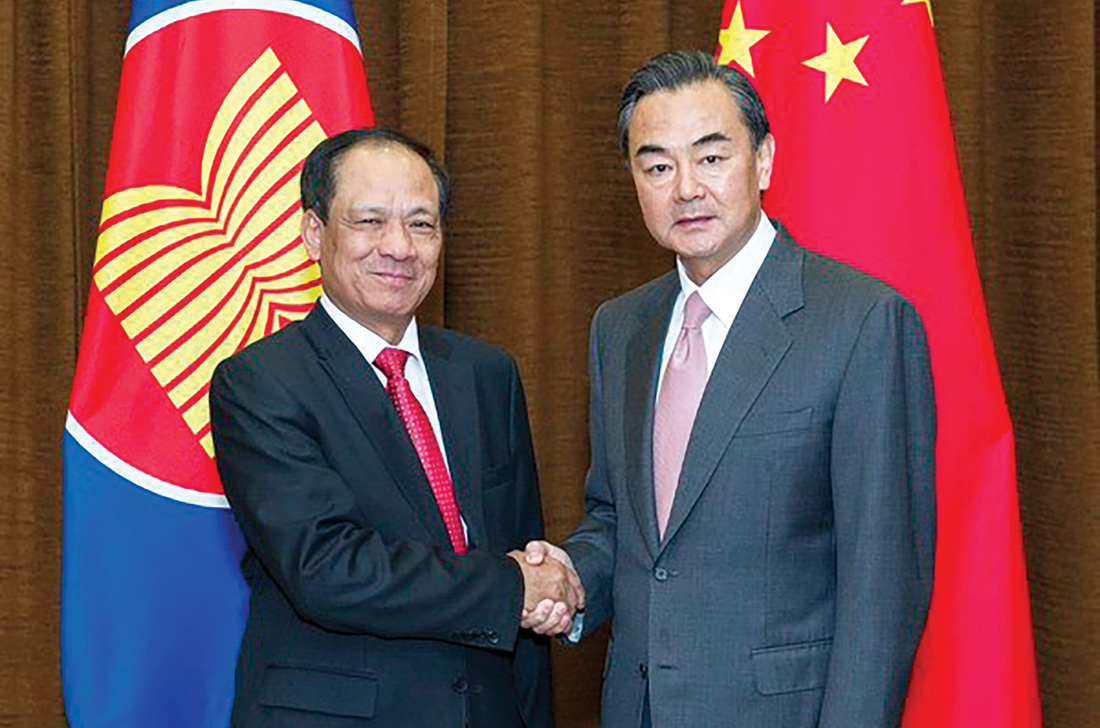
ASEAN Secretary-General Le Luong Minh met with Chinese Foreign Minister Wang Yi during his visit to China in 2013 – Photo: VNA
* What are the biggest differences between your work at the United Nations and ASEAN?
– The United Nations and ASEAN share the commonality of being multilateral organizations, but differ in scale: global and regional.
In terms of scale, ASEAN is like a miniature United Nations: 10 compared to nearly 200 members. In terms of scope of work, there's not much difference, as almost all issues discussed at the United Nations fall on ASEAN's agenda in various mechanisms, under the three pillars of security-politics, economics, and socio-cultural affairs.
The biggest difference between ASEAN and the United Nations lies in the mechanisms for adopting and the significance of resolutions or decisions. The United Nations makes decisions primarily through voting, except in cases where consensus is reached during consultations.
ASEAN does not have a voting mechanism, except for secret ballots to elect two of the four deputy secretaries-general. ASEAN decisions are primarily made on the basis of consensus, one of the fundamental principles of the ASEAN Way, aiming to ensure voluntariness, leave no one behind, and the feasibility of agreements, thereby maintaining unity and solidarity within the bloc.
The relationships and interactions between colleagues at the United Nations and ASEAN are also different. While at the United Nations, colleagues can be representatives of allied, neutral, or opposing countries, in ASEAN, colleagues are representatives of member states sharing common interests within the framework of the "ASEAN Family."
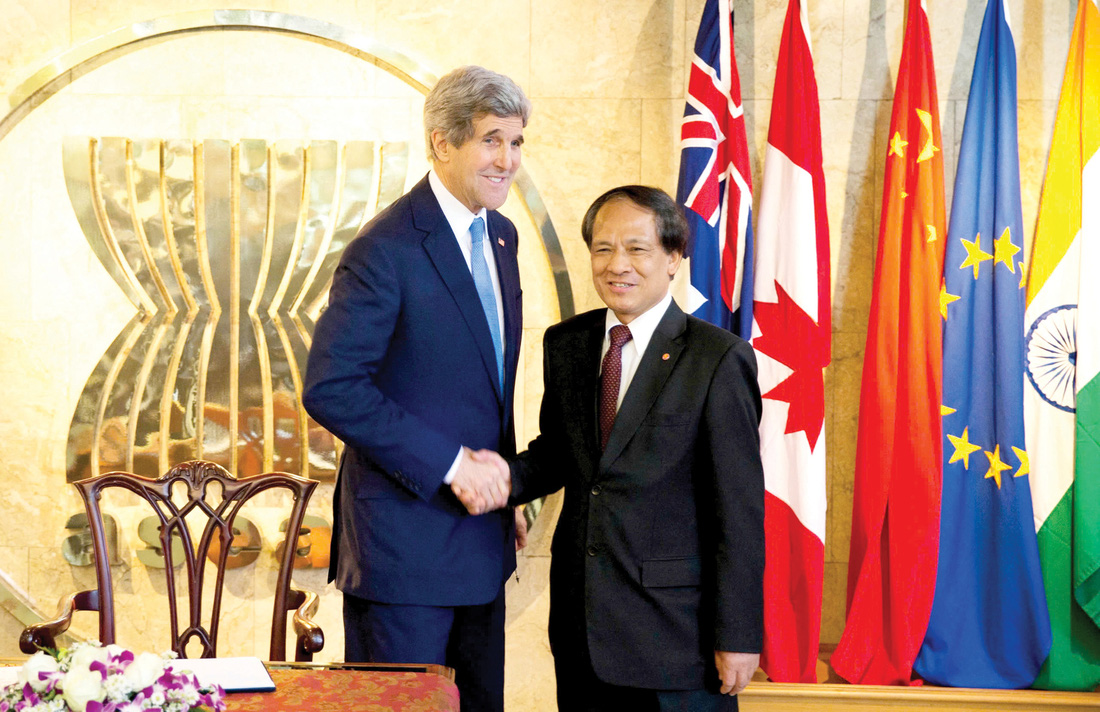
ASEAN Secretary-General Le Luong Minh met with US Secretary of State John Kerry in February 2014 in Jakarta, Indonesia – Photo: MOFA.GOV.VN
* What experience at the United Nations helped you fulfill your responsibilities in ASEAN?
– My work experience and relationships at the United Nations have greatly helped me in fulfilling my responsibilities in ASEAN. This included a nearly eight-year term as Ambassador and Head of the Permanent Mission to the United Nations (during which Vietnam was elected as a non-permanent member of the Security Council for the first time), and two stints as Executive President of the Security Council. My experience in multilateral forums, as well as my guiding principle throughout my career of being sincere in my relationships with colleagues – "I may not always be able to tell the truth, but I never lie" – have been invaluable.
* When you assumed the position of ASEAN Secretary-General, what were the difficult, even intractable, issues that the ASEAN Secretariat had to face, resolve, and overcome?
– During my time as Secretary-General and up to the present day, the South China Sea has remained one of the most challenging and difficult issues facing ASEAN and the ASEAN Secretariat. On numerous occasions, when I have spoken out on ASEAN's common position, I have been directly criticized by representatives of non-ASEAN countries that are parties to the dispute.
Maintaining its central role requires ASEAN, the ASEAN Secretariat, and the ASEAN Secretary-General himself to be courageous and able to reconcile and balance national interests with the common interests of the entire bloc.
* What are your thoughts on the assertion that, under any circumstances, ASEAN will always have to stand between the US and China?
– As has been observed for many years, ASEAN has consistently been caught in the middle of the Sino-American rivalry, the competition between major powers, not only in Southeast Asia but also in the broader Asia-Pacific and Indo-Pacific regions.
ASEAN's policy of non-partisanship in disputes between major powers should be understood as not choosing to ally with one country against another, not as isolating ASEAN from what is right, even if that right often lies between two sides. And what is right, for ASEAN, must always be in the interest of peace, stability, and development of the region as well as of each member state.
Beyond many other and often contradictory interpretations, in my opinion, this is the fundamental essence of ASEAN's central policy.
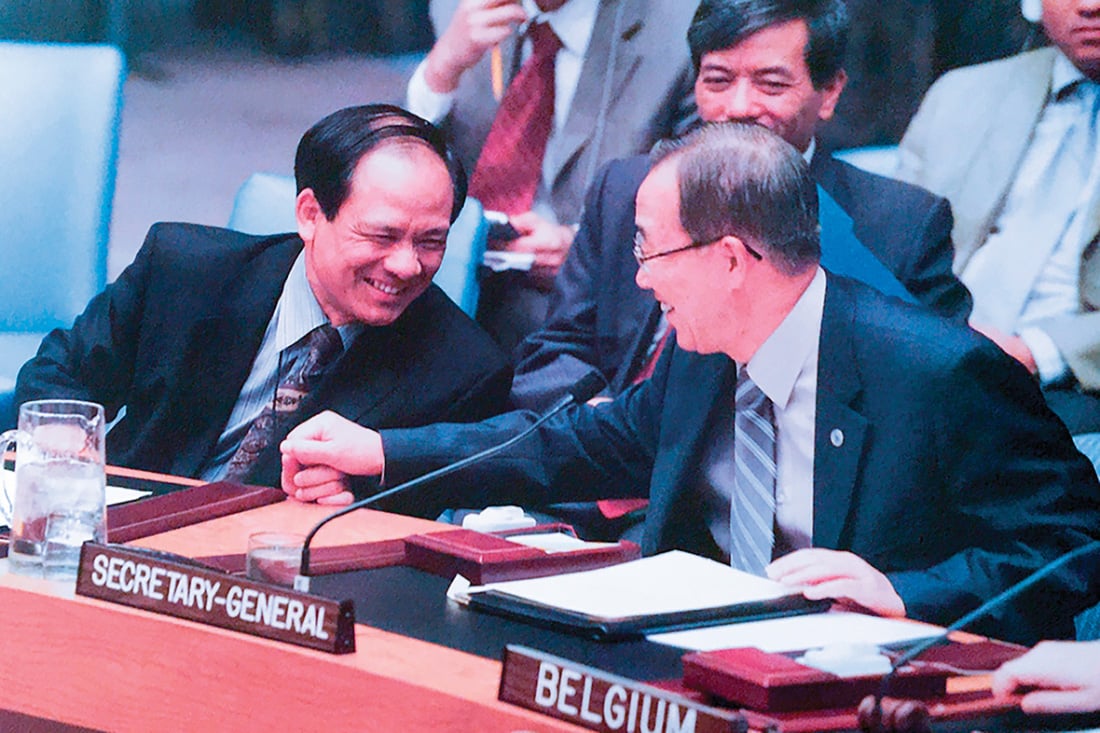
Ambassador Le Luong Minh, Head of the Permanent Mission of Vietnam to the United Nations, and UN Secretary-General Ban Ki-Moon during a Security Council meeting chaired by Mr. Minh – Photo: MINISTRY OF FOREIGN AFFAIRS
Opening up a new chapter.
* As someone whose entire career has been dedicated to multilateral diplomacy, how do you assess Vietnam's milestone of joining ASEAN?
– In my opinion, the normalization of relations with the US and joining ASEAN at almost the same time opened up a situation where Vietnam escaped the grip of blockade and embargo and became a member of one of the two most successful and promising regional organizations in the world.
* There is an opinion that when Vietnam joined ASEAN, we were in a passive position in participating in free trade agreements (FTAs) because we only participated as an ASEAN member in FTAs with other partners. What is your view on this?
– That assessment is correct but incomplete. We integrated and opened our economy later than other ASEAN countries, our economy is still small, and our negotiation experience is limited, so caution in participating in bilateral FTAs is natural.
This assessment would be more complete if it were pointed out that the bilateral FTAs Vietnam signs with its partners often have higher commitments and standards compared to agreements signed by ASEAN or ASEAN member states. This stems from Vietnam's policy of deeper integration and export-oriented economic development, and from the partners' unwillingness to accept lower levels of commitment and standards than those they have previously agreed upon with partners. The FTA Vietnam signed with the European Union (EVFTA) can be taken as a prime example.
* As an increasingly important voice in ASEAN, what should Vietnam do to continue being a leading voice on the bloc's issues, sir?
– Besides the United Nations and ASEAN, Vietnam is also a member of many other important international organizations such as the Francophone Community, the Non-Aligned Movement, the Asia-Pacific Economic Cooperation Forum, the Asia-Europe Cooperation Forum, and the World Trade Organization, and has signed 16 free trade agreements with important partners.
Vietnam has also established diplomatic relations with most members of the United Nations, including Comprehensive Partnerships, Strategic Partnerships, or Comprehensive Strategic Partnerships with 30 countries, including the five permanent members of the UN Security Council.
This, coupled with political stability and exceptional economic growth, gives Vietnam a significant advantage and a powerful voice in resolving ASEAN issues, especially those affecting our practical interests such as the South China Sea, climate change, management and utilization of the Mekong River, counter-terrorism, and combating drug trafficking…
To continue playing a leading role in these important and practical issues, Vietnam needs to strengthen cooperation and coordination with other member states to maintain ASEAN's central role in the Asia-Pacific regional structure.
This is not always easy due to the differences in interests among member states, particularly regarding the South China Sea issue.
ASEAN prioritizes cooperation on youth.
* Looking to the future, how do you expect young people from Vietnam and other member countries to contribute to the future ASEAN community?
– Nearly 40% of the current ASEAN population is aged between 15 and 35, defined as youth. With the ongoing trend of population aging in many ASEAN countries, in the coming decades, today's youth will play a crucial role in many aspects of social life within the ASEAN Community.
For many years, cooperation on youth has been a priority area for ASEAN. Since 2017, ASEAN has developed an index for youth development in its member countries. Young, even very young, faces have emerged in the leadership of some member countries, faces previously only seen in developed nations.
With the prioritized policies and correct orientations of ASEAN in general and each member country in particular, coupled with the inherent dynamism of youth in East Asia and Southeast Asia, I have complete confidence in the bright future of ASEAN youth in general and Vietnamese youth in particular, as well as their contributions to realizing the goals set out in the ASEAN Community Vision after 2025 to 2045: building a resilient, dynamic, inclusive, people-centered ASEAN that is in harmony with youth.
A career closely tied to multilateral diplomacy.
Mr. Le Luong Minh (born in 1952) began his diplomatic career in the early days of Vietnam's reunification in 1975, when he was appointed as an officer at the Vietnamese Embassy in Canada after graduating from the Diplomatic Academy and participating in an intensive training course in English and linguistics at Jawaharlal Nehru University in India.
He served as Deputy Minister of Foreign Affairs for 10 years until his retirement in 2018, with a career closely tied to multilateral diplomacy. He spent many years working at the United Nations headquarters in New York (USA) and Geneva (Switzerland).
As head of the Vietnamese Delegation to the United Nations, he twice served as President of the Security Council when Vietnam was first elected as a non-permanent member for the 2008-2009 term.
He was also the first Vietnamese to hold the position of ASEAN Secretary-General, serving from January 1, 2013 to December 31, 2017. This is a position that, according to the principle of rotation, would not be held by another Vietnamese person for 50 years, since 2013.
Tuoitre.vn
Source: https://tuoitre.vn/nha-ngoai-giao-le-luong-minh-asean-nhu-lien-hiep-quoc-thu-nho-20240829132554766.htm#content-1



















![[Video] The craft of making Dong Ho folk paintings has been inscribed by UNESCO on the List of Crafts in Need of Urgent Safeguarding.](https://vphoto.vietnam.vn/thumb/402x226/vietnam/resource/IMAGE/2025/12/10/1765350246533_tranh-dong-ho-734-jpg.webp)










































Comment (0)