

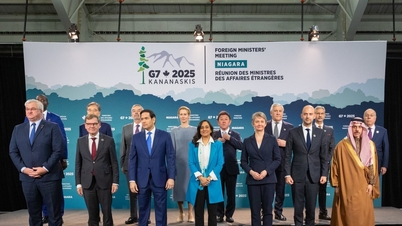
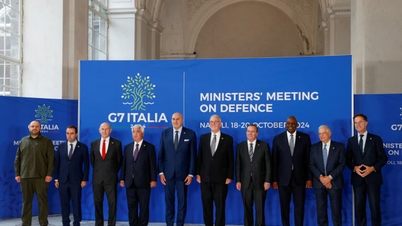
At the same time, this recommendation will be discussed at the Group of Seven (G7) meeting in September.
Japan currently holds the rotating G7 presidency. The countries are also considering rules for governing AI through a process in Hiroshima – a cabinet-level forum to discuss the technology.
"We intend to take the lead in discussions toward the formation of international rules," Takeaki Matsumoto, Minister of Internal Affairs and Communications, said at a Japanese government strategy meeting last week.

Guidance on AI in the development stage will target companies of a certain size, such as OpenAI and Google. They will be required to publicly disclose the mechanisms and features behind the technology being developed.
Developers are encouraged to disclose the risks behind AI and explain the measures taken to mitigate risks from input and output data that could lead to biased or criminal behavior.
For example, the guidelines include calling on developers to create contact points where users can request corrections to inappropriate or inaccurate content generated by AI programs.
At the end-user level, the principle emphasizes the responsibility of companies to restrict the use of general AI programs for discrimination or criminal purposes, among other inappropriate behaviors.
According to Nikkei Asia , at G7 discussions, there is a difference between the US approach of letting businesses self-regulate and the European Union's view on binding rules. For example, proposed EU regulations would require disclosure of AI-generated content. Users would be obligated to temporarily suspend the use of high-risk AI systems if problems occur.
In the US, President Joe Biden will soon issue an executive order related to this technology. Seven major AI companies signed a self-regulatory code of conduct in late July, and the executive order will give the agreement legal standing.
In addition, Washington is expected to issue restrictions on US investment in sensitive technologies in China this week. The new executive order targets private equity firms, investment funds, and joint ventures operating in the semiconductor, quantum computing, and artificial intelligence sectors.
The tightening of investment flows shows that the U.S. is “filling the gaps” in existing regulations. Cordell Hull, a former Commerce Department official, said, “We have technology export bans and new investment regulations that will help close the gaps in the flow of capital and technological know-how.”
Accordingly, the new regulations are not expected to take effect immediately, and the government will gather further comments from stakeholders. Washington has held consultations with allies and other parties involved in this issue.
(According to Nikkei Asia)
Source





























































































Comment (0)