

With the thirst for high-quality semiconductor chips being stifled by US sanctions, Huawei has just made a shocking move in the technology world. The Chinese giant claims that its new software can create a 'simulated AI chip' with processing speeds 1,000 times faster than its fierce rival Nvidia.
Huawei recently officially introduced Flex:ai, an open-source orchestration tool designed to thoroughly optimize the capacity of large-scale computing clusters.
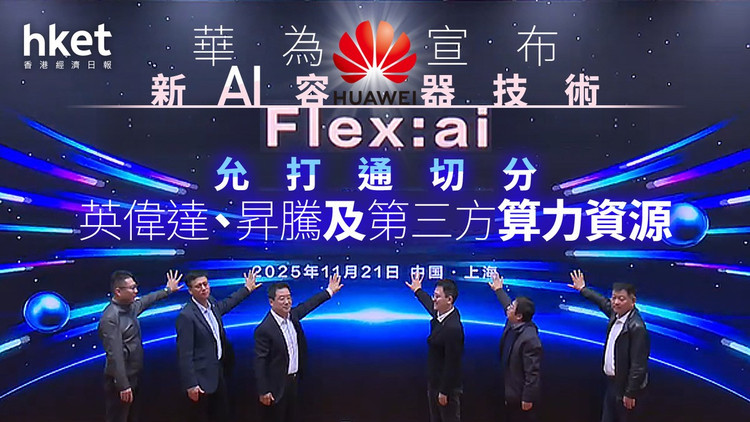
Launch of Flex:ai orchestration tool for supercomputing clusters.
Built on top of Kubernetes and released through the ModelEngine community, Flex:ai is more than just a management tool.
It is seen as an urgent solution to China's current strategy of 'using software to make up for hardware'.
Huawei's most notable claim is that it can "create a simulated AI chip that is 1,000 times faster than Nvidia's." While it hasn't released the technical details behind this huge number, in terms of practical efficiency, Huawei claims Flex:ai increases the average utilization of AI chips by about 30%.
Instead of letting accelerators (GPU/NPU) run separately and waste resources, Flex:ai uses a smart virtualization mechanism. This tool 'slices' physical GPU or NPU cards into multiple virtual compute instances.
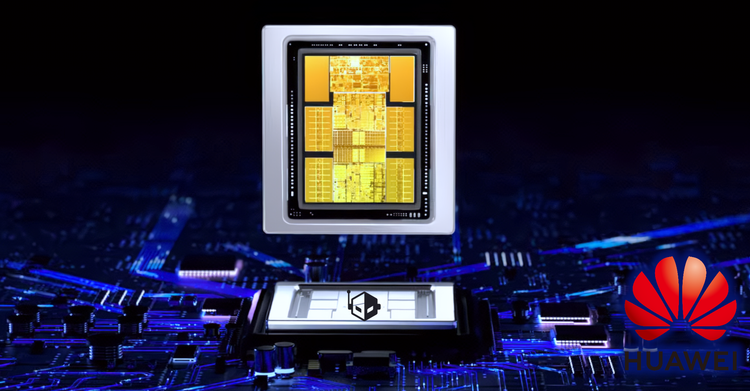
Do the emulated chips have the speed that Huawei claims?
For small tasks: Flex:ai stacks them to maximize resource headroom. For massive AI models: It allows workloads to be spread across multiple cards, overcoming the physical limitations of a single device.
The heart of the system is the 'Hi Scheduler' - capable of dispatching idle resources in real-time, ensuring no computing power is wasted while AI tasks are waiting in line.
Ambition to unify heterogeneous chip systems
The big difference between Flex:ai and existing solutions is cross-compatibility. While tools like Run:ai (acquired by Nvidia in 2024) focus on the Nvidia ecosystem, Flex:ai aims to unify different types of hardware. It has strong support for Huawei's homegrown Ascend chips alongside other standard GPUs.
The tool was developed with contributions from researchers at Shanghai Jiaotong University, Xi'an Jiaotong University, and Xiamen University (China).
Currently, Huawei has not yet released the source code and specific test results. Experts are raising big questions about whether Flex:ai is really compatible with popular GPUs smoothly through standard plugins? And is the number '1,000 times faster' a real breakthrough or just a marketing comparison in an emulator environment? The answer will be available when Flex:ai is officially available to the programming community.
Source: https://khoahocdoisong.vn/phai-chang-huawei-tao-ra-chip-ai-mo-phong-nhanh-hon-1000-lan-nvidia-post2149072921.html


















![[Photo] Worshiping the Tuyet Son statue - a nearly 400-year-old treasure at Keo Pagoda](/_next/image?url=https%3A%2F%2Fvphoto.vietnam.vn%2Fthumb%2F1200x675%2Fvietnam%2Fresource%2FIMAGE%2F2025%2F12%2F02%2F1764679323086_ndo_br_tempimageomw0hi-4884-jpg.webp&w=3840&q=75)
![[Photo] Parade to celebrate the 50th anniversary of Laos' National Day](/_next/image?url=https%3A%2F%2Fvphoto.vietnam.vn%2Fthumb%2F1200x675%2Fvietnam%2Fresource%2FIMAGE%2F2025%2F12%2F02%2F1764691918289_ndo_br_0-jpg.webp&w=3840&q=75)






































































Comment (0)