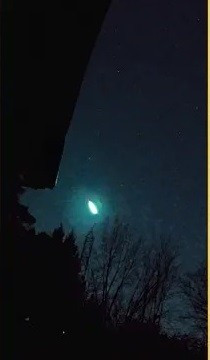
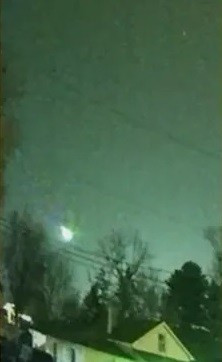
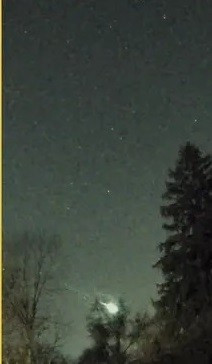
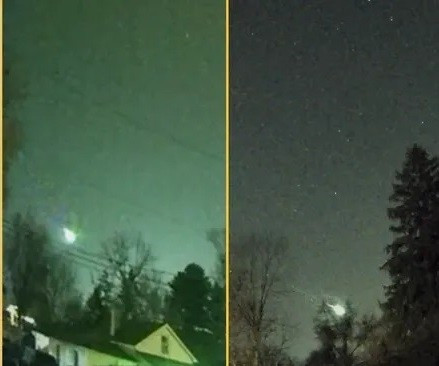
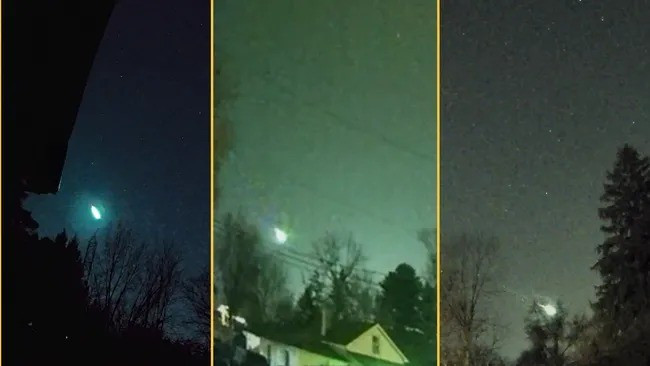
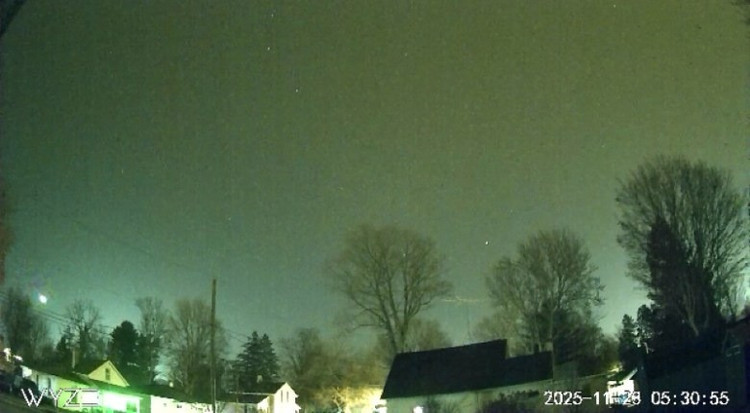
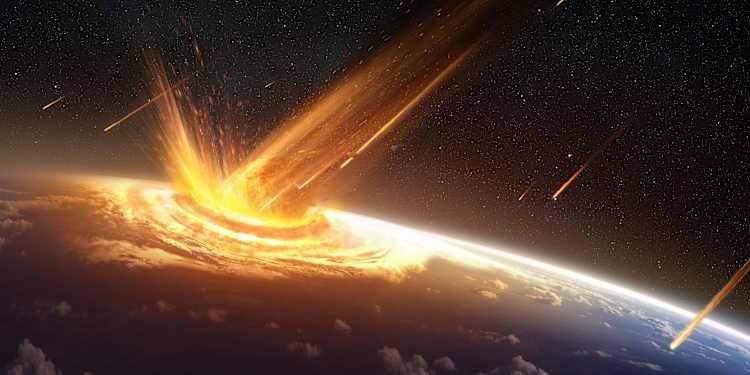
Video from cameras belonging to the Michigan Storm Chasers organization captured a green fireball appearing in the sky over the Great Lakes region (USA) at about 5:29 a.m. on November 23. The footage, posted on Facebook, quickly attracted the attention of the online community. Photo: Skippy the Magnificent Destroyer of Worlds Romancer of Women/© Bam B/© Jeremy Downard. Dozens of witnesses also reported seeing a meteorite moving quickly across the sky before exploding into a fireball. Many believe the meteorite was likely a comet fragment, burning up in the atmosphere, creating a greenish glow over the Great Lakes region. Photo: Skippy the Magnificent Destroyer of Worlds Romancer of Women/© Bam B/© Jeremy Downard. According to the American Meteor Society (AMS), the fireball was seen by many people in the states of Michigan, Wisconsin, Indiana, and even as far away as Lancaster, Ohio. Photo: Skippy the Magnificent Destroyer of Worlds Romancer of Women/© Bam B/© Jeremy Downard. NASA then tracked the meteorite’s path using video and other reports. According to the agency, it began to become visible at an altitude of 100 km above Lake Hubbard, traveled at a speed of 160,000 km/h for about 132 km, and finally disintegrated at an altitude of 74 km above Lake Huron. Photo: Skippy the Magnificent Destroyer of Worlds Romancer of Women/© Bam B/© Jeremy Downard. According to NASA, the meteor over the Great Lakes appears to be a small, isolated comet fragment, not part of any ongoing meteor shower like the Leonid meteor shower, which runs from November 6 to 30. Photo: Skippy the Magnificent Destroyer of Worlds Romancer of Women/© Bam B/© Jeremy Downard. Leonid meteors are known for their high speeds, hitting Earth’s atmosphere at around 260,000 km/h, turning into bright fireballs, sometimes leaving a long trail of light. Photo: Skippy the Magnificent Destroyer of Worlds Romancer of Women/© Bam B/© Jeremy Downard. Most comets and meteors are visible to the naked eye, but photographing them requires specialized astrophotography equipment. Photo: Adam Bower. According to the AMS, meteorites sometimes glow green due to their high concentrations of metals, such as nickel. Different elements can create fireballs of different colors: sodium produces a bright yellow while magnesium is a bright blue. Photo: SciTechDaily.com. The world has recorded many cases of meteorites emitting green light. In July 2022, a green fireball appeared above New Zealand. In November 2022, another meteorite fell into Lake Ontario, becoming the smallest asteroid ever recorded with a diameter of only 40-60 cm. Photo: Future Publishing via Getty Images. Readers are invited to watch the video: Universe map with more than 900,000 stars, galaxies and black holes. Source: THĐT1.
Source: https://khoahocdoisong.vn/sao-choi-chay-sang-ngoan-muc-tren-bau-troi-my-post2149073320.html



 Báo Khoa học và Đời sống•03/12/2025




















![[Photo] Parade to celebrate the 50th anniversary of Laos' National Day](/_next/image?url=https%3A%2F%2Fvphoto.vietnam.vn%2Fthumb%2F1200x675%2Fvietnam%2Fresource%2FIMAGE%2F2025%2F12%2F02%2F1764691918289_ndo_br_0-jpg.webp&w=3840&q=75)







































































Comment (0)