

In this process, the intellectual and scientific community within the Vietnam Union of Science and Technology Associations plays a particularly important role, serving as both the core force in creating knowledge and as key participants in policy planning and the transfer of breakthrough solutions for green transformation and sustainable development.
Developing science and technology, innovation, and digital transformation are not only strategic directions but have become intrinsic requirements for the country's development process.
Resolution No. 57-NQ/TW affirms that the vigorous development of science, technology, innovation, and digital transformation is a strategic breakthrough, creating a solid foundation for the successful implementation of green transformation, aiming towards sustainable development, improving the quality of life for the people, and ensuring national independence, self-reliance, security, and safety.
Along with the National Strategy on Green Growth, the National Strategy on Climate Change, the National Action Plan on Sustainable Development for the period 2023–2030, and programs on energy saving, renewable energy development, and circular economy , the major policy framework of the Party and State has considered the application and transfer of green and clean technologies as a core pillar to realize the commitment of net zero emissions by 2050.
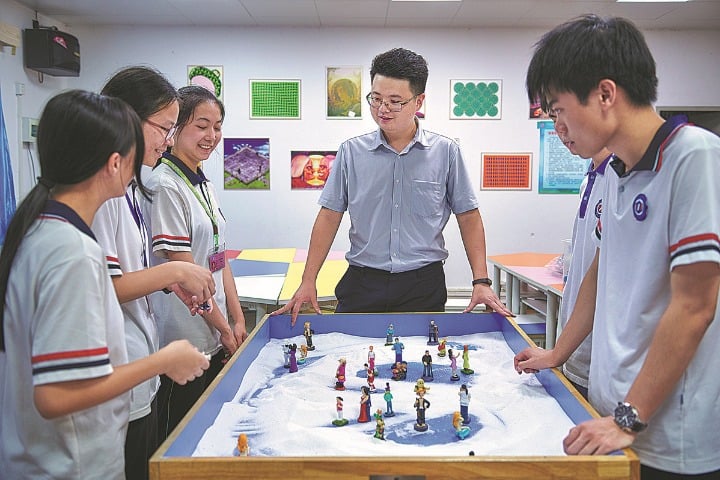
Within that framework, the Vietnam Union of Science and Technology Associations is a socio -political organization of the scientific and technological intellectual workforce, functioning to unite intellectuals both domestically and internationally; acting as a bridge between industry associations, scientific and technological organizations, and Party, State, Fatherland Front, local authorities, and the business community. It is a space that brings together the intellect of tens of thousands of scientists and experts from diverse fields, ranging from natural sciences, engineering, and technology to economics, social sciences, and the environment, capable of deeply participating in solving strategic national problems, including green transformation and sustainable development.
In recent years, the intellectual workforce within the Vietnam Union of Associations system has affirmed its role through many in-depth activities.
In terms of social consultation, critique, and assessment, national professional associations and local federations have chaired and participated in thousands of tasks related to strategies, plans, programs, and projects at the central and local levels. From energy planning, infrastructure development, urban development, agriculture, resources, and the environment to poverty reduction programs and development of remote areas, many suggestions and recommendations from scientists have been incorporated and revised, thereby helping to improve policies, mitigate risks, save resources, enhance the efficiency of public investment, and minimize negative impacts on the ecological environment. Many consultation and critique tasks have contributed to saving the State hundreds, even thousands of billions of dong, but more importantly, have created sound policy decisions based on scientific arguments, with a long-term and sustainable approach.
In the field of scientific research and technology deployment, the institutes, centers, and scientific and technological organizations under the Union of Associations have implemented hundreds of projects at various levels, closely linking research with the practical requirements of production and life.
Organic farming models, ecological farming, climate-smart farming, the use of organic fertilizers and biological products, circular livestock farming models, agricultural waste treatment linked to biomass energy development; solutions for forest protection, water resource management, responding to saltwater intrusion and coastal erosion; sustainable livelihood models for ethnic minorities… are vivid evidence that science and technology have reached the most challenging areas, where solutions that are both scientific and appropriate to local social and cultural conditions are required.
Science and technology organizations within the Union of Associations system not only contribute to economic growth but also directly participate in achieving goals of poverty eradication, community capacity building, and environmental protection. Thousands of jobs have been created for young intellectuals and technical experts; hundreds of international aid projects and domestic projects have been implemented, focusing on sustainable agricultural and forestry development, marine economy, forest economy, livelihoods in disadvantaged areas, and adaptation to climate change.
In addition, the system of professional associations, magazines, publishing houses, newspapers, websites, and communication channels of the Union of Associations has become a "bridge of knowledge," widely disseminating scientific and technical advancements, and raising people's awareness of green transition, sustainable consumption, and cleaner production.
International cooperation is also a highlight. Through participation in multilateral and bilateral mechanisms on science, technology, engineering, training, and knowledge dissemination, the Vietnam Union of Associations has strengthened the position of Vietnamese intellectuals on the international stage, while expanding opportunities to attract financial, technical, and intellectual resources for domestic development. Relations with regional and international organizations in the fields of science, technology, and innovation have helped many proposals and initiatives from affiliated institutes and centers access support programs, enhance capacity, and contribute to spreading the image of a proactive and responsible Vietnam in addressing global issues.
However, in light of the new demands of green transformation and sustainable development, the role of intellectuals and scientists within the Vietnam Union of Associations system is increasingly being challenged with higher, more difficult, and more demanding tasks.
First and foremost, it is a task to continue addressing bottlenecks in awareness, institutions, infrastructure, and human resources. Implementing Resolution 57 is not just about developing more projects and programs, but a process of profound innovation in thinking, eliminating conservative and stagnant attitudes, complacency, and resistance to change, and overcoming the notion that investment in science, technology, and environmental protection is an expense, rather than an investment in the future.
The intellectual workforce within the Union of Associations system must truly be a pioneering force, possessing a scientific, objective, and persuasive voice in proposing policies and defending long-term strategic choices, even when those choices require adjustments to short-term interests.
Simultaneously, scientists need to intensify research, development, and proposals for new technologies and models to serve green transformation and the circular economy, ranging from renewable energy technologies, energy storage, biotechnology, and new materials, to digital solutions in resource management, carbon governance, and emission monitoring. The Union of Associations should be a place to gather, select, and introduce green solutions and technologies with breakthrough potential, and participate more strongly in advising on public investment programs, urban planning, industrial parks, energy infrastructure, and digital infrastructure towards green, smart, and sustainable development.
Another important responsibility is to contribute to the development of high-quality human resources to meet the demands of the new era.
In implementing Resolution 57, the intellectual workforce within the Union of Associations system not only directly participates in teaching, training, and fostering, but also shares experiences and accompanies the younger generation through career guidance activities, innovative entrepreneurship, technical innovation competitions, scientific awards, and dialogue forums between scientists and students, businesses, and managers. With their professional prestige and practical experience, scientists can inspire and nurture the aspiration for research, innovation, and dedication to science and the goal of green and sustainable development.
In the context of the strong digital transformation taking place across all sectors, the intellectual and scientific community within the Vietnam Union of Associations system also needs to take the lead in applying digital technologies, from artificial intelligence, big data, the Internet of Things to open digital platforms, to science management, connecting expert networks, sharing knowledge, and transparentizing scientific information. Simultaneously, they should support ministries, sectors, and localities in building data systems to serve the planning of green transformation policies. Extensive international cooperation, proactive participation in global green research networks, joint training programs, and technology transfer with international organizations and developed countries will create additional leverage for Vietnamese knowledge to integrate and contribute more positively to the international community.
For these contributions to be effective, a decisive and coordinated effort from the entire political system is needed, along with close cooperation among ministries, sectors, localities, businesses, science and technology organizations, and the intellectual community itself. Promoting the role and driving force of science and technology in implementing the green transformation is not only a professional task of the science and technology sector, but a common cause of the entire nation. When the intellectuals and scientists within the Vietnam Union of Science and Technology Associations are given the opportunity to fully utilize their capabilities, courage, and dedication, Resolution 57 will be implemented with concrete and practical results; the path to a rapidly developing, green, smart, self-reliant, and prosperous Vietnam by the middle of the 21st century will be shortened by the strength of Vietnamese knowledge and creativity.
Source: https://mst.gov.vn/phat-huy-vai-role-doi-ngu-tri-thuc-trong-dot-phat-trien-khoa-hoc-cong-nghe-thuc-day-chuyen-doi-xanh-va-phat-trien-ben-vung-197251210184830331.htm
















![[Video] The craft of making Dong Ho folk paintings has been inscribed by UNESCO on the List of Crafts in Need of Urgent Safeguarding.](https://vphoto.vietnam.vn/thumb/402x226/vietnam/resource/IMAGE/2025/12/10/1765350246533_tranh-dong-ho-734-jpg.webp)



















































Comment (0)