

Concerned about the prolonged Russia-Ukraine conflict, many people hoped President Donald Trump would urge both sides to freeze hostilities and sit down for negotiations.
Will the White House create a miracle, "giving a gift to Russia"? What will the negotiation path be like? It's difficult to fully answer such a large and complex question, but we can outline a few things.
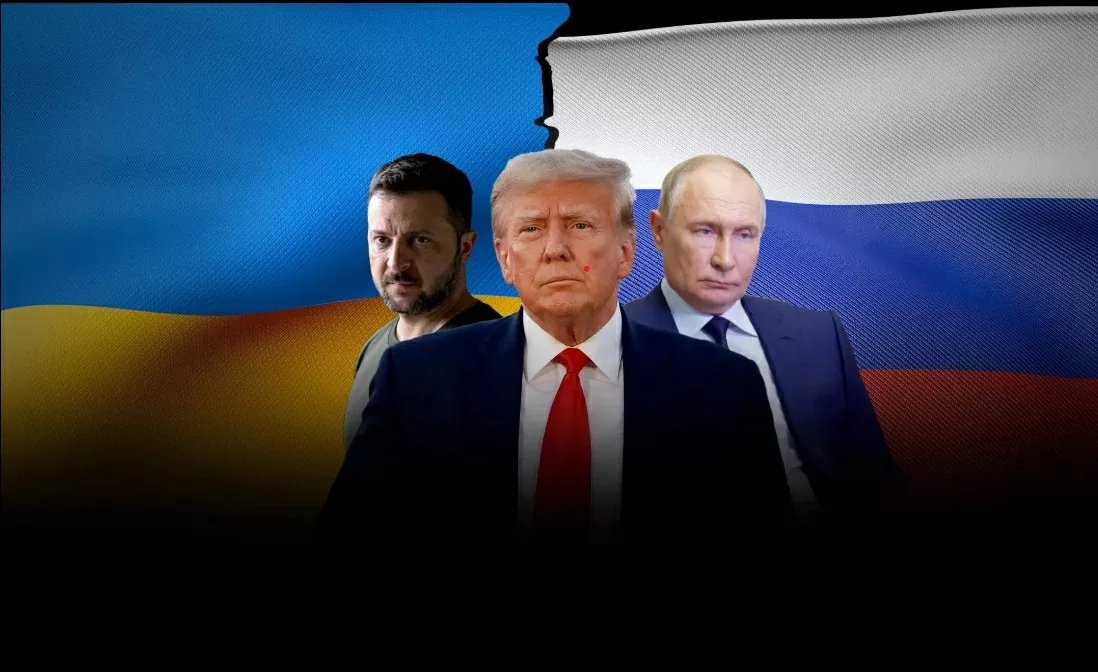 |
| Will US President Donald Trump urge all sides to freeze hostilities and sit down at the negotiating table? (Source: Getty) |
The submerged part of the iceberg
The conflict in Ukraine is just the tip of the iceberg, with a much larger underlying issue. The causes and nature of the conflict are still being debated, and will continue to be so. However, statements from some leaders and actions by EU and NATO members reveal their purposes and intentions. While trying to avoid acting under the guise of the bloc, NATO is the author and director of the "Eastward strategy" aimed at encircling, isolating, weakening, and ultimately disintegrating Russia. They have launched numerous "below-the-belt" attacks.
Kyiv is a pawn in the chessboard meticulously crafted by NATO and the West. The Ukrainian issue has been simmering since the Maidan protests more than 10 years ago. The government and the people may justify their choices, but the consequences cannot be hidden. Change is not wrong, but the important thing is for whom and how. In reality, countries that experience "color revolutions" often fall into prolonged instability, even civil war.
For Russia, the special military operation was imperative for national security and survival. The name of the military operation somewhat suggests that Moscow did not fully anticipate its complexity and duration. With the element of surprise, in the initial weeks, the Russian army gained the upper hand at key targets and around the capital Kyiv. But when Moscow withdrew its troops, creating an environment for negotiations in Istanbul, Turkey, the British Prime Minister intervened, causing the effort to collapse. The delaying tactics, similar to the Minsk II agreement, were repeated.
In essence, the conflict in Ukraine is a complex, all-encompassing war involving security, economics, technology, politics , diplomacy, media, and law between the EU and NATO and Russia. The conflict raises numerous issues regarding defense strategy, military art, weapons, and equipment, all of which require change. Moscow is also seeking to forge alliances, cooperate, and upgrade relations with allies and partners. To some extent, the conflict is a concrete manifestation of the clash between the unipolar world order dominated by the US and the West (with adaptive adjustments) and the trend towards a more equitable new order.
The conflict in Ukraine touches upon major geopolitical issues, competing interests, relations between major powers, NATO's "Eastward expansion strategy," and more. Therefore, ending the conflict cannot simply address the surface issues within a few weeks or months, but must be done step by step, resolving the root causes and encompassing the entire issue between Russia and the West, including NATO led by the United States.
| In essence, the conflict in Ukraine is a complex, all-encompassing war involving security, economics, technology, politics, diplomacy , media, and legal matters between the EU and NATO and Russia. |
The economic aspect is becoming increasingly clear.
Kyiv is and will continue to be heavily dependent on the West, so as the conflict continues, some countries are thinking long-term. "The upfront investment is the smart investment." On January 16th, Britain signed a "century-long agreement" with Ukraine, demonstrating London's unwavering and long-term support for Kyiv. This agreement includes intensive security and military cooperation with aid of no less than £3 billion per year for as long as necessary, to keep Kyiv standing against Russia, manage its internal affairs, and remain within London's embrace. Britain's long-term, multifaceted presence in Ukraine is coupled with attractive economic benefits.
The US is the biggest beneficiary. Behind the aid package are huge profits from arms supply contracts, a particularly non-negotiable commodity (as confirmed by President Volodymyr Zelensky). President Donald Trump also openly demanded that Kyiv supply rare earth minerals (lithium, titanium, beryllium, uranium, etc.) in exchange for further arms aid from Washington. Kyiv had previously included this element in its "win plan." However, a significant portion of these resources is located in areas controlled by Russia.
Once the potential profits are high, the West will stop at nothing to secure them. However, any agreement or trade deal between the US, the West, and Kyiv depends on the socio-political model and future institutions of Ukraine. Economics is the bargaining chip in resolving the Ukrainian issue.
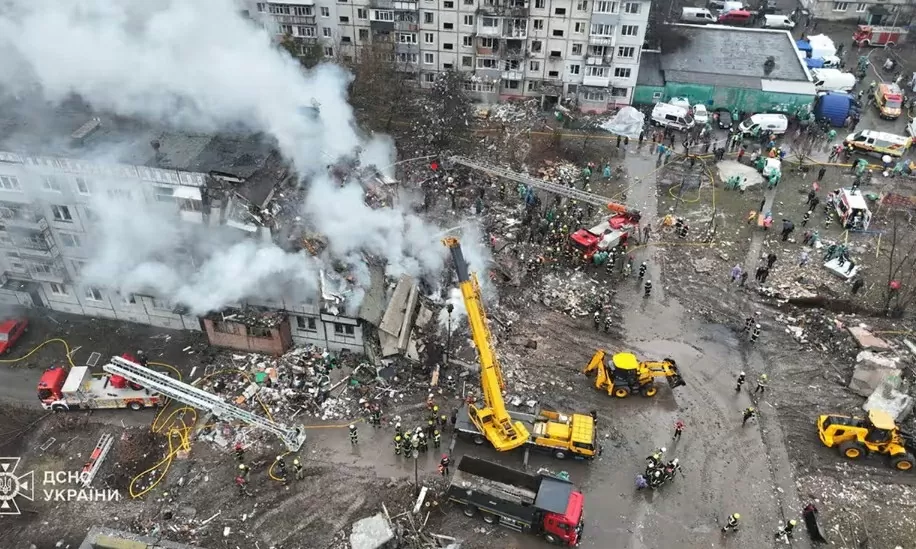 |
| This is the location of a Russian missile attack on a residential building in Poltava, central Ukraine, which killed 11 people and injured 16. (Source: EPA) |
The US will not give up; what it needs to and can do.
The US initiated and led NATO's "Eastward Strategy," using tools and the involvement of a "European army" to weaken its rivals and maintain its global strategic role and interests. Therefore, Washington is not abandoning the Ukraine issue but is resolving it in its own way, with low costs and high multifaceted effectiveness.
In resolving the Ukraine conflict, the biggest benefit for the US is maintaining its role as a "security umbrella" in Europe; its position as the number one peace negotiator; and having a free hand to deal with China, a systemic, comprehensive rival that challenges its number one position but is always difficult to deal with. What does Washington need and can do?
Moscow believes Washington needs concrete action and a plan. According to reports, the US intends to postpone Ukraine's accession to NATO; maintain the status quo on the battlefield, freeze hostilities, and withdraw troops from certain areas; and lift sanctions against Russia for three years after a peace agreement is signed. There are also reports that the US and the West are considering replacing Kiev's leadership.
If the US and the West were to actually stop aid, even conditionally, it would still be a beneficial catalyst for resolving the Ukraine issue. However, Kyiv would struggle to maintain its position and secure long-term US strategic interests in Ukraine. Therefore, Washington is not tying its own hands, but rather attaching conditions that Moscow would find difficult to accept or continuing aid in other forms.
But the US cannot decide everything on its own, doing whatever it wants. The view that Russia is weak and facing difficulties will inevitably lead to concessions lacks solid foundation. How much Moscow is willing to compromise is a difficult question.
Concessions in exchange for gifts: What are the deciding factors?
Russia welcomes the idea of negotiating a resolution to the conflict. It's a positive development, but not a gift from President Donald Trump; rather, it's a quid pro quo exchange. Russian Foreign Ministry spokeswoman Maria Zakharova affirmed that Moscow does not accept a half-hearted solution of "freezing the conflict" (essentially a delaying tactic) but seeks a comprehensive, concrete, and legally binding solution.
The decisive factor in the outcome of negotiations remains the battlefield situation, which is currently favorable to Russia; Moscow's ability to maintain economic stability, ensure social stability, and expand and improve its ties and cooperation with allies and partners. Despite facing numerous difficulties, Russia is not in a hurry. It is proceeding slowly and steadily. Perseverance is also an art of strategic maneuvering.
President Volodymyr Zelensky wants four-party talks (if they take place), but the key players would be representatives from the US and Russia. Moscow maintains its conditions, stated since launching its special military operation and in the near-successful agreement in Istanbul, Turkey, in April 2022; demanding that the US and the West completely lift sanctions and establish fair relations with Russia, including on issues of trade, technology, energy, and gas pipelines.
Complex, multi-party, protracted conflicts often end at the negotiating table. A summit between President Donald Trump and President Vladimir Putin (possibly as early as February or March) is hoped to be the starting point for progress. The two sides will argue and bargain on core issues and significant differences, as stated. A broad consensus is unlikely, but it could pave the way for further steps.
Nevertheless, agreeing to meet, exchange views on relations, and negotiate a conflict resolution is a breakthrough. The battle at the negotiating table will be extremely fierce, complex, protracted, and unpredictable, with the core being the level of compromise. What Moscow is likely to concede is a multilateral security guarantee mechanism including Russia (not accepting NATO peacekeeping forces), and a new, neutral government in Ukraine. President Donald Trump is a seasoned negotiator. Let's wait and see how far the US goes.
Source: https://baoquocte.vn/qua-den-tu-dau-hay-ai-quyet-dinh-ket-cuc-xung-dot-o-ukraine-303650.html
![[Photo] Closing Ceremony of the 10th Session of the 15th National Assembly](/_next/image?url=https%3A%2F%2Fvphoto.vietnam.vn%2Fthumb%2F1200x675%2Fvietnam%2Fresource%2FIMAGE%2F2025%2F12%2F11%2F1765448959967_image-1437-jpg.webp&w=3840&q=75)


































![[OFFICIAL] MISA GROUP ANNOUNCES ITS PIONEERING BRAND POSITIONING IN BUILDING AGENTIC AI FOR BUSINESSES, HOUSEHOLDS, AND THE GOVERNMENT](https://vphoto.vietnam.vn/thumb/402x226/vietnam/resource/IMAGE/2025/12/11/1765444754256_agentic-ai_postfb-scaled.png)







































Comment (0)