

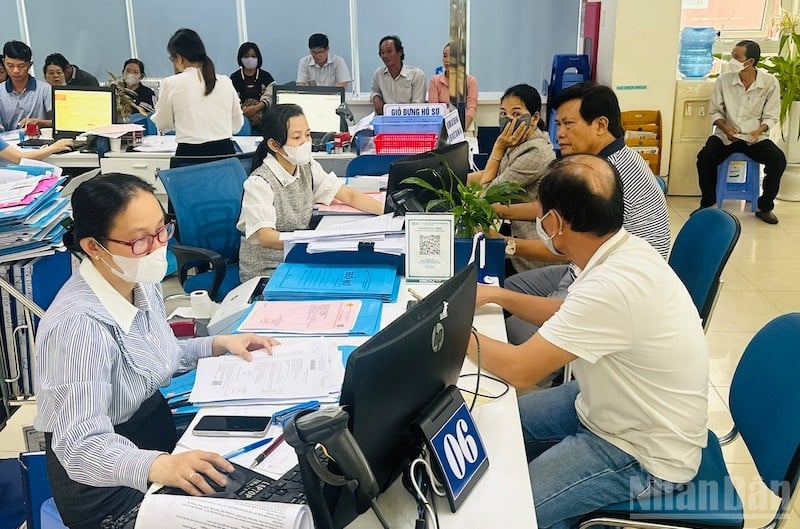
With the efforts of relevant authorities, the consensus and close supervision of the people, the fight against corruption, waste, and negative practices at the grassroots level is expected to achieve more comprehensive and sustainable changes.
Efforts to monitor and inspect Party organizations
To date, the Quang Ngai Provincial Party Committee has conducted inspections and supervision of 80 Party organizations and 92 Party members related to corruption, practicing thrift, and combating waste. At the grassroots level, Party committees and inspection committees at all levels have inspected and supervised 106 Party organizations and 187 Party members; and simultaneously resolved many issues related to preventing and combating corruption and negative practices, as well as asset and income declarations.
Simultaneously, the entire province conducted more than 4,000 administrative and specialized inspections. Through these inspections, functional agencies recommended disciplinary action against more than 420 collectives and 1,400 individuals; and discovered violations totaling over 246 billion VND and more than 630 hectares of land.
The entire province conducted more than 4,000 administrative and specialized inspections. Through these inspections, functional agencies recommended disciplinary action against more than 420 collectives and 1,400 individuals; and discovered violations totaling over 246 billion VND and more than 630 hectares of land.
To strengthen the prevention of corruption and negative practices, the province has reassigned and transferred more than 1,800 officials, civil servants, and public employees to different positions; at the same time, it has tightened the process of controlling assets and income. However, the declaration and verification of assets and income are still not commensurate with reality. According to reports from relevant agencies, by the end of 2024, the entire province had more than 28,300 instances of asset declaration; by July 2025, the authorities had only verified 317 cases regarding the origin of assets and income.
According to Comrade Nguyen Van Dieu, Director of the Department of Foreign Affairs and former Chief Inspector of Quang Ngai province, the standardization, integration, and sharing of databases on land, housing, taxes, etc., are still limited; the time taken for some agencies to coordinate and provide information is prolonged, affecting the timeliness and accuracy in verifying and handling cases of asset and income declarations.
The People's Court of Quang Ngai province and courts at all levels have handled 53 cases with 95 defendants; 52 cases with 94 defendants have been tried. Many typical cases have attracted the attention of officials and the public, such as those related to the Dak Drinh hydropower project; irregularities at the People's Committee of Ba Xa commune; the Pham Ngoc Phuong case at the Provincial Forensic Center; the Nguyen Tuan Linh case at Quang Ngai Agricultural and Forestry Technical Supplies Joint Stock Company…
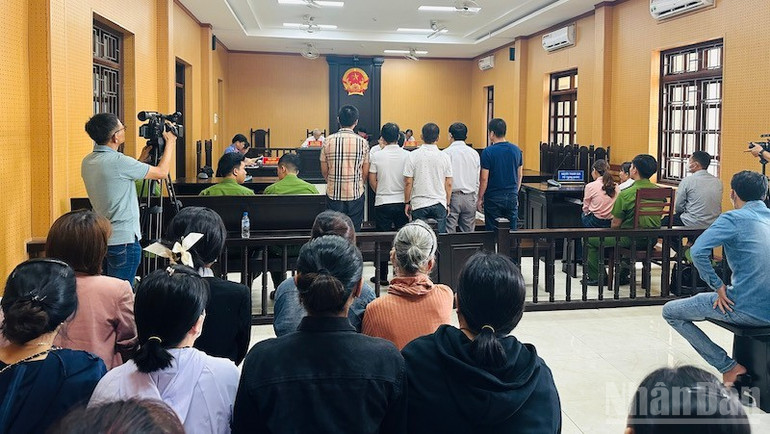
According to Ha Viet Toan, Chief Justice of the Quang Ngai Provincial People's Court, alongside achievements, the handling of corruption, waste, and negative cases still faces many difficulties due to the increasingly sophisticated and complex nature of the crimes. Many defendants hold positions of authority, possess high qualifications, and have extensive social connections. Some land-related cases are protracted, and asset recovery is difficult, while pressure from public opinion demands caution and impartiality in trials.
In reality, the majority of corruption cases in the province are discovered through inspections, audits, and investigations by relevant authorities. However, instances of harassment, negative practices, and petty corruption still occur in some administrative and public service sectors. Furthermore, the process of requesting expert assessments and valuations of assets obtained through corruption is sometimes untimely and ineffective, prolonging the resolution of cases.
Early prevention with the goal of "4 no's"
To enhance the effectiveness of preventing and combating corruption, waste, and negative practices, Quang Ngai province is focusing on solutions linked to the "four no's" goal: impossible, not daring, not wanting, and not needing corruption and negative practices.
The solutions are closely linked to the responsibilities of Party committees, departments, and management staff. One of the issues that Quang Ngai province is particularly concerned about is preventing and combating the waste of resources, especially in the areas of land and projects. Currently, the entire province has 65 projects facing difficulties and obstacles related to land clearance, planning adjustments, and investment certification, posing a significant risk of loss and waste.
In response to this situation, Quang Ngai province has proactively implemented several key solutions, such as focusing on resolving and addressing slow-progressing projects and works that pose a risk of loss and waste; while simultaneously promoting administrative reform, digital transformation, and enhancing online public services to minimize opportunities for corruption and negative practices.
The relevant agencies will focus on reviewing, inspecting, and classifying obstacles into groups to propose appropriate solutions; at the same time, they will recommend that central ministries and agencies apply specific mechanisms and policies to overcome difficulties.
Pham Xuan Due, Deputy Secretary of the Party Committee of the People's Committee of Quang Ngai Province.
In 96 communes, wards, and special zones, local authorities have proactively implemented various measures to improve the effectiveness of preventing and combating corruption, waste, and negative practices. To limit harassment, Dak Mar commune publicly displays the list of administrative procedures, processing times, and fees; and promptly receives and handles feedback and suggestions from citizens regarding the service attitude of officials and civil servants.
According to Nguyen Bao Tan, Secretary of the Party Committee of Dak Mar commune, the locality focuses on implementing codes of conduct and public service ethics; installing a surveillance camera system at the Public Administration Center, and publicizing a hotline to receive feedback, thereby strengthening supervision and preventing corruption. At the same time, the commune strictly implements internal spending regulations, practices thrift, and combats waste, especially in the context of the recent merger and the many difficulties it faces.
In addition, Quang Ngai province is promoting digital transformation in administrative management, building an interconnected database system between sectors such as taxation, natural resources and environment, police, justice, and banking…
The application of science and technology and digital transformation will contribute to enhancing openness and transparency in public service activities, helping to detect early signs of irregularities in asset and income declarations, and limiting the practice of merely going through the motions in declarations.
Director of the Department of Science and Technology, Nguyen Tan Liem.
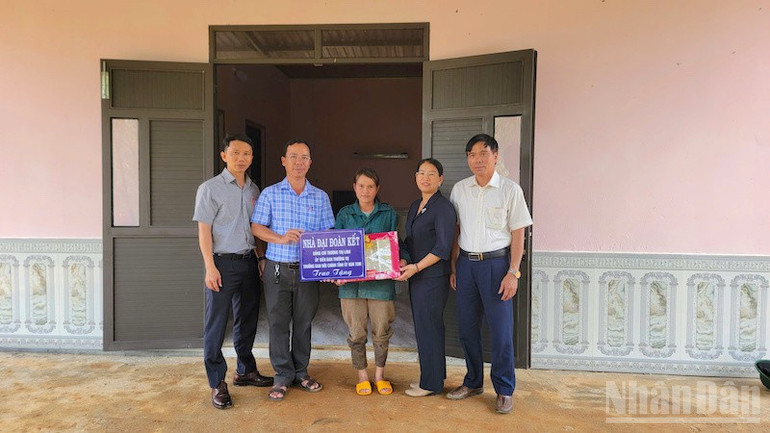
To realize the "four no's" goal, Quang Ngai province continues to emphasize the responsibility and exemplary conduct of leaders at all levels of Party committees, units, and localities in many aspects. Simultaneously, it resolutely handles violations, tightens administrative discipline and order; and strengthens control over power in personnel work, investigation, trial, and execution of judgments.
The Head of the Internal Affairs Department of the Quang Ngai Provincial Party Committee, Truong Thi Linh, emphasized: “Functional agencies need to implement the job position scheme effectively and synchronously; assign the right people to the right jobs, overcoming overlapping and formalistic situations in the organizational structure. At the same time, build a fair and transparent working environment in the recruitment and appointment of officials.”
Quang Ngai province also proposed that central ministries and agencies study breakthrough solutions such as building and operating a unified national database system on preventing and combating corruption, waste, and negative practices; promptly putting into operation the national database on asset and income control and applying artificial intelligence to analyze and warn of risks. Along with that, it suggested increasing transparency in public investment projects, auctions of state assets, project planning, and areas prone to corruption and negative practices.
Source: https://nhandan.vn/quang-ngai-dong-bo-giai-phap-phong-chong-tham-nhung-lang-phi-post930037.html













![[Video] 24-hour News on December 13, 2025: Prime Minister: Eliminate the situation of "managing without knowing" and "banning if you can't manage"](https://vphoto.vietnam.vn/thumb/402x226/vietnam/resource/IMAGE/2025/12/13/1765631092985_z7323081777994-c31a9753c13724017adafe243bd77001-jpg.webp)
































































Comment (0)