

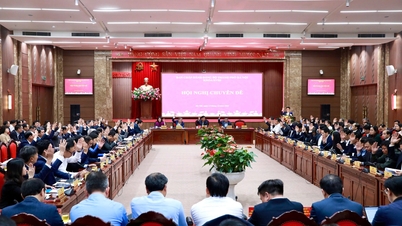
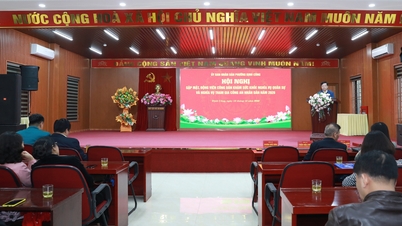
On December 12th, nearly 250 delegates from 29 ministries and central agencies attended the conference "Implementing the settlement and auditing of the state budget of ministries and central agencies according to the 2025 State Budget Law".
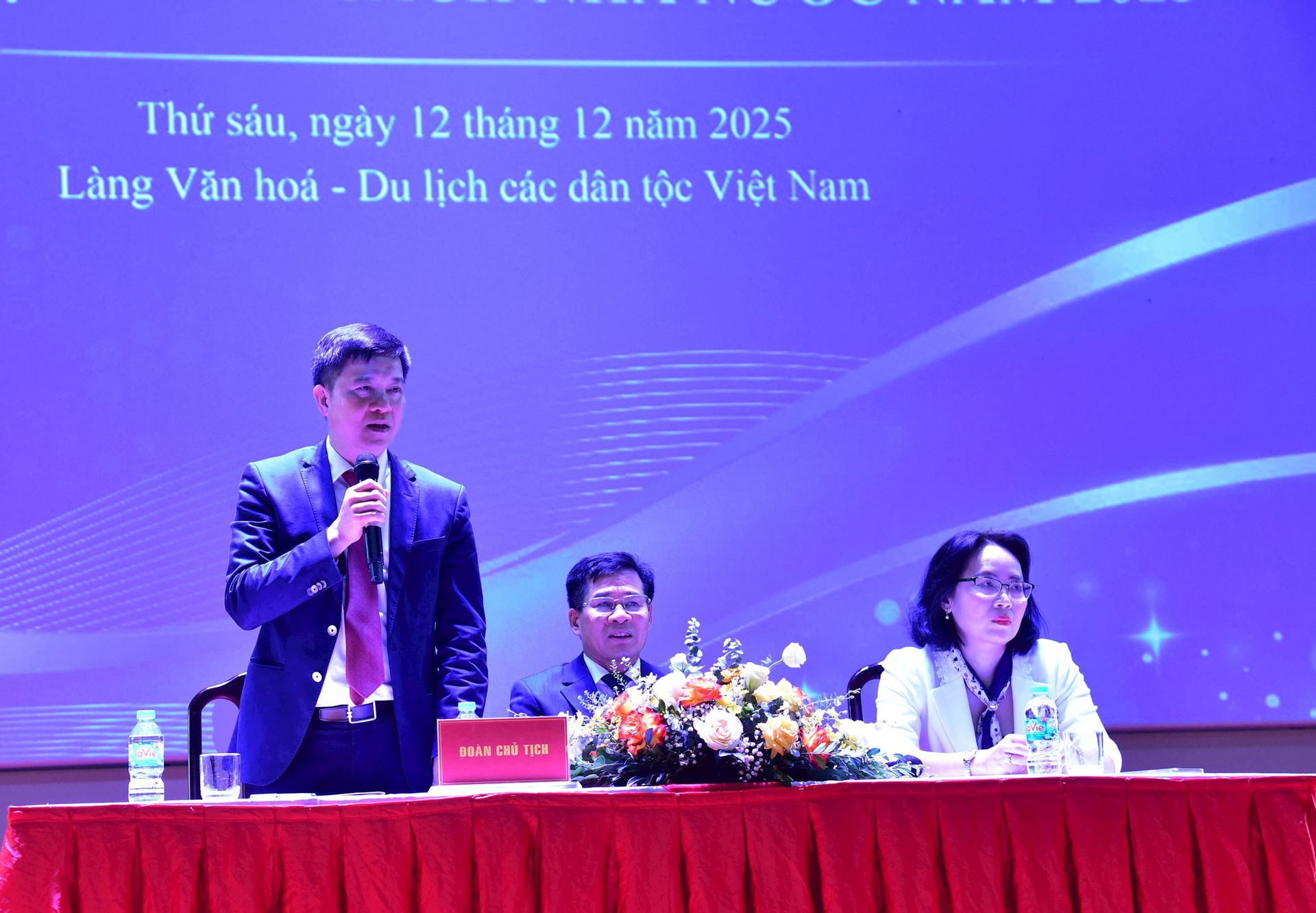
This is the first time the Ministry of Finance and the State Audit Office of Vietnam (SAO) have co-chaired a tripartite conference with the participation of budget-using units, creating a forum to unify understanding, clarify new points of the State Budget Law and exchange coordinated solutions to ensure the progress of the 2025 budget settlement.
Pressure to meet deadlines
At the conference, Mr. Chu Duc Lam, Director of the Department of Finance and Sectoral Economics (Ministry of Finance), emphasized that the 2025 State Budget Law places high demands on the entire budget cycle. Shortening the time for preparing, reviewing, and appraising final accounts means a significant increase in the workload of the units, while financial discipline, data transparency, and budget utilization efficiency are tightened.
Ms. Vu Thi Hai Yen, Deputy Director of the Department of Finance and Sectoral Economics, Ministry of Finance, clarified that the new regulations require first-level budget units to submit final accounts reports to the Ministry of Finance and the State Audit Office before July 5th of each year; the Ministry of Finance compiles and submits the reports to the Government before August 15th; the Government sends the final accounts report to the Standing Committee of the National Assembly before September 20th; and the National Assembly approves the final accounts within 12 months from the end of the fiscal year.
Ms. Vu Thi Hai Yen also pointed out four common types of errors in the review of final accounts: errors in documentation; errors in budget preparation and allocation; errors in accounting; and errors in the management of public assets.
Identifying this group of errors is a necessary step for ministries and agencies to adjust their internal procedures and improve the quality of documents submitted to the Ministry of Finance and the State Audit Office.
A representative from the State Treasury stated that they will send data to the Ministries starting in February each year to support faster progress, but this still requires each unit to proactively review and complete the documents according to standards to avoid delays like before.
At the conference, representatives from several ministries highlighted internal difficulties in adapting to new forms, procedures, and deadlines. From the perspective of the Ministry of Health, Ms. Tran Thi Lieu, Deputy Director of the Planning and Finance Department, stated that the Ministry manages hundreds of budget units, some of which generate tens of trillions of dong in revenue annually; many account holders have medical expertise but lack in-depth knowledge of finance and accounting, leading to significant difficulties in preparing and reviewing reports; and the Ministry's financial staff is very limited.
Ms. Lieu stated that although supporting software exists, there is no shared system connecting all levels of budget units to the Ministry of Finance, making data entry and approval on Tabmis inconvenient. The Ministry of Health requested the Ministry of Finance to promptly implement the shared software to standardize data and reduce the workload of manual operations.
Besides the Ministry of Health, representatives from the Ministry of Industry and Trade, the Ministry of Agriculture and Environment, and the Planning and Finance Department (Ministry of Finance) also reported similar difficulties.
Digital transformation – a key factor in shortening settlement and audit times.
Mr. Le Dinh Thang, Chief Auditor of the State Audit Office of Vietnam, Sector II, affirmed that units should not be overly concerned about the new settlement deadline, as the regulation shortening the time has been applied since 1996.
He emphasized that digital transformation will be a key factor in adapting to the pace of development. Once the financial and budgetary information system is completed, all transactions will be updated instantly at the State Treasury; at the end of the year, the unit will only need to review and print the report.
At that time, the State Audit Office of Vietnam (SAO) could access data remotely without having to work directly at the headquarters of the audited entities. Mr. Thang argued that the new schedule forced the SAO to change its approach: increasing surveys, streamlining processes, applying big data analytics, and building electronic audit files to both shorten time and ensure quality.
Acknowledging the challenges in implementation capacity, Mr. Phan Truong Giang - Deputy Chief Auditor of the State Audit Office of Vietnam, Sector II - pointed out that with the new schedule, the State Audit Office of Vietnam only has a little over a month to complete the audit of the final accounts reports of Ministries and central agencies (from after July 5th to before August 15th) and one month to audit the final accounts report of the State budget (from after August 15th to before September 20th). This puts pressure on the State Audit Office of Vietnam to restructure its audit process, strongly shifting towards the application of big data, automation, remote analysis, streamlining documentation, and standardizing processes to ensure both progress and quality.
From there, Mr. Phan Truong Giang proposed key solutions, including rebuilding the audit schedule, strengthening internal control system surveys, promoting tripartite data exchange, applying modern technologies such as AI, electronic audit files, and organizing audits by clusters of ministries and sectors...
These solutions aim to adapt to the very short timeframe under the 2025 State Budget Law while still ensuring materiality and compliance with auditing standards.
The settlement and auditing process will involve agreement between all parties.
In the context of the shortened budget settlement schedule under the 2025 State Budget Law, the need for tripartite coordination between the Ministry of Finance, the State Audit Office, and budget-using units has become more urgent than ever.
Organizing a conference with the simultaneous participation of all three entities demonstrates the need to unify understanding, procedures, and implementation methods from the beginning of the year, in order to minimize discrepancies in the application of regulations and reduce the risk of errors. Previously, many difficulties in reviewing and auditing final accounts stemmed from differences in policy interpretation or handling.
Delegates agreed that tripartite dialogue should become a regular activity, not only in 2025 – the first year of the new State Budget Law – but should be maintained long-term. When all stages from report preparation to review and auditing are connected, with unified methods and standardized data, both the progress and quality of state budget settlements will be improved, contributing to increased transparency and accountability to the National Assembly and the Government.
Source: https://daibieunhandan.vn/quyet-toan-va-kiem-toan-ngan-sach-nha-nuoc-tien-do-gap-rut-yeu-cau-phoi-hop-chat-che-10400373.html


![[Photo] Prime Minister Pham Minh Chinh attends the Conference summarizing and implementing tasks of the judicial sector.](/_next/image?url=https%3A%2F%2Fvphoto.vietnam.vn%2Fthumb%2F1200x675%2Fvietnam%2Fresource%2FIMAGE%2F2025%2F12%2F13%2F1765616082148_dsc-5565-jpg.webp&w=3840&q=75)
















































































Comment (0)