

Using autonomous, unmanned delivery robots on urban roads is Alpha Asimov Robotics' first step in bringing intelligent technology to the world .
In a new urban area of Hanoi , a delivery robot powered by AI (artificial intelligence) is undergoing trials. The robot moves along the road at a pre-programmed speed, anticipating obstacles and people during operation. It delivers goods along a pre-established route to the recipient. Initial results have shown positive signs.
The idea originated during the social distancing period.
Self-driving cars are a relatively new concept in Vietnam, so the fact that a robot operates autonomously using AI technology came as quite a surprise to many when they learned about this startup. Some even questioned whether Mr. Nguyen Tuan Anh was making things difficult for himself.
In Vietnam, in the field of self-driving cars,FPT , Phenikaa-X, and VinFast are companies that have conducted initial trials, laying the foundation for the market. However, most are still at the research stage.
Not long ago, FPT created a self-driving electric car and conducted trials at Ecopark. However, FPT does not manufacture self-driving cars like giants like Google and Tesla, but focuses only on developing software for automatic vehicle control, as Mr. Hoang Nam Tien shared in a dialogue program with VietNamNet newspaper.
Regarding unmanned delivery robots, Mr. Nguyen Tuan Anh's project is the first of its kind in Vietnam. Globally, many large technology companies such as Amazon and Alibaba have begun experimenting with autonomous robot delivery.
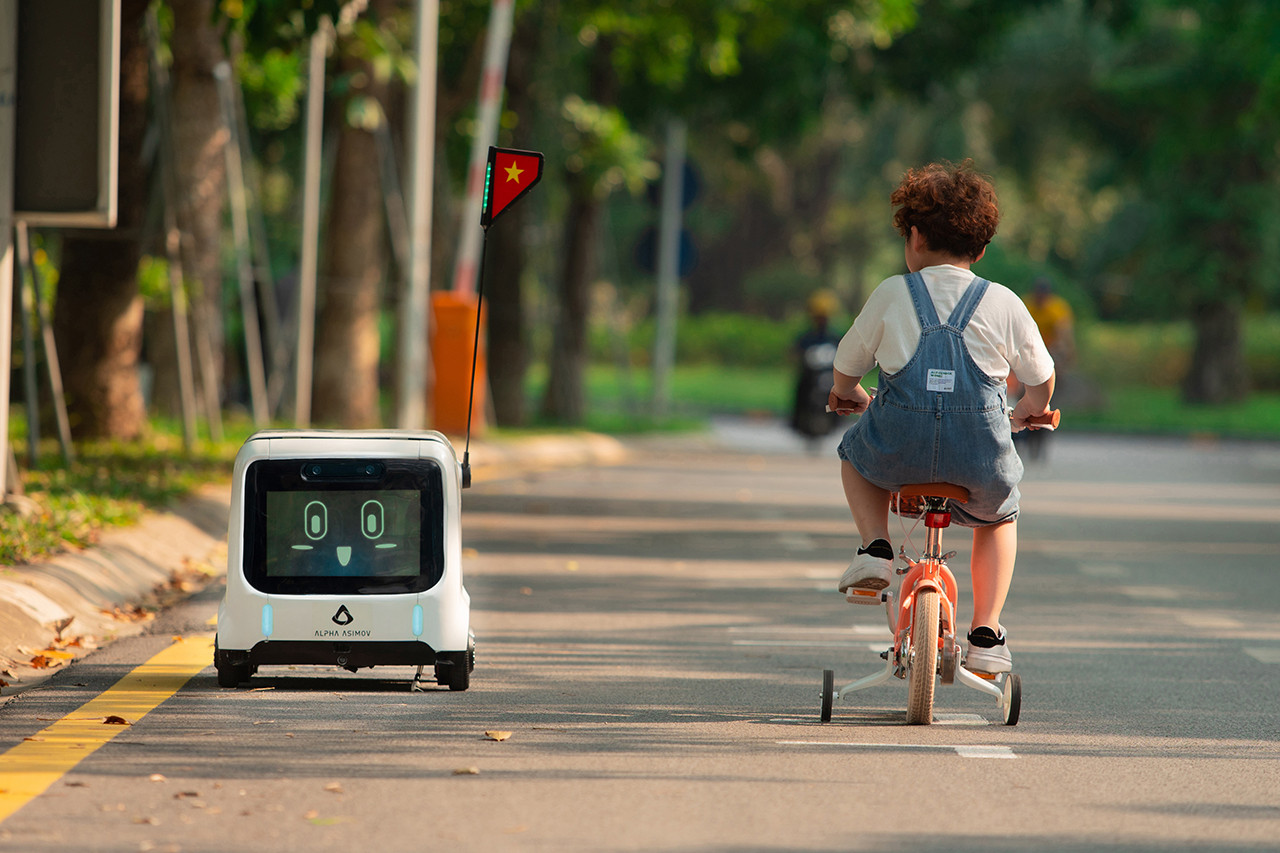
The first unmanned delivery robot in Vietnam. (Photo: Provided by the interviewee)
According to Mr. Nguyen Tuan Anh, co-founder and CEO of Alpha Asimov Robotics, the idea for the project originated during the pandemic. During social distancing, people limited their outings and direct contact, making delivery robots an effective tool for assisting with goods transportation.
This reality motivated Mr. Nguyen Tuan Anh, who had studied computer programming and worked at Grab, to create an innovative technology product: an automated delivery robot, to solve the short-term problem of goods transportation during the pandemic. Automated delivery robots are also an inevitable trend in the future.
Mr. Nguyen Tuan Anh began developing the idea for Alpha Asimov Robotics in September 2021 and officially established the company in November. The product is currently still in the testing phase.
According to Statista's estimates, the global last-mile delivery market will reach $200 billion by 2027. The market for automated robot delivery alone is projected to reach $41 billion by 2027.
Solving the shipping cost problem
Mr. Tuan Anh stated that in Vietnam, the cost of last-mile delivery services is very high, potentially accounting for up to 53% of total transportation costs. Delivering a single food item requires a motorbike and driver, with a total weight exceeding 150kg, requiring a significant amount of energy. In contrast, delivery robots only carry 50kg, significantly reducing energy costs. Therefore, the only way to increase efficiency and reduce delivery costs is to use robots.
Furthermore, in reality, goods shipped from China to warehouses in Vietnam are cheaper than those shipped directly from the warehouse to the recipient's home. These costs are ultimately borne by the consumer.
Therefore, automating and increasing efficiency in this process will lead to significant cost savings for end users. This is also a great opportunity that Mr. Tuan Anh is determined to seize.
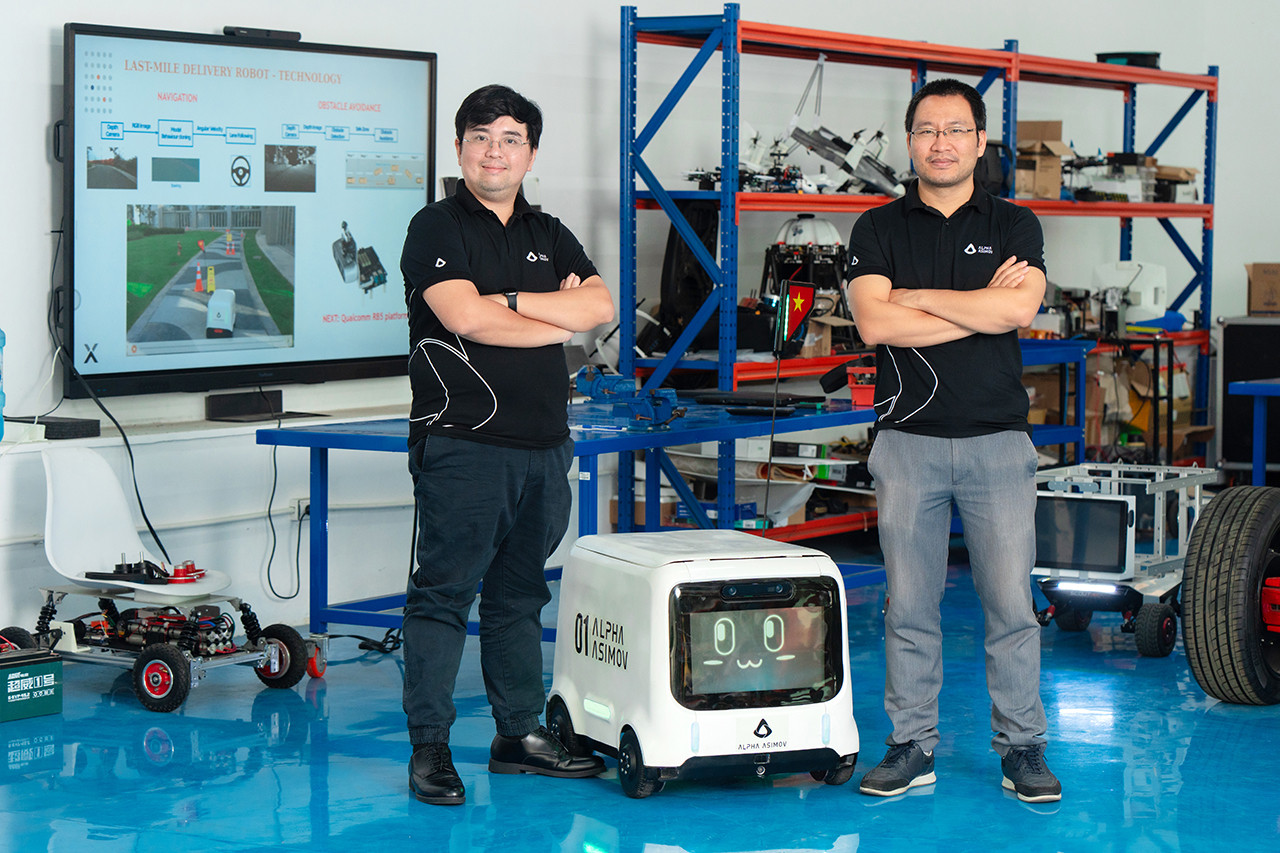
Mr. Nguyen Tuan Anh and Mr. Le Anh Son. (Photo: Provided by the interviewee)
According to the description, the robot has a payload capacity of 50kg and moves at a speed comparable to a bicycle, at 15-25 km/h. Like a self-driving car, this robot is also equipped with cameras, sensors, and GPS technology. Thanks to motion detection technology, the robot can automatically adjust its speed and avoid collisions.
Similar to other delivery services, after a user places an order and requests delivery, the provider will proceed with delivery based on the customer's location. Following instructions, the delivery robot will automatically find its way to deliver the product to the customer.
Currently, the robot is capable of 95% autonomous operation, handling most situations automatically, while the remaining 5% is handled by humans in the laboratory. Alpha Asimov is undergoing trials in several urban areas in Hanoi, such as Ecopark, VinUni, and Phenikaa.
In reality, implementing a delivery robot project is not easy. According to Mr. Tuan Anh, there are no regulations regarding these vehicles on the road.
"Currently, there are no regulations because this form of transportation is too new, so within the framework of testing, the robot only operates in urban areas. In the future, the new road traffic law will include provisions for new technologies and principles. This will create a legal framework for new types of vehicles like Alpha Asimov," Mr. Tuan Anh said.
To leverage technological support, Alpha Asimov partnered with Phenikaa-X from research and development to operational expertise. The co-founder of Alpha Asimov is Mr. Le Anh Son, and the company is Phenikaa-X.
“When I started, I saw that the idea of autonomous delivery robots could be expanded to Southeast Asia and many other countries around the world, so I decided to look for people who could support me in implementing the project. I am very happy that Vietnam has large corporations that are genuinely interested in and investing in this industry. In fact, Vietnam has enormous potential in this field; people are actually doing it, not just talking without acting,” he added.
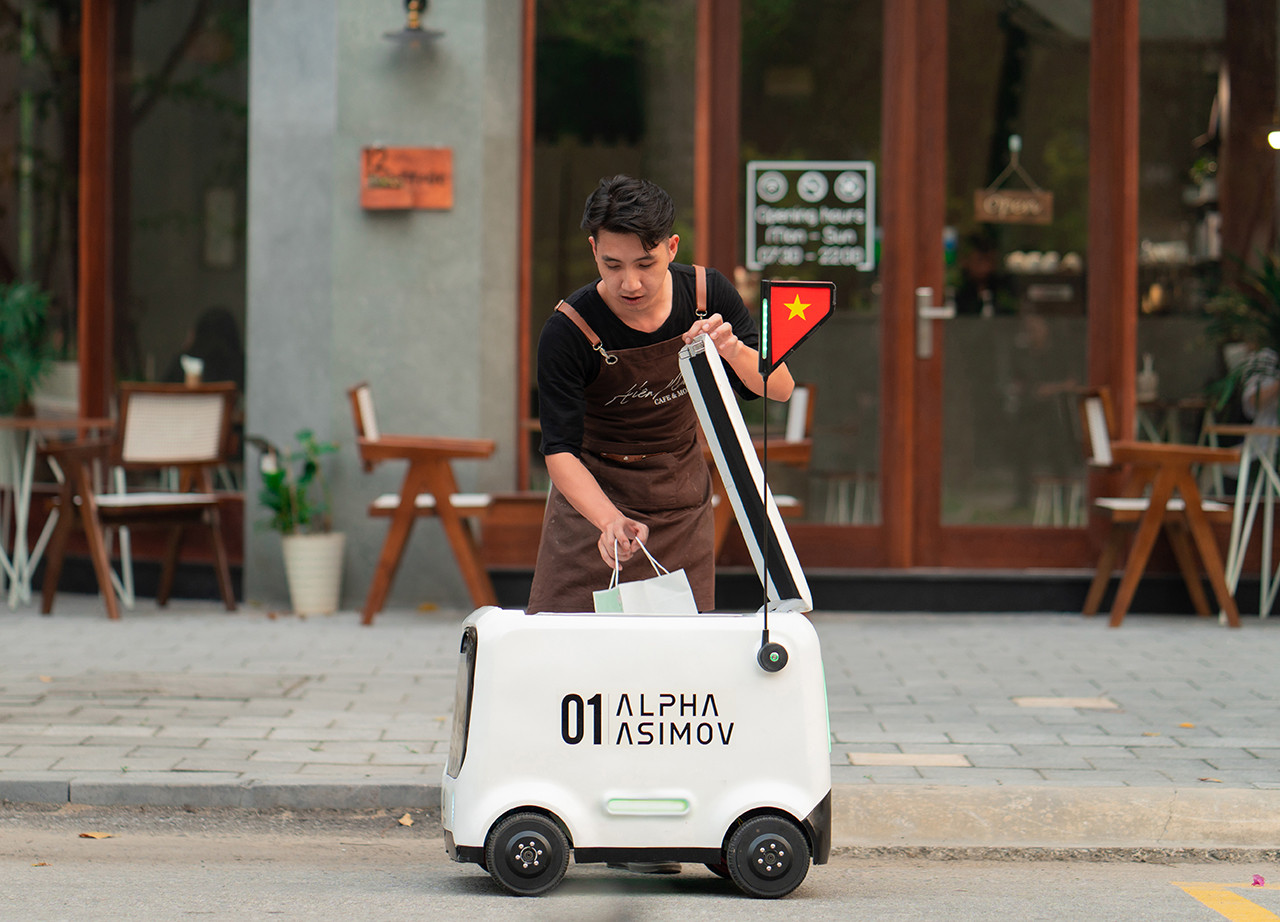
The project bears the mark of Vietnam on its journey to the global market. (Photo: Provided by the interviewee)
Alpha Asimov's operational model involves 20 members working in various locations "without borders," and in the future, there will also be a team working in Singapore.
Regarding the prospects, Mr. Tuan Anh stated that, with current delivery costs, by 2026, the cost of robot delivery could equal that of human delivery. From then on, the cost of robot delivery will become increasingly cheaper. When the cost of robot delivery equals that of human delivery in Vietnam, the cost could be even lower in other countries such as Singapore, UAE, South Korea, or Australia. Delivery robots are expected to replace the role of humans, providing a more cost-effective and suitable solution.
Based on these initial results, Mr. Tuan Anh expects that in the not-too-distant future, Alpha Asimov will become familiar to people in urban areas. He aims for this startup to dominate the Vietnamese market and expand beyond Southeast Asia.
(To be continued)
Vietnamnet.vn














































































Comment (0)