


Speakers and guests shared a wealth of knowledge on personal financial management at the seminar - Photo: DIEU QUI
This question was raised at the financial autonomy workshop for students titled "Financial Freedom for Generation Z: From Survival to Abundance" on October 13th. The program was organized by the Ho Chi Minh City Student Union in collaboration with the Youth Union Committee of the Vietnam National University Ho Chi Minh City at the University of Economics and Law.
A "plan" to improve financial health.
According to the speakers, the main reason Gen Z struggles with financial management is their lack of planning and prioritization of expenses.
We can refer to the 50-30-20 rule. That's 50% for essential needs, 30% for desires, and 20% for savings. Most importantly, when budgeting, you must prioritize your spending.
Dr. Ngo Ngoc Quang (Ho Chi Minh City University of Banking) - a member of the advisory board of the Vietnam Association of Personal Financial Advisors - has proposed a "plan" to improve financial health.
Survival is the first and most important stage when starting to manage personal finances. Building a suitable budget, establishing smart spending habits, increasing income, and reducing expenses are all essential steps at this stage.
Phase 2 involves building a solid financial foundation, known as being financially viable. This includes saving, accumulating wealth, establishing a contingency fund, and building a strong credit score.
To live comfortably in stage 3, one needs to create long-term plans and learn how to invest to increase their assets. Finally, living fully is the highest stage in personal financial management because it ensures one's financial needs are met, focuses on optimizing assets, and creates sustainable prosperity.
"Personal financial management is not only important but also a mandatory skill that helps students develop a responsible mindset and financial planning skills, helping them control spending, which is key to achieving stability and success in the future," Dr. Quang analyzed.
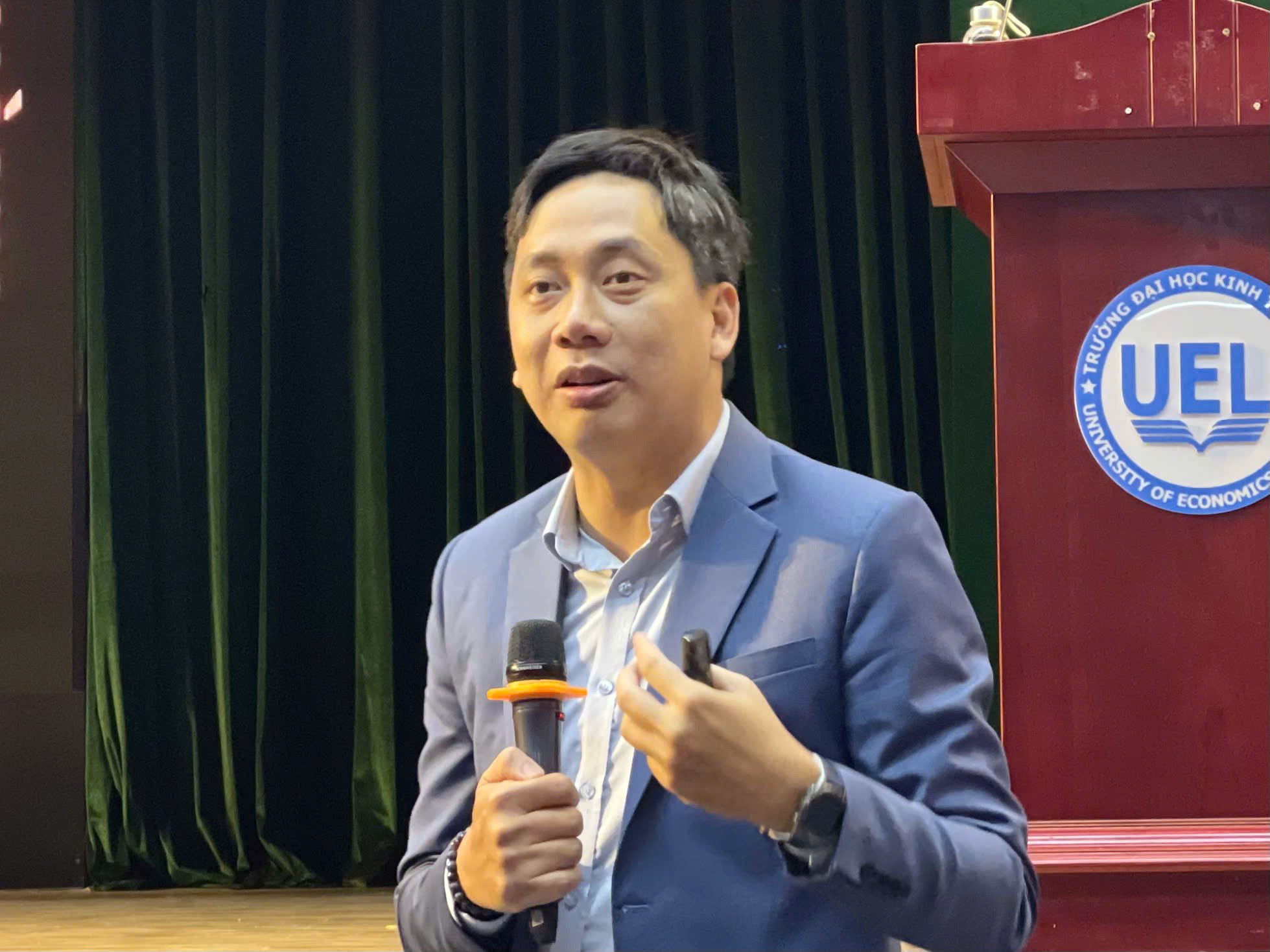
Dr. Ngo Ngoc Quang - lecturer at the University of Banking Ho Chi Minh City - shares ways to improve financial health - Photo: DIEU QUI
Become an entrepreneur or a professional.
Mr. Nguyen Tuan Quynh, Chairman of the Board of Directors of Saigon Books Joint Stock Company, believes that three things are necessary to achieve financial self-sufficiency: increasing revenue, effectively controlling costs, and investing efficiently.
Young people need to work professionally and exceed expectations if they want to advance in their careers and achieve their financial goals.
"To achieve financial freedom, you need a roadmap to wealth creation, to become a business owner, or to become a skilled expert in your field. To become an expert in your profession, you need passion, a good mentor, and hard work," Mr. Quynh said.
Mr. Nguyen Tuan Quynh (Saigon Books)
The "rule of survival" for personal finance is to always have surplus cash flow, earn more income than you spend, avoid debt or falling into credit traps, and regularly remind yourself of your weaknesses to maintain spending discipline.

Some students said they would invest in stocks, gold, real estate, or put money in savings accounts to increase their income - Photo: DIEU QUI
Mr. Dang Vien Khang - CEO and founder of Mon Amie Group - noted that students who want to start a business often face difficulties.
Based on his own experience, he said that when he started a business, he lacked financial knowledge, had no clear plan, and didn't know how to manage cash flow or control expenses.
Furthermore, lacking the ability to raise capital, failing to distinguish between needs and wants, and resorting to borrowing to start a business.
"I can say I had to work four times harder than others, learning from many different places to be able to pay off my debt within a few months and open more branches," Khang shared.
5 things students need to do to achieve personal financial independence.
- Focus on getting through the survival phase and starting to accumulate resources.
- Aim to take responsibility.
- Build up intangible assets for yourself.
- Have a specific financial plan for after graduation.
- Begin learning about different types of assets.
Source: https://tuoitre.vn/sinh-vien-tu-chu-tai-chinh-cach-nao-20241013140118762.htm


![[Photo] Prime Minister Pham Minh Chinh attends the Conference summarizing and implementing tasks of the judicial sector.](/_next/image?url=https%3A%2F%2Fvphoto.vietnam.vn%2Fthumb%2F1200x675%2Fvietnam%2Fresource%2FIMAGE%2F2025%2F12%2F13%2F1765616082148_dsc-5565-jpg.webp&w=3840&q=75)


































































































Comment (0)