


Director of the Department of Information Technology Industry Nguyen Khac Lich - Photo: VGP/TG
On June 14, 2025, the 15th National Assembly passed the Law on Digital Technology Industry, marking an important turning point in the formation of a concentrated Digital Technology Park - a new model to replace the previous concentrated Information Technology Park.
The new law strongly decentralizes the decision to establish and expand digital technology zones to the provincial People's Committee; at the same time, clearly stipulates the incentive mechanism, operation, management and exploitation of shared digital infrastructure. This is considered a breakthrough, creating new momentum for the strong development of digital technology zones in the coming time, meeting the goal of creating essential shared infrastructure for the development of Vietnam's digital technology industry.
According to Director of the Department of Information Technology Industry Nguyen Khac Lich, the concentrated digital technology park is the foundational infrastructure of the digital technology industry, a 'fertile land' for businesses and a space to realize the aspiration of making Vietnam a strong country in technology.
The current digital technology park model has its foundation since 2006, when the centralized information technology park was first legalized and the Government issued Decree 154/2013/ND-CP. After more than 12 years of development, the system of these zones has clearly taken shape and brought about outstanding results.
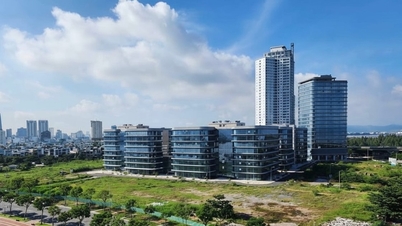
According to the Department of Information Technology Industry, the country currently has 8 digital technology zones concentrated in Hanoi , Ho Chi Minh City, Da Nang and Can Tho. The land fund reaches more than 2.588 million m², an increase of more than 10 times compared to 2013. The number of technology enterprises operating in the zones exceeds 630, with a growth rate of 20%. The high-quality workforce reaches about 42,450 people, double that of 2013.
A particularly impressive indicator is land use efficiency, up to 10 million USD/ha/year, which is considered very high compared to other types of functional zones. Income and labor productivity in digital technology zones are also outstanding, becoming the destination of experts and engineers in the high-tech field.
Mr. Nguyen Khac Lich commented: “These figures show that the concentrated digital technology zone is not only a place where businesses operate, but also a place where value is created, where knowledge is nurtured and where innovation is strongly promoted.”
The world is moving into a digital technology boom – from local software to an integrated ecosystem of AI, data, semiconductors and breakthrough technologies. In that context, Resolution 57-NQ/TW (2024) identifies the development of concentrated digital technology zones as a key solution for innovation and national digital transformation.
The next highlight is the Digital Technology Industry Law, the world's pioneering law on digital technology industry development. The law opens a new chapter for the digital technology park model with outstanding incentives, experimental sandboxes and shared digital infrastructure such as cloud, data center, chip testing lab or AI supercomputer.
"Developing a concentrated digital technology zone is not about real estate development, but about building an ecosystem where all businesses, from startups to global corporations, can experiment, innovate and reach out to the world. This is also a journey to accompany Vietnam in creating a new generation of digital technology industrial infrastructure, the foundation for the country to make a breakthrough in the next 30 years," Mr. Nguyen Khac Lich emphasized.

The 15th National Assembly passed the Law on Digital Technology Industry at the 9th Session of the 15th National Assembly in June 2025 - Photo: VGP/TG
Unprecedented incentives: tax – land – human resources
One of the bright spots that the business community is most interested in is the strong incentive framework provided by the Digital Technology Industry Law.
According to Deputy Director of the Department of Information Technology Industry Nguyen Anh Tuan, in terms of finance, investment projects to build concentrated digital technology zones and investment projects in the digital technology sector in concentrated digital technology zones enjoy the highest corporate income tax incentives: a tax rate of 10% for 15 years, tax exemption for the first 4 years and a 50% reduction for the next 9 years.
For super large projects with a scale of over 6,000 billion VND in the fields of key technology, semiconductors and auxiliary, HPC, tax incentives and 1.5 times extension of the term, 200% deduction of research and development costs.
Regarding land, investors building infrastructure for digital technology parks are exempted from land rent for the entire duration of the project. Enterprises producing key digital technology products such as semiconductor chips and AI also enjoy similar incentives.
The policy to attract talent is also very competitive: 5-year personal income tax exemption for high-quality human resources, 5-year visa for experts and their families, work permit exemption, housing and transportation support...
Another fundamental change to remove procedural bottlenecks is the decentralization of authority to the provincial People’s Committee in establishing and expanding digital technology zones. Administrative procedures are cut by up to 50%. This helps localities shorten project implementation time, attract investors faster and more flexibly.
Not only stopping at the concentrated digital technology zone, the Ministry of Science and Technology is aiming at a larger scale, which is the high-tech urban area, currently proposed in the draft Law on High Technology (amended). This is where the high-tech zone is the core, planned, invested in synchronous technical infrastructure, social infrastructure, modern management mechanism to ensure modern and sustainable living, working and creative conditions to develop the high-tech ecosystem.
Vietnam currently has 8 concentrated digital technology parks in operation, including: Hanoi Software Park, Cau Giay IT Park, Quang Trung Software Park, Da Nang IT Park, Da Nang Software Park, Can Tho IT Park, Binh Duong IT Park and FPT Danang Office Complex.
Thu Giang
Source: https://baochinhphu.vn/doanh-nghiep-vao-khu-cong-nghe-so-tap-trung-duoc-huong-loat-uu-dai-dac-thu-10225120716005286.htm


![[Photo] General Secretary To Lam receives the Director of the Academy of Public Administration and National Economy under the President of the Russian Federation](/_next/image?url=https%3A%2F%2Fvphoto.vietnam.vn%2Fthumb%2F1200x675%2Fvietnam%2Fresource%2FIMAGE%2F2025%2F12%2F08%2F1765200203892_a1-bnd-0933-4198-jpg.webp&w=3840&q=75)








































































































Comment (0)