

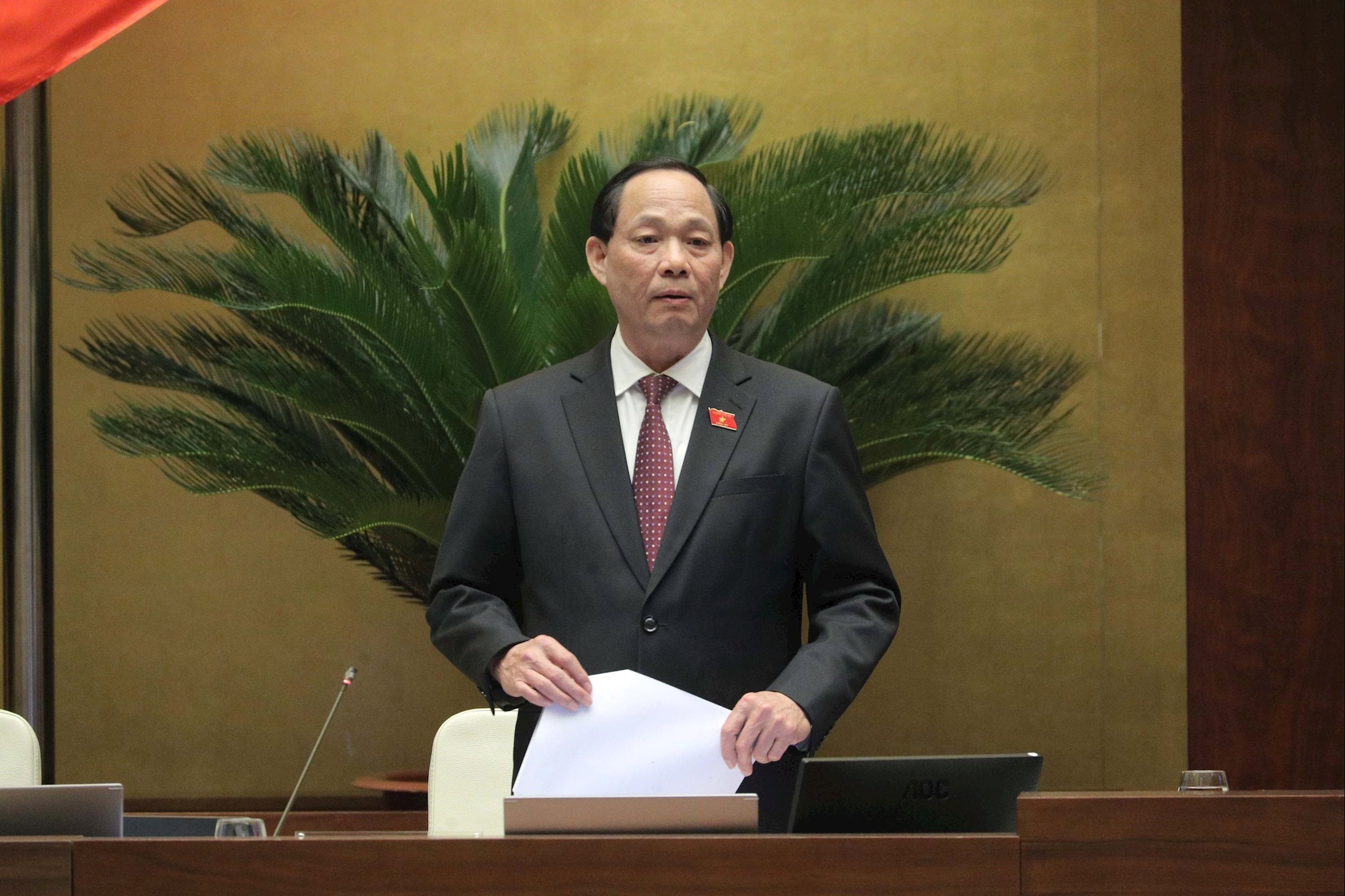
Bind personal responsibility of leaders if they are slow or avoid receiving citizens
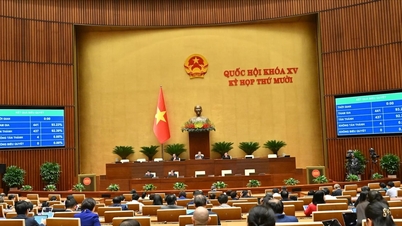
Basically supporting the National Assembly's consideration of promulgating the Law amending and supplementing a number of articles of the Law on Citizen Reception, the Law on Complaints, and the Law on Denunciations, National Assembly Deputy Nguyen Tam Hung ( Ho Chi Minh City) emphasized that this is an important step in perfecting the law to improve the effectiveness and efficiency of state management; promote the responsibility of leaders; protect the legitimate rights and interests of the people; and at the same time, in line with the requirements of building a rule-of-law state and national digital transformation.
Highly appreciating the fact that the draft Law has added the form of online citizen reception, demonstrating the mindset of administrative reform and digital transformation, delegate Nguyen Tam Hung also said that, in order to implement uniformly nationwide, it is necessary to consider clearly defining the principle of recognizing the legal value of online citizen reception sessions as equivalent to direct citizen reception. Specifically, it is necessary to clearly define the value of minutes, records, confirmations and legal responsibilities when providing false information... to help limit disputes and ensure consistency when applying in practice in localities.
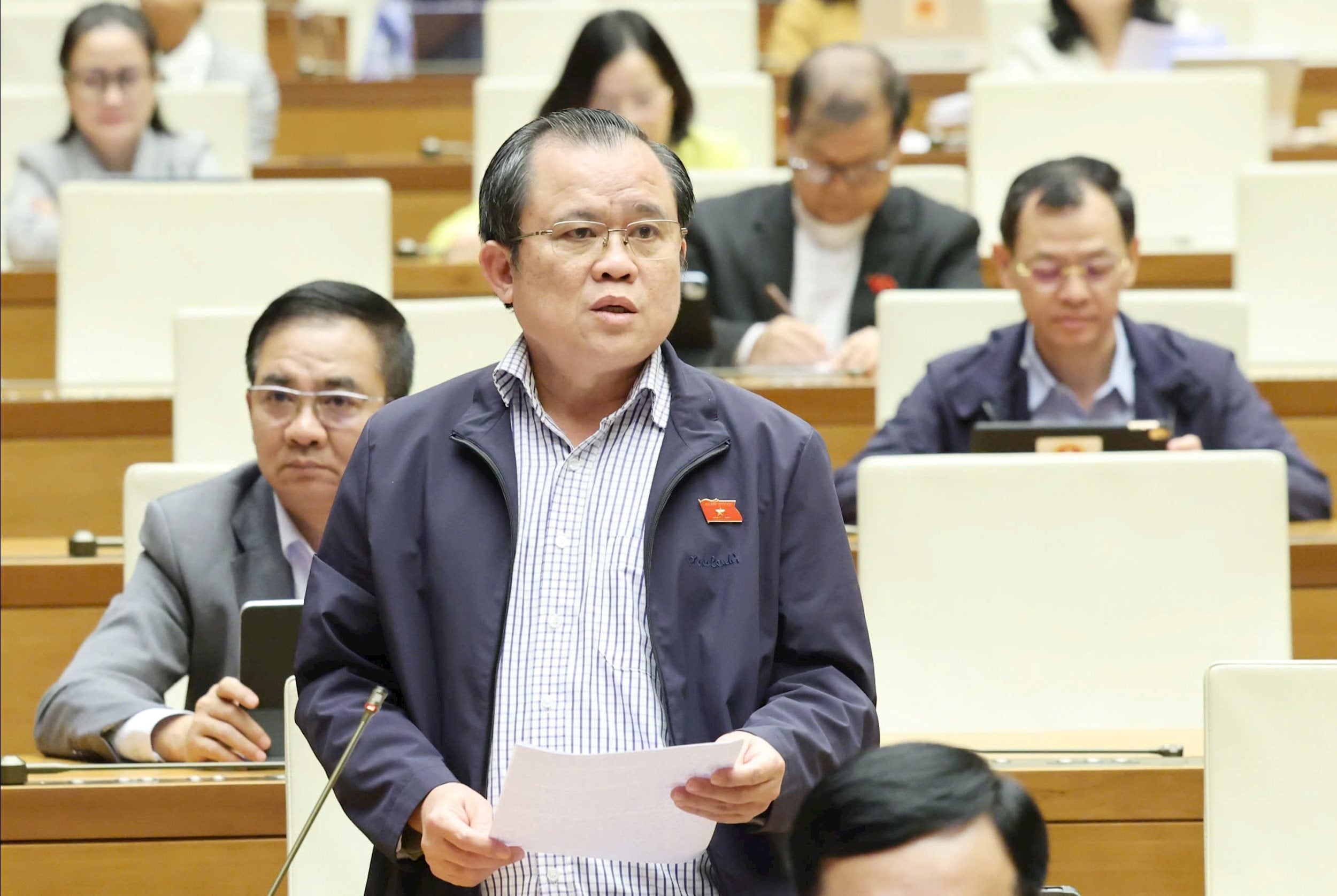
Clause 2, Article 15 stipulates that the Chairman of the People's Committee at the commune level directly receives citizens at least 2 days a month to enhance the role of the leader.
Agreeing with the above regulation and to suit the reality, especially in crowded and complicated cases, delegate Nguyen Tam Hung suggested considering adding regulations on arranging professional support forces and ensuring security and order during the citizen reception session to protect the safety of enforcement officers, reduce psychological stress and ensure the quality of citizen reception work.
In addition, delegates also proposed considering adding some related contents that have not been regulated in the draft Law to ensure comprehensiveness and effectiveness when the law comes into effect.
Firstly, supplementing the mechanism to protect public servants when receiving citizens, handling complaints and denunciations, including measures to handle acts of insulting, offending, attacking or threatening officials. Practice shows that protecting the legitimate rights and interests of the People must go hand in hand with protecting public servants. This is an urgent requirement to maintain administrative discipline, not allowing officials to "fear responsibility" or "avoid collisions".
Second, establish a mechanism to bind the personal responsibility of the head in case of delay or avoidance of receiving citizens, prolonging the time limit for settlement, or transferring petitions in a roundabout way. Practice shows that many cases of complaints and denunciations that last a long time do not stem from the complexity of the case but from the avoidance of responsibility. Linking the responsibility of the head to the results of receiving citizens and resolving complaints and denunciations will increase the actual effectiveness of the system.
Third, develop a mechanism to connect national data on citizen reception - complaints and denunciations with the National Population Database, to verify identity, look up authorization and limit complaints and denunciations sent to multiple places or declaring false information. This is a fundamental solution to reduce the situation of "both correct and incorrect complaints", avoiding wasting State resources.
Specific regulations on maximum suspension period to avoid abuse
In Clause 4, Article 2 of the draft Law, Article 11a was added after Article 11 of the Law on Complaints, regulating temporary suspension and suspension of complaint settlement. Accordingly, there are cases of temporary suspension of complaint settlement due to force majeure or objective obstacles" (as stipulated in Point a).
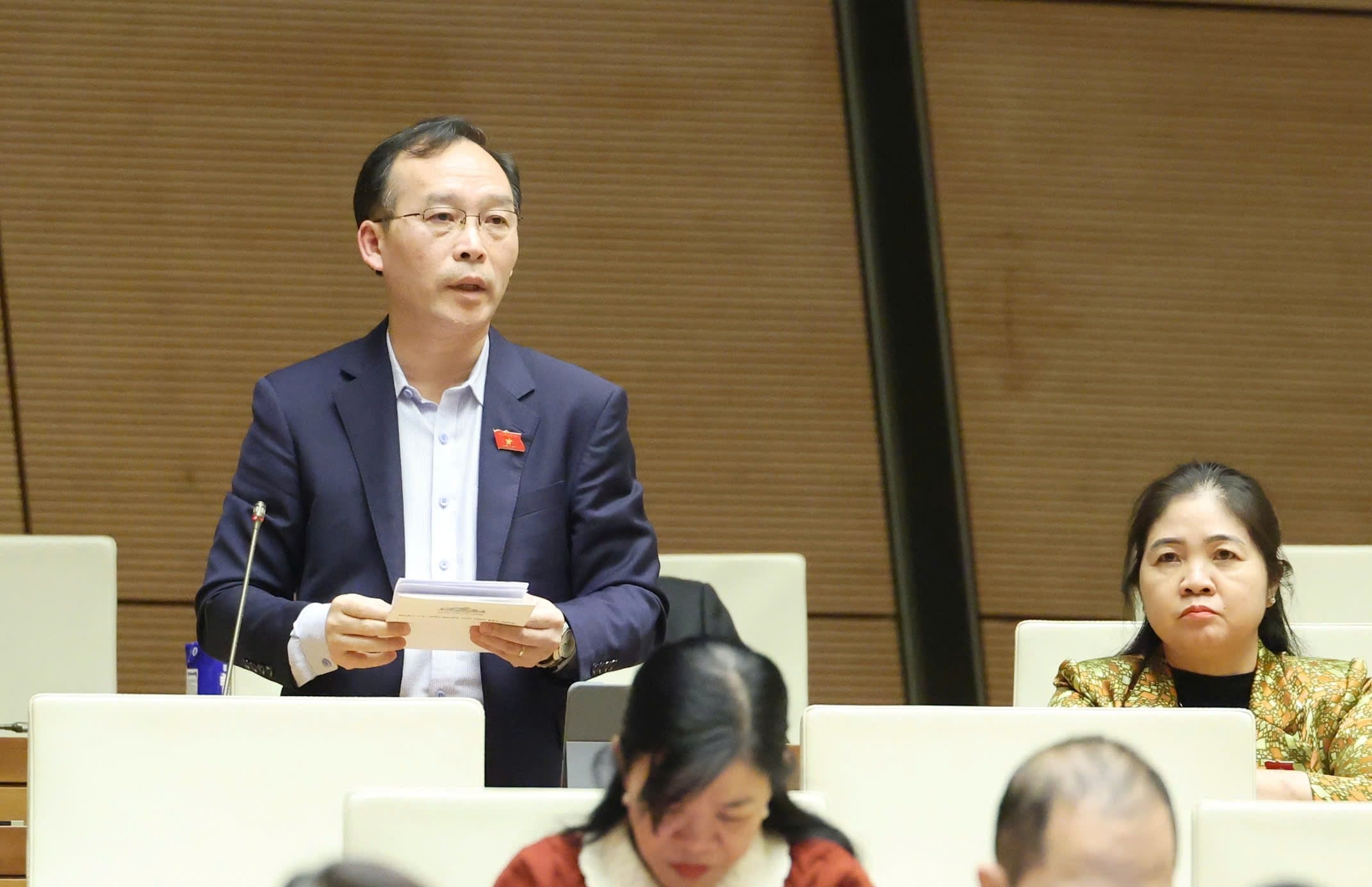
National Assembly Deputy Tran Van Tuan (Bac Ninh) suggested that the drafting agency study and supplement specific regulations in the law or assign the Government to specifically regulate cases of temporary suspension of complaint settlement determined to be due to force majeure or objective obstacles; at the same time, supplement specific regulations on the maximum suspension period.
The reason is that currently, according to the provisions of Article 156 of the 2015 Civil Code, "A force majeure event is an event that occurs objectively, cannot be foreseen and cannot be overcome, despite the application of all necessary and possible measures" and "An objective obstacle is an obstacle caused by objective circumstances that make it impossible for a person with civil rights and obligations to know that his/her legitimate rights and interests have been violated, or to exercise his/her civil rights and obligations".
“This is a general provision, on the basis of which specialized laws continue to regulate force majeure cases in accordance with the scope and subjects of the law, or refer to the provisions of the Civil Code.” Emphasizing this requirement, delegate Tran Van Tuan said that the draft Law needs to clearly define what is a “force majeure event or objective obstacle” in handling complaints.
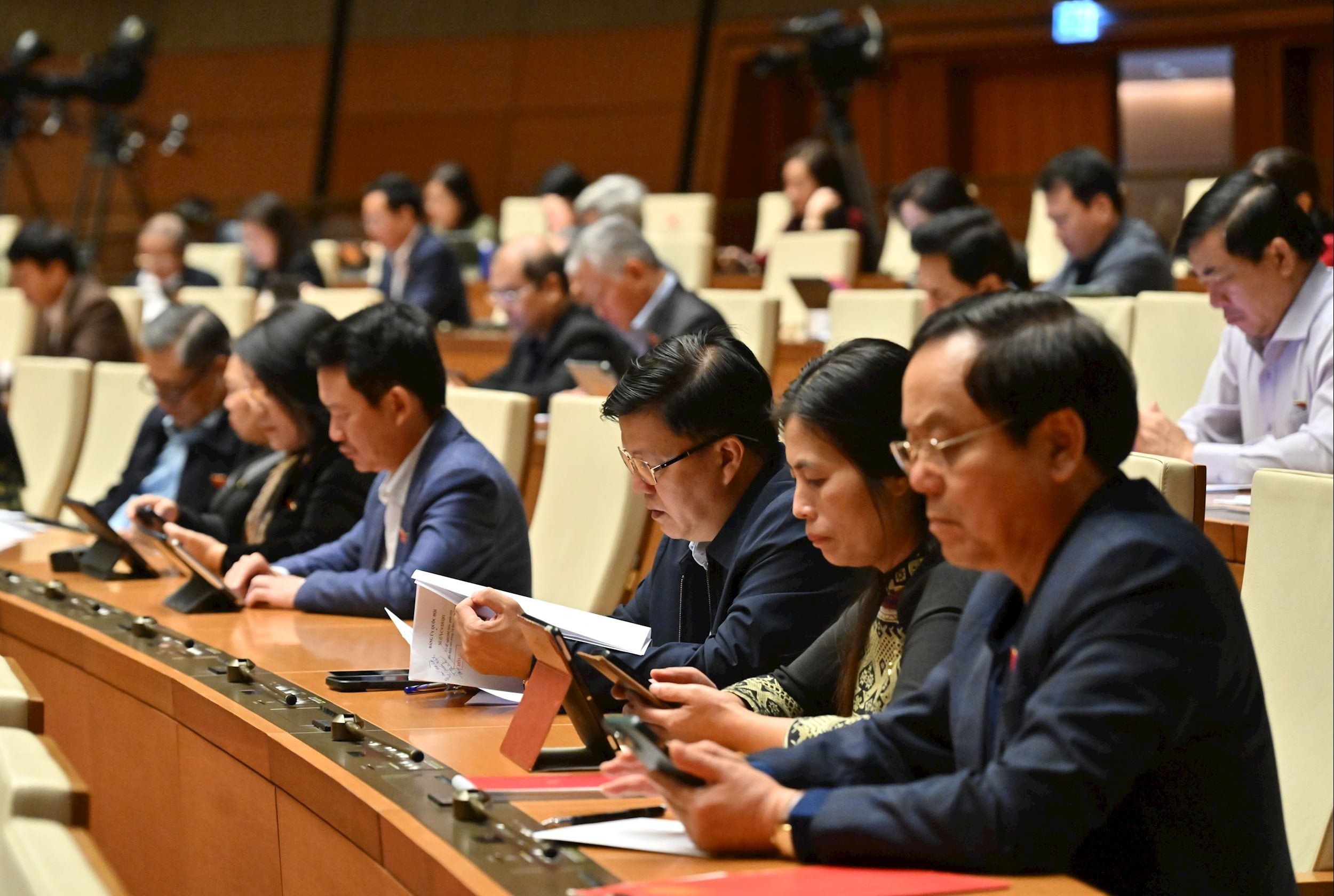
At the same time, it is necessary to add specific regulations on the maximum suspension period to avoid abuse in the suspension of complaint settlement. According to the delegate, if there is no clear regulation, it may lead to the suspension of complaint settlement in cases where there are only certain difficulties, not yet determined to be a case of force majeure or objective obstacles. The consequence of this abuse is that the complaint is not resolved or is prolonged, pushed back, or resolved, causing disadvantages and frustration for citizens.
Regarding the authority of the Chairman of the People's Committee at the commune level in handling complaints, delegate Tran Van Tuan found that current regulations and the draft Law do not fully stipulate the authority to handle complaints regarding administrative decisions issued by agencies and organizations, including the People's Committee at the commune level.
Meanwhile, currently, although there are no regulations, Chairmen of People's Committees at all levels are still not only handling first-time complaints against their own administrative decisions and administrative acts, but also have to handle first-time complaints against administrative decisions of the People's Committees at their level.
Therefore, to have a full legal basis for implementation, the delegate proposed to amend and supplement Article 17 on the authority of the Chairman of the People's Committee at the commune level in resolving first-time complaints. Accordingly, the Chairman of the People's Committee at the commune level has the authority to resolve first-time complaints regarding administrative decisions and administrative acts of himself, of the People's Committee at the commune level, of the head of a specialized agency, other administrative organization under the People's Committee at the commune level, of civil servants and public employees under his direct management.
At the same time, study and amend Clause 1, Article 21 of the Law on Complaints to define the authority of the Chairman of the Provincial People's Committee in resolving first-time complaints.
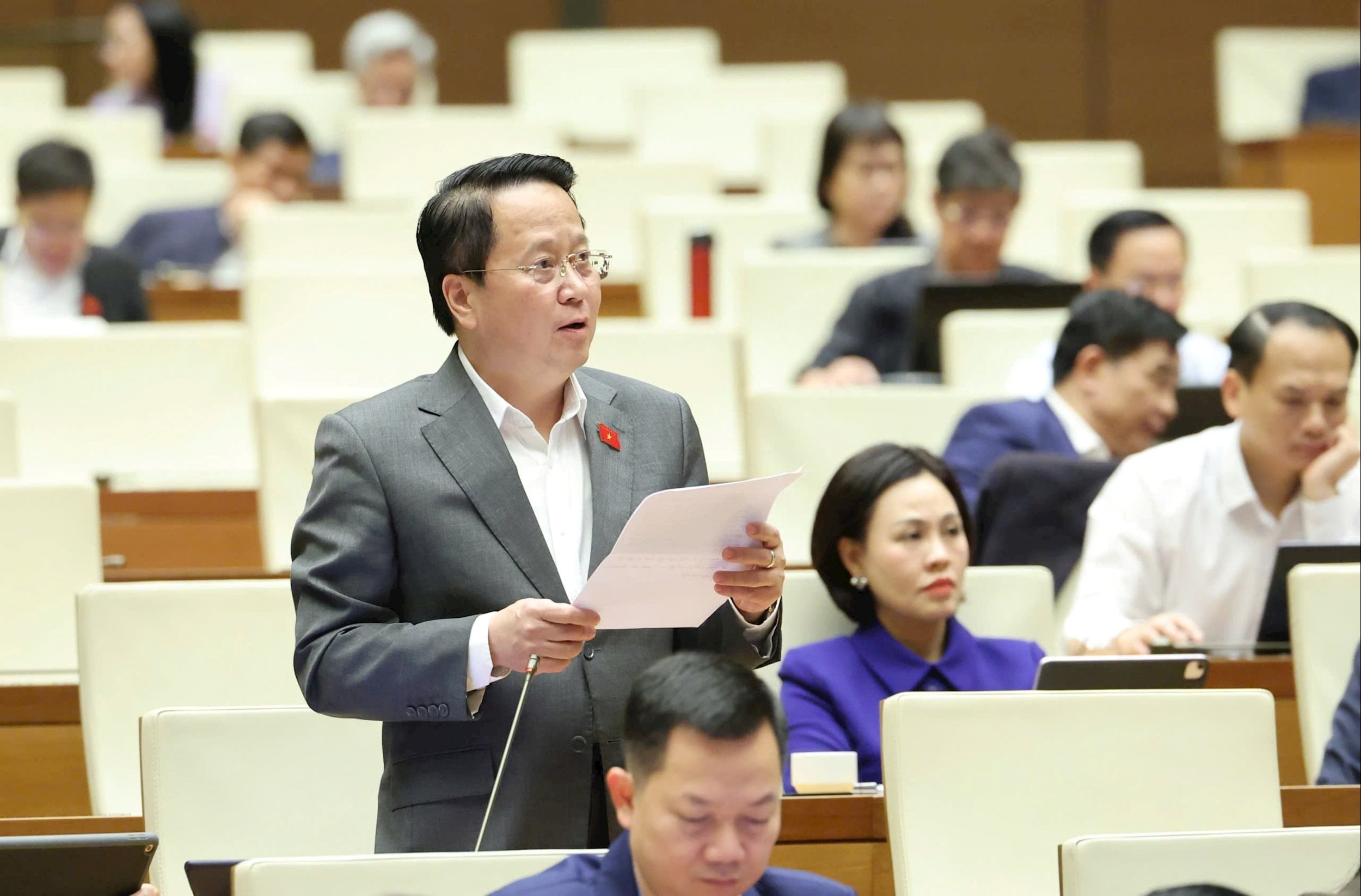
In addition, National Assembly Deputy Hoang Anh Cong (Thai Nguyen) also pointed out that the draft Law has amended and supplemented Article 22 of the Law on Citizen Reception in the direction of specifically regulating the reception of citizens by the People's Council and People's Council deputies. However, the draft Law has not yet stipulated the responsibility of the Standing Committee of the People's Council to receive citizens.
Meanwhile, in localities, the regulations on citizen reception of People's Councils at all levels stipulate that the Standing Committee of the People's Council receives citizens on behalf of the People's Council and is responsible for organizing for People's Council delegates to receive citizens.
Source: https://daibieunhandan.vn/sua-doi-bo-sung-mot-so-dieu-cua-luat-tiep-cong-dan-luat-khieu-nai-luat-to-cao-quy-dinh-ro-ve-tam-dinh-chi-giai-quyet-khieu-nai-do-bat-kha-khang-10399380.html
![[Photo] Cat Ba - Green island paradise](/_next/image?url=https%3A%2F%2Fvphoto.vietnam.vn%2Fthumb%2F1200x675%2Fvietnam%2Fresource%2FIMAGE%2F2025%2F12%2F04%2F1764821844074_ndo_br_1-dcbthienduongxanh638-jpg.webp&w=3840&q=75)
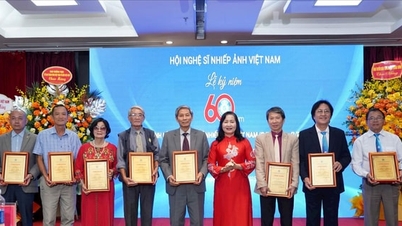
![[Photo] 60th Anniversary of the Founding of the Vietnam Association of Photographic Artists](/_next/image?url=https%3A%2F%2Fvphoto.vietnam.vn%2Fthumb%2F1200x675%2Fvietnam%2Fresource%2FIMAGE%2F2025%2F12%2F05%2F1764935864512_a1-bnd-0841-9740-jpg.webp&w=3840&q=75)






































































Comment (0)