

Although they are both Taiwanese apples, the Xuân apple variety, when grown in Đại Sơn, produces large fruits with a uniquely sweet flavor rarely found elsewhere. According to local people, amidst the vast forests and cool climate of the former Sơn Động district, Đại Sơn stands out due to its very low rainfall combined with its special soil. This combination of favorable weather and location creates the unique value of the apples grown here.
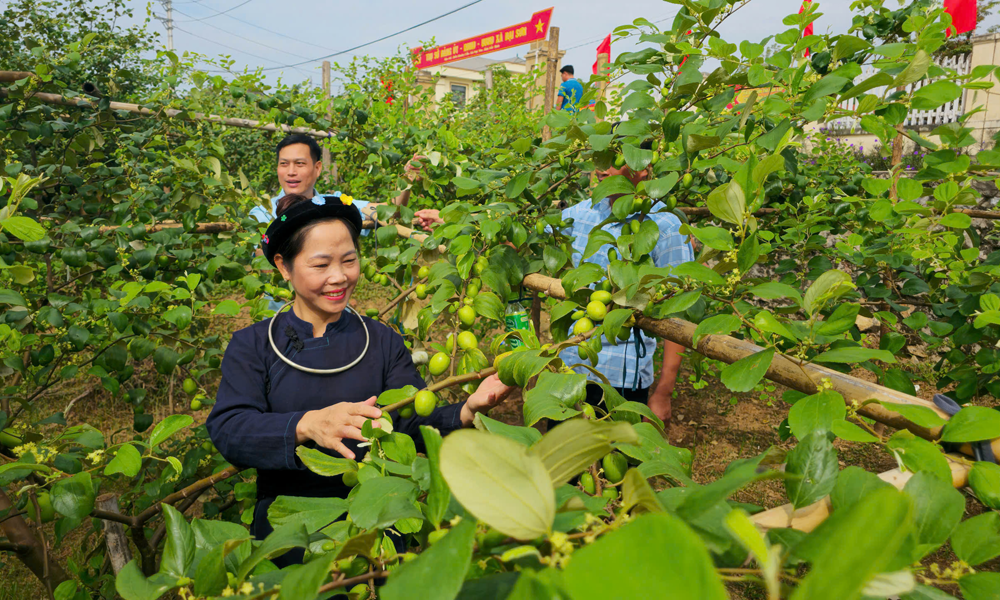 |
The apple orchard is entering the fruit development stage. |
With its superior yield and quality, this fruit has established a strong brand in the market, helping farmers increase their income. Therefore, from just a few hectares initially, Dai Son has expanded its apple cultivation area to over 190 hectares, with an average yield of nearly 40 tons/ha, a total production of approximately 7,600 tons/year, and a selling price of around 30,000 VND/kg, generating hundreds of billions of VND in income annually. Many households earn between 150 and 300 million VND/year. It is projected that by 2025, revenue will exceed 200 billion VND. The commune has successfully developed a concentrated apple production area, and Dai Son apples have received OCOP 3-star certification. The majority of the apples are purchased by traders, convenience stores, and supermarkets both within and outside the province.
| From just a few hectares initially, Dai Son has now expanded its apple cultivation area to over 190 hectares, with an average yield of nearly 40 tons/ha, a total production of approximately 7,600 tons/year, and a selling price of around 30,000 VND/kg, generating hundreds of billions of VND in income annually. Many households earn between 150 and 300 million VND/year. Revenue is projected to exceed 200 billion VND by 2025. |
Tan Hiep village is one of the typical localities in the commune that has transformed its crop structure from unreliable rice production to commercial apple cultivation. The village has 240 households, with a total apple cultivation area of over 250 acres. While tending to her apple orchard during the fruit development stage, Ms. Duong Thi Ket shared: “Previously, our family's economy mainly depended on lychee trees and forestry, but in recent years, thanks to converting a portion of the lychee orchard to apple cultivation, our economic situation has improved significantly. Last year, our 3 acres of spring apples yielded over 4.5 tons, with traders buying directly from the orchard, providing a stable income. To ensure a bountiful harvest, our family always pays attention to every step of care, applying balanced fertilizer, regularly inspecting the orchard, and promptly controlling pests and diseases. This year's apples are developing well and are expected to yield a high harvest.”
According to Mr. Chu Van Trang from Tan Hiep village, a farmer with many years of experience, nature is fair. Although Dai Son commune experiences little rainfall, making it unsuitable for growing plants that prefer high humidity, it is very suitable for growing apples. Therefore, the people of Dai Son commune have introduced apple trees to replace other crops. Mr. Trang's family alone cultivates 3 acres of apple trees, yielding 14 tons in 2024. With an average selling price of 30,000 VND/kg, their revenue exceeded 400 million VND. Currently, some early-ripening apple trees have large fruits, while others are in the flowering and initial fruiting stages. Mr. Trang anticipates that the early-ripening trees will be harvested around the Lunar New Year, while the remaining trees will be harvested later in the spring. The apple harvesting season lasts approximately 3 months.
Not content with traditional production methods, apple growers in Dai Son have boldly adopted clean agricultural models, producing according to VietGAP standards and establishing product distribution networks. As a result, the quality and commercial value of apples have steadily improved, and the market has expanded. In Tan Hiep village, a cooperative for the consumption of clean agricultural products has been formed with 14 member households, specializing in purchasing and guaranteeing the sale of products from several households in the village. The cooperative has been certified by VINACAB Certification Joint Stock Company (Hanoi) for apple production according to VietGAP standards, covering an area of over 21 hectares with an expected yield of 635 tons per year.
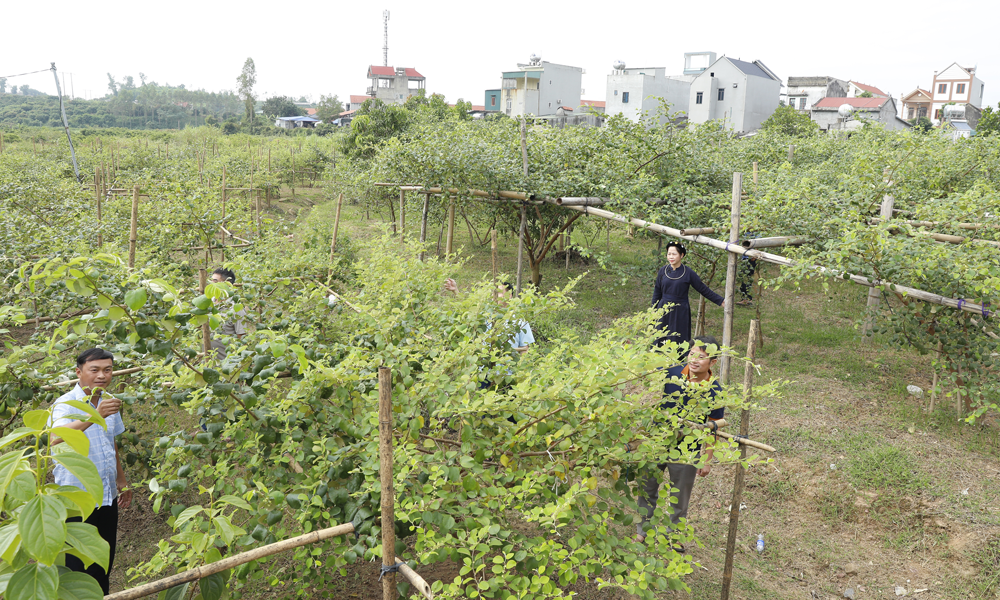 |
The late spring apple variety is currently in bloom. |
Mr. Hoang Van Phuong, Chairman of the People's Committee of Dai Son commune, said: “To achieve the goal of increasing the economic value per hectare of agricultural land to 125 million VND/year, Dai Son commune continues to promote the transfer of science and technology into production towards organic farming, VietGAP, and GlobalGAP. We focus on rationally transforming the crop structure, encouraging farmers to expand the area for apple cultivation, building high-quality apple production zones, and promoting production linkages to create competitive products in the market. At the same time, we are implementing solutions to build and promote the brand of clean Dai Son apples to improve economic efficiency and make this agricultural product a key product of the commune, linked to the One Commune One Product (OCOP) program.”
Although apple trees are a new crop in Dai Son, their high yield, delicious flavor, and good price have brought outstanding economic benefits compared to other crops in this hilly region. Apple trees have become a shining example in the transformation of crop structure to suit the soil conditions, contributing to the local implementation of the National Target Program for socio-economic development in ethnic minority and mountainous areas.
Source: https://baobacninhtv.vn/tao-dai-son-hua-hen-mua-qua-ngot-postid430209.bbg

![[Image] Hanoi's urban life under the challenge of a "scorching hot" environment](https://vphoto.vietnam.vn/thumb/1200x675/vietnam/resource/IMAGE/2026/05/25/1779706979265_nang-nong-t5-2026-minh-duy-7-4636-jpg.webp)














































































Comment (0)