

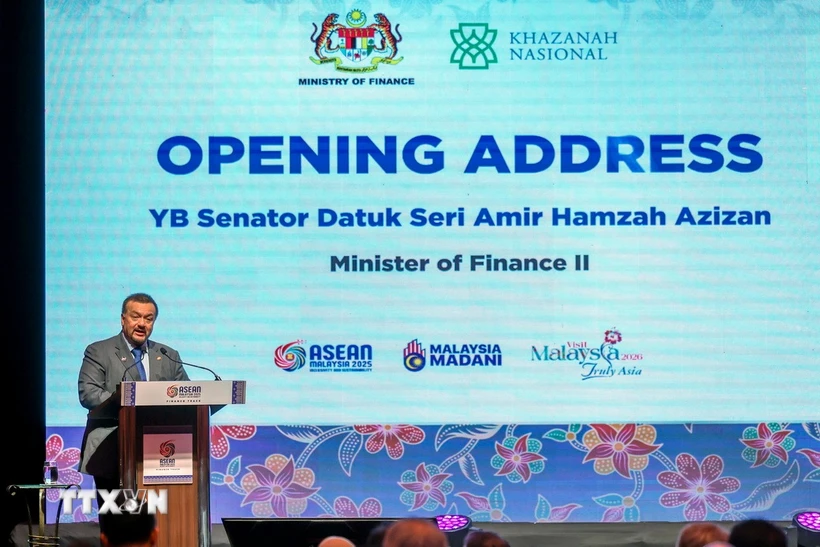
Malaysia's Second Finance Minister, Amir Hamzah Azizan, delivers the opening remarks. (Photo: Bernama/VNA)
Malaysia's second Finance Minister, Amir Hamzah Azizan, believes that the ASEAN semiconductor market has the potential to exceed US$52 billion by 2032 by moving up the value chain.
In his opening remarks at the April 8th discussion themed “Building a Nation Through Complementary Ecosystems,” one of the side events of the 12th ASEAN Finance Ministers and Central Bank Governors Meeting (AFMGM-12) and related meetings held in Kuala Lumpur, Minister Hamzah stated that to develop the region’s semiconductor market, which has already reached over US$31 billion by 2023, ASEAN must focus on value rather than just volume.
This means that the value chain must be upgraded, focusing on design, manufacturing, and early-stage intellectual property (IP) development so that ASEAN is not only a hub for innovation but also a starting point for innovation.
He asserted that no country can achieve that coveted position alone. Taiwan (China) rose not solely through talent, and the US did not lead solely through capital. It was the interconnected, coordinated, and supportive ecosystems that made the difference. Therefore, ASEAN must do the same, and ASEAN must do it together.
According to Amir Hamzah, ASEAN has enormous potential to shape the next chapter of the global semiconductor story because the bloc possesses deep industrial capabilities, a growing pool of skilled engineers, increasingly modern innovation centers, and access to some of the world's most dynamic consumer and business markets.
He emphasized that ASEAN's strength lies not in doing the same thing everywhere, but in doing things together that complement each other.
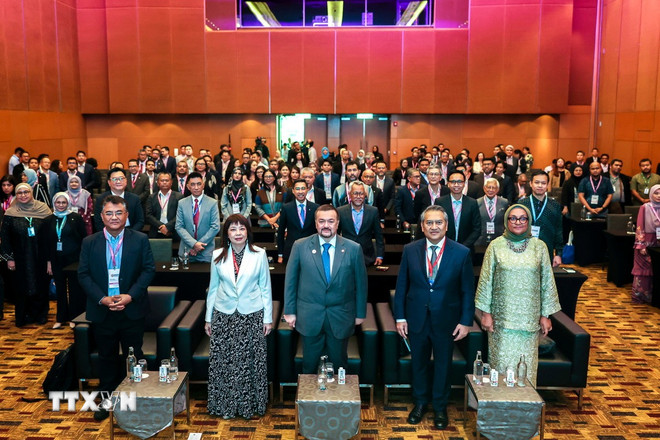
Malaysia's Second Finance Minister, Amir Hamzah Azizan (second from the left), poses for a photo with delegates attending the seminar. (Photo: Bernama/VNA)
With the right coordination, ASEAN can become an integrated, agile, and future-ready semiconductor manufacturing region. However, ASEAN must be wise in the face of challenges.
Assessing the real-world semiconductor environment, he stated that the realignment of global supply chains due to rising geopolitical tensions and protectionist trade policies is reshaping global production and trade patterns.
The US imposing retaliatory tariffs on countries with trade surpluses, including a 24% tariff on Malaysian exports, is not an isolated development but part of a larger shift toward more inward-looking policies.
However, for ASEAN, this move represents a turning point, requiring clarity, coordination, and shared determination.
He argued that ASEAN's best response was not to retreat into protectionism, but to gain an advantage through integration.
Simultaneously, ASEAN must diversify its supply chains, support open regionalism through frameworks such as the Regional Comprehensive Economic Partnership (RCEP) and the Comprehensive and Progressive Trans- Pacific Partnership (CPTPP), and make full use of tools such as the ASEAN Single Window to mitigate conflicts and build trust.
In fact, he noted, ASEAN has produced more than 10 "unicorns" with a combined value exceeding US$34 billion since 2012. However, the region's startup ecosystem is still suffering from unequal access to capital, fragmented markets, and limited support.
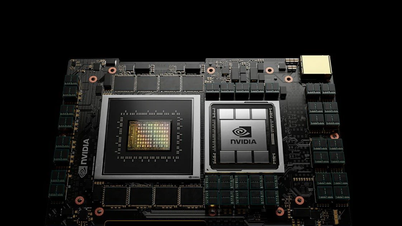
He compared semiconductors to the hardware of the future economy, saying that startups are the operating system driving acceleration, adaptability, and innovation. But bold ideas cannot scale in isolation.
To thrive, startups need an infrastructure of opportunity: clear rules, open markets, reliable networks, and parallel development organizations.
Source: https://www.vietnamplus.vn/thi-truong-ban-dan-asean-co-tiem-nang-vuot-52-ty-usd-vao-nam-2032-post1026538.vnp


![[Photo] Prime Minister Pham Minh Chinh attends the Conference summarizing and implementing tasks of the judicial sector.](/_next/image?url=https%3A%2F%2Fvphoto.vietnam.vn%2Fthumb%2F1200x675%2Fvietnam%2Fresource%2FIMAGE%2F2025%2F12%2F13%2F1765616082148_dsc-5565-jpg.webp&w=3840&q=75)









































































Comment (0)