

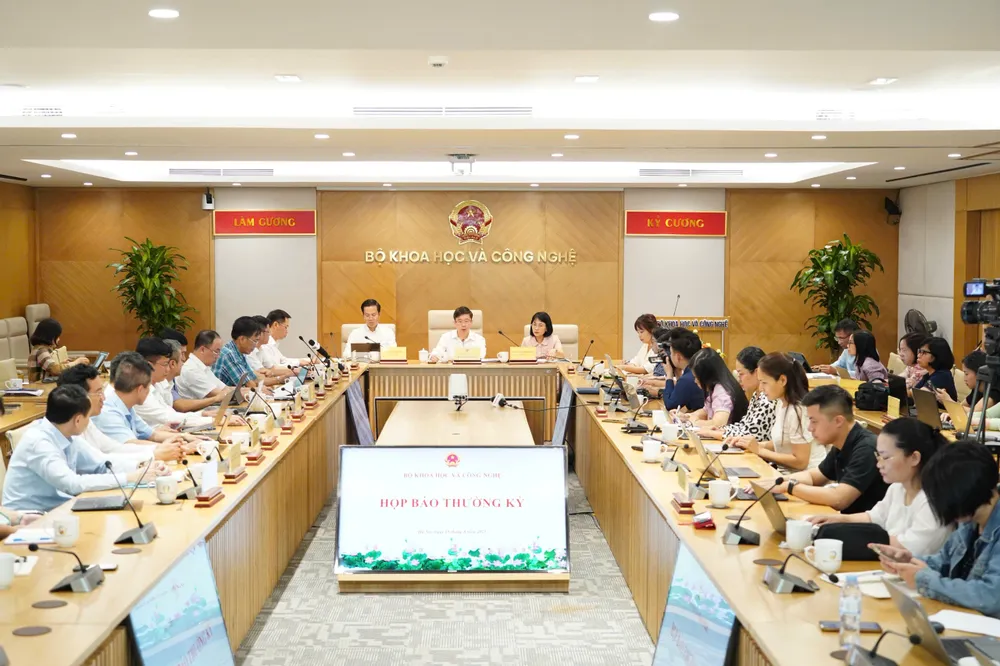
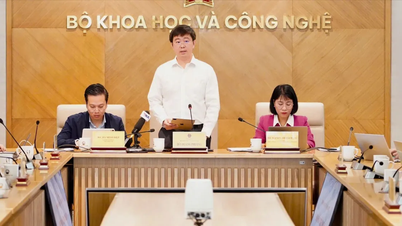
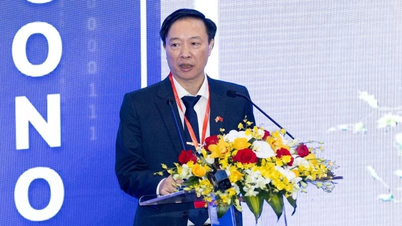
At the press conference, Deputy Minister Bui Hoang Phuong stated that in July, the Ministry of Science and Technology proactively and actively implemented many key tasks in its leadership and management, achieving outstanding results and making important contributions to the national development of science , technology, innovation, and digital transformation.
The Ministry of Science and Technology has closely coordinated with the Ministry of Interior and the Ministry of Finance to develop and submit to the Government for promulgation Decree No. 179/2025/ND-CP stipulating the support level for those working full-time on digital transformation, information security, and cybersecurity (support level of 5 million VND/month) and Decree 180/2025/ND-CP on mechanisms and policies for public-private cooperation in the field of science and technology development, innovation, and digital transformation. The promulgation of these decrees creates a breakthrough legal framework for public-private partnerships (PPP), aiming to unleash social resources and provide a strong impetus for the national development of science and technology, innovation, and digital transformation.
Allows the use of budget funds to purchase, decode, and localize technology.
In August 2025, the Ministry of Science and Technology will focus on developing and submitting to the Government four draft laws: the Law amending the Law on High Technology; the Law amending and supplementing a number of articles of the Law on Technology Transfer; the Law amending and supplementing a number of articles of the Law on Intellectual Property; and the Law on Digital Transformation; ensuring that they are submitted to the National Assembly for consideration and approval at the 10th session of the 15th National Assembly.
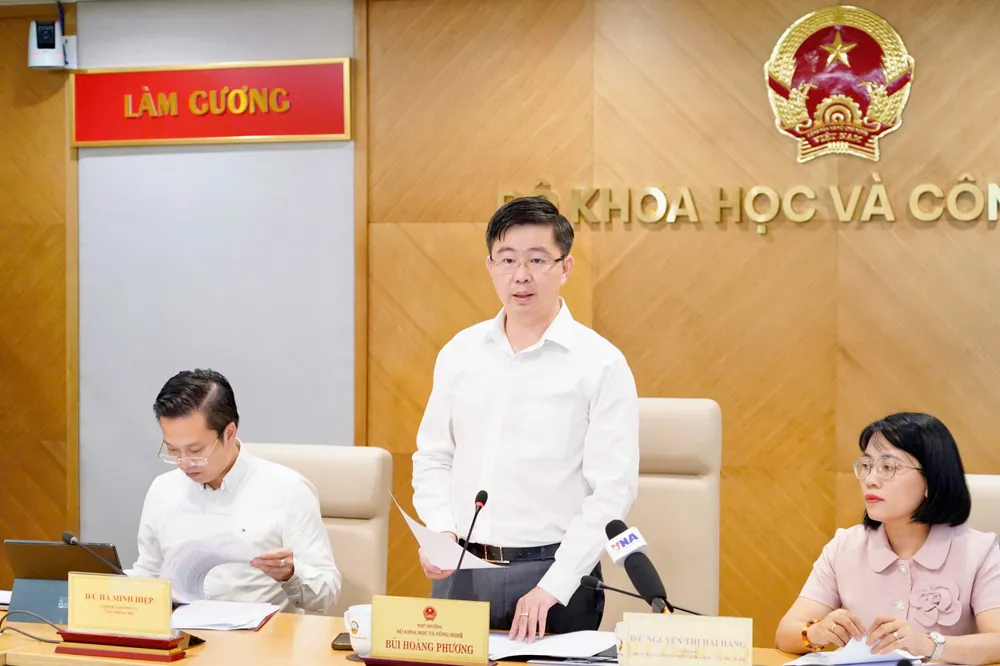
The Ministry of Science and Technology will also focus on developing two projects: Forming large-scale strategic technology enterprises domestically to develop digital infrastructure, digital workforce, digital data, strategic digital technologies, and cybersecurity; and supporting and developing digital technology enterprises to expand globally.
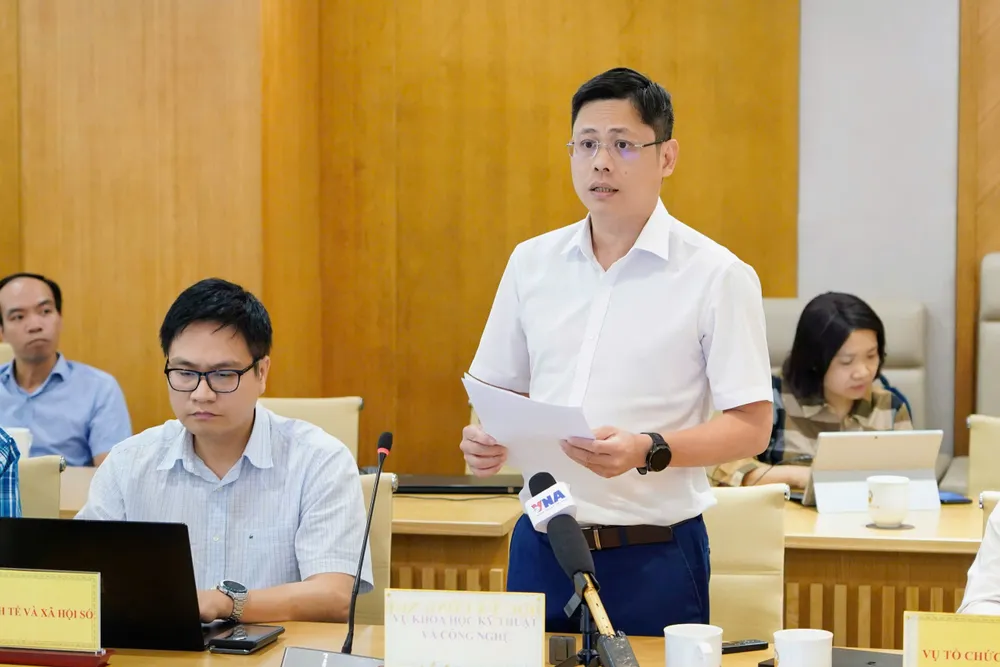
Regarding the development of national strategic technologies, Mr. Hoang Anh Tu, Deputy Director of the Department of Science, Technology and Engineering (Ministry of Science and Technology), said that in the coming time, the Ministry of Science and Technology will focus on promoting the development of 1 to 3 strategic products that are urgent, have the potential for rapid success, create a ripple effect, and have the readiness of businesses to participate in pioneering implementation.
Simultaneously, the National Project for the Development of Strategic Technologies until 2030 and with a vision to 2035 will be submitted to the Prime Minister for approval. This includes the National Science and Technology Program for the Development of Strategic Technologies, comprising 11 component programs, corresponding to 11 groups of strategic technologies. Each component program will be assigned to one ministry or sector to lead.
The Ministry of Science and Technology will also implement a comprehensive set of solutions to develop strategic technologies.
Specifically, this involves establishing centers for reverse engineering and technology decoding; allowing the use of budget funds to purchase, decode, and localize technology; and gradually forming strategic technology clusters at the local level, each focusing on a number of key technologies based on regional advantages, with specific mechanisms for public investment, land, finance, and human resources.
Simultaneously, develop a national communication program on strategic technology development to raise social awareness and bring strategic "Make in Vietnam" technology products to the international market.
Creating a conducive environment for creativity and innovation.
Regarding the strategy for attracting and utilizing talented individuals and developing high-quality human resources, Mr. Mai Anh Hong, Deputy Director of the Personnel and Organization Department (Ministry of Science and Technology), stated that to concretize the spirit of Resolution 57-NQ/TW of the Politburo and the Law on Science and Technology and Innovation, and the Law on Digital Technology Industry, the Ministry of Science and Technology is focusing on developing and promulgating specific regulations on risk acceptance mechanisms; autonomy mechanisms for public science and technology organizations; superior preferential policies for the development of the semiconductor industry; policies for attracting, utilizing, and valuing talented individuals and high-quality human resources; and regulations on the distribution of benefits from research results.
In addition, the plan includes developing and implementing the project "Developing and utilizing high-quality human resources and talents to serve the development of science and technology, innovation, and digital transformation of the nation"; and developing national programs with specific objectives to attract Vietnamese scientists abroad to work, as well as experienced foreign experts.
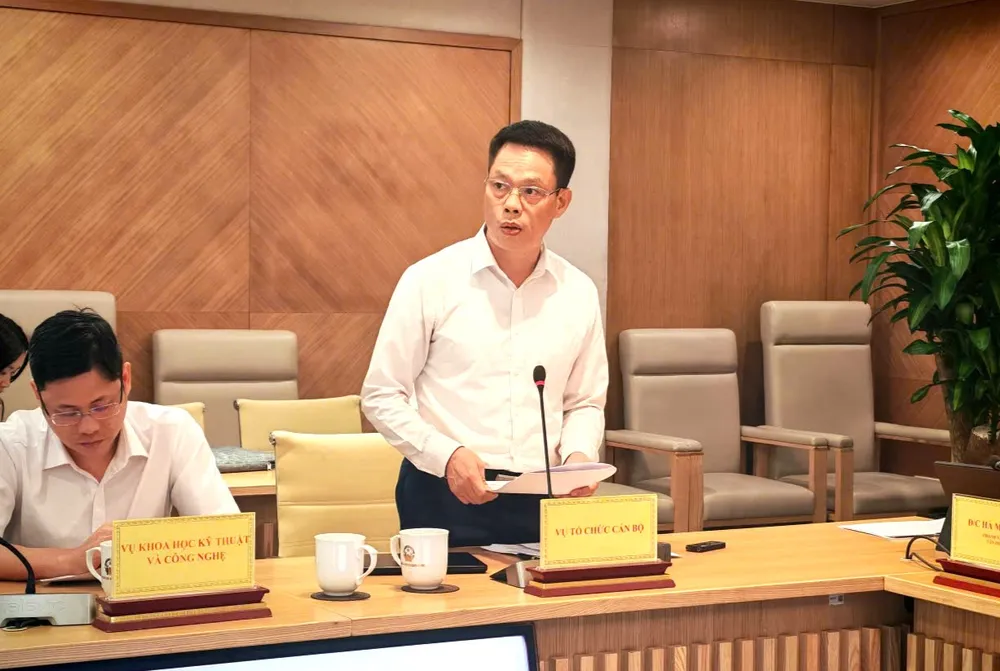
According to Mr. Mai Anh Hong, these programs may include special financial support packages, excellent working conditions, and clear career development opportunities.
The Ministry of Science and Technology will also upgrade key laboratories and research centers to meet international standards, and build high-tech zones and technology incubators to create a favorable environment for creativity and innovation.
Simultaneously, promote linkages between research and businesses; strongly encourage businesses to invest in R&D, cooperate with research institutes and universities to apply scientific results to practical production and business; and develop markets for science and technology products.
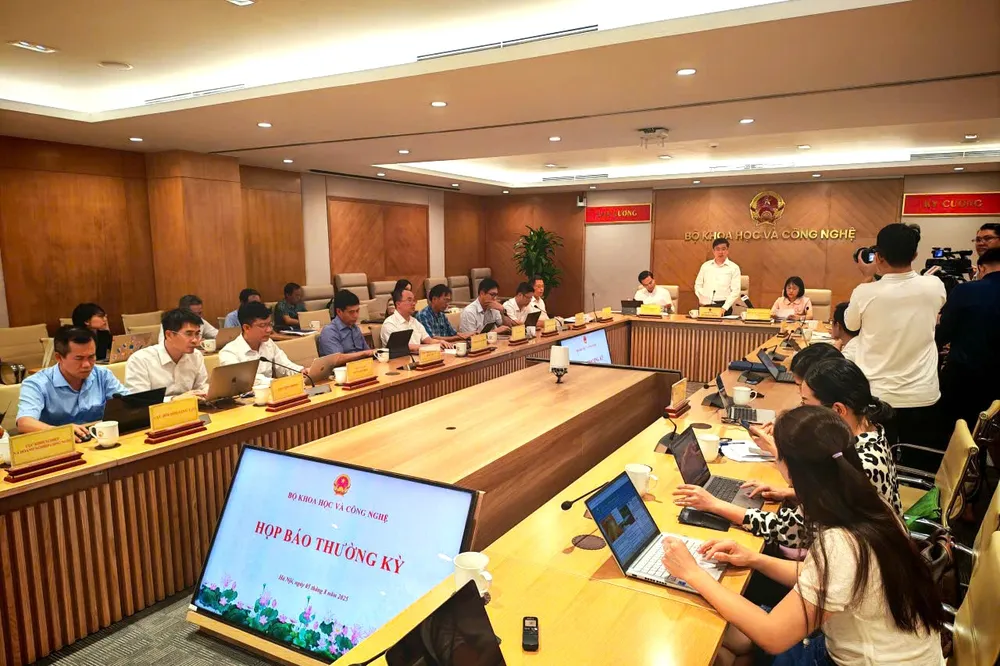
The Ministry of Science and Technology will create conditions for Vietnamese scientists to participate in international projects and global research networks, while attracting large technology corporations to establish R&D centers in Vietnam; minimizing administrative barriers, ensuring maximum autonomy for scientists, and providing resources (finance, equipment, databases) to support research and testing.
Simultaneously, evaluation should be based on effectiveness and products; instead of being heavily focused on process, concentrate on outputs, international publications, patents, and valuable commercialized products.
Source: https://www.sggp.org.vn/thuc-day-phat-trien-cac-san-pham-cong-nghe-chien-luoc-co-tinh-cap-thiet-post806987.html








![[INFOGRAPHIC] Huawei FreeBuds 7i, Noise-Canceling Headphones 4.0](https://vphoto.vietnam.vn/thumb/402x226/vietnam/resource/IMAGE/2025/12/13/1765633184506_info-tainghechongon-02-jpg.webp)







































































Comment (0)