

Income is one of the important criteria that positively impacts the effectiveness of other criteria in the national set of criteria for building new rural areas. Recognizing this, local Party committees and authorities have not only proactively innovated their communication efforts but also implemented various appropriate solutions to encourage people to switch crops and increase their income.
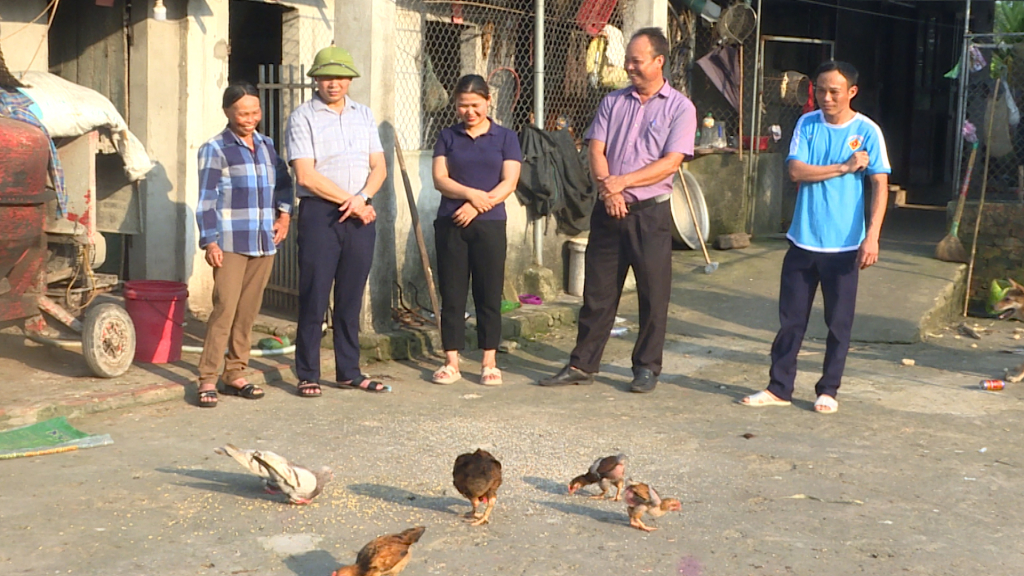
In the context of building new rural areas, Quang Ninh province has always identified income as the most difficult criterion to achieve compared to others. Previously, the province allocated significant resources through resolutions focusing on the development of agriculture , farmers, and rural areas; numerous mechanisms, policies, and state support were provided for the development of economic models and supply chain linkages. However, in reality, many localities have seen numerous economic models implemented only after state support, leaving the land fallow once the support ended. This has led to many communes and villages, especially in remote areas and areas with large ethnic minority populations, having poverty and near-poverty rates reaching nearly 80%.
Based on the above situation, when implementing the new rural development program, Quang Ninh province simultaneously deployed it in all communes and villages throughout the province; clearly setting goals and timelines for completing criteria and indicators in each stage; with income as the foundation for achieving other criteria and indicators. At the same time, the province directed localities to strengthen propaganda and mobilization efforts aimed at raising farmers' awareness and initiative in transforming the structure of crop and livestock varieties.
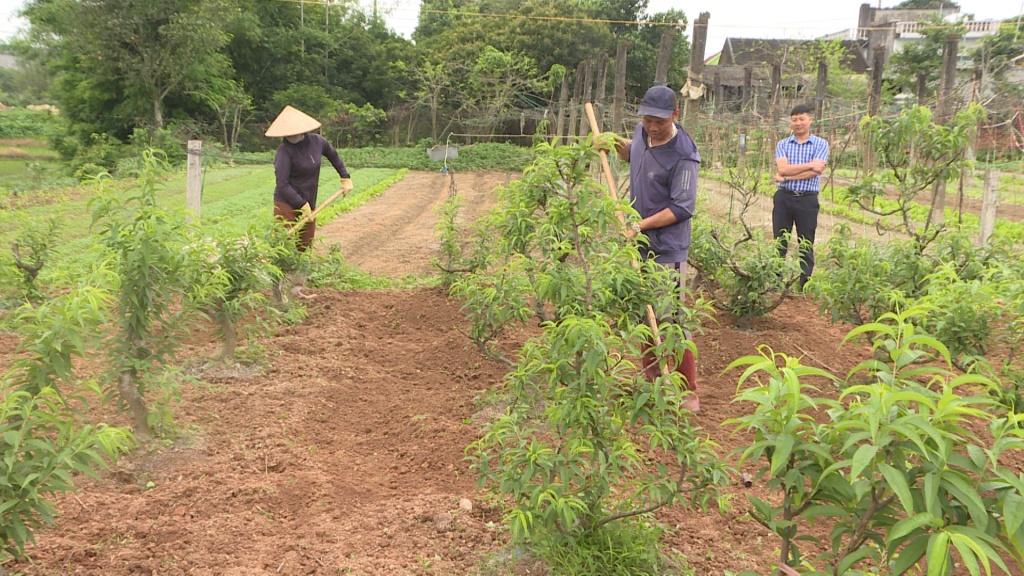
Mr. Nguyen Van Hoa, from Hamlet 4, Quang Minh Commune, Hai Ha District, said: "Three years ago, commune and hamlet officials came to promote and encourage my family to shift our crop structure. The commune facilitated our participation in training courses on peach tree care organized by the district, and my family decided to try planting peach trees on a small area. But after only two years, I saw that the economic efficiency was dozens of times higher than growing rice and other crops, so now my family has decided to expand the area for planting peach trees to meet market demand during Tet (Lunar New Year). I am very happy; each year we earn nearly 500 million VND."
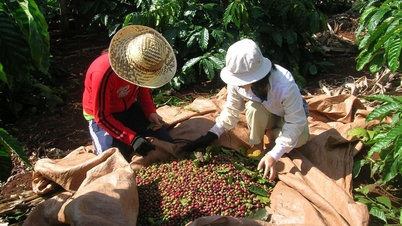
As the largest and most geographically complex of the 13 villages in the commune, Na Bap village in Don Dac commune had a poverty and near-poverty rate exceeding 90% before the implementation of the new rural development program. Therefore, the commune implemented various comprehensive solutions to address the income criteria, strengthening and innovating propaganda efforts to suit the local conditions. Simultaneously, the commune assigned responsibility to each organization and official in charge of the village to actively promote and encourage the people to diversify their crop and livestock production. And with that approach, households in Don Dac commune (Ba Che district) in general, and the family of Mr. Trieu Duc Sinh in Na Bap village in particular, since being encouraged by the commune to shift the crop structure and receiving capital support for the model of growing medicinal plants under the forest canopy, Mr. Trieu Duc Sinh's family has boldly renovated more than half a hectare of forest land previously planted with acacia trees to grow the medicinal plant Codonopsis pilosula.
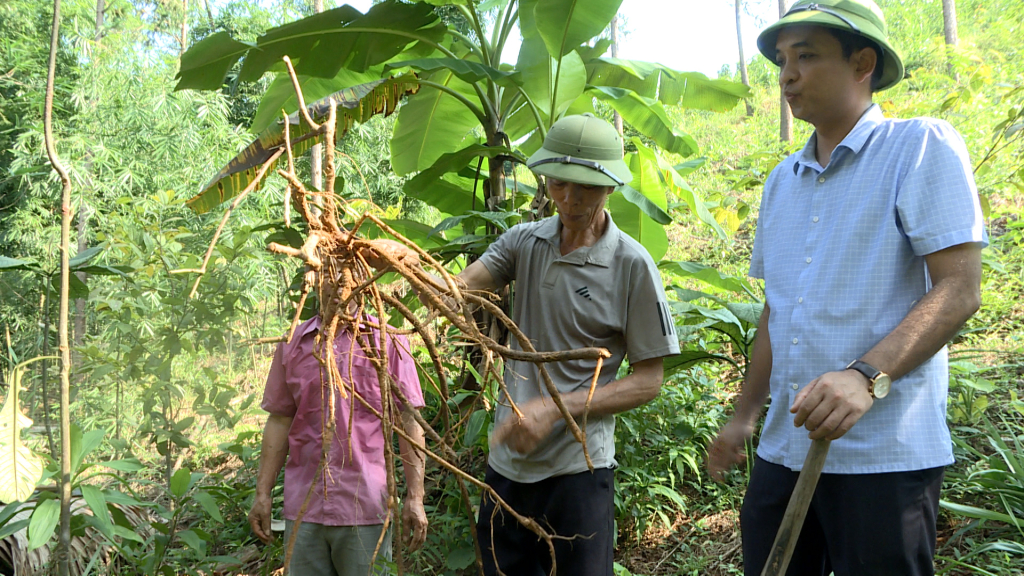
Mr. Luu Minh Thang, Secretary of the Party Committee and Chairman of the People's Council of Don Dac commune, Ba Che district, said: "Through a field inspection of Mr. Sinh's medicinal herb garden, the Codonopsis pilosula plants are developing very well. Although only two years after planting, each Codonopsis pilosula plant has already reached 2 kg, and with the current growth rate, each plant will yield 5 to 6 kg at harvest. Thus, based on the current market price of 180,000 VND/kg, Mr. Sinh's family will earn over 1.5 billion VND."
It can be seen that, thanks to the synchronized solutions that have been and are being implemented by Party committees and authorities at all levels, from the province to the localities, the income criteria of farmers have continuously increased. The average per capita income in rural areas of Quang Ninh province is estimated to reach over 80 million VND/person/year by December 31, 2024.
Source


![[Photo] Prime Minister Pham Minh Chinh attends the Conference on the Implementation of Tasks for 2026 of the Industry and Trade Sector](/_next/image?url=https%3A%2F%2Fvphoto.vietnam.vn%2Fthumb%2F1200x675%2Fvietnam%2Fresource%2FIMAGE%2F2025%2F12%2F19%2F1766159500458_ndo_br_shared31-jpg.webp&w=3840&q=75)












































































Comment (0)