

The polio virus undergoes many genetic mutations.
The polio case involves a 3-year-old boy, detected in Laos, with paralysis onset in late June. This case was confirmed to be infected with the polio virus, recorded approximately 150 km from the Quang Tri border of Vietnam.
This is a highly contagious disease that spreads easily from person to person. Approximately 1 million children under 5 years old in Vietnam are at high risk if the polio virus enters the country, due to inadequate vaccination rates, even though Vietnam eradicated polio in 2000.
This information was provided by the Department of Disease Prevention ( Ministry of Health ) at a meeting on polio prevention and control held this morning, December 12th.
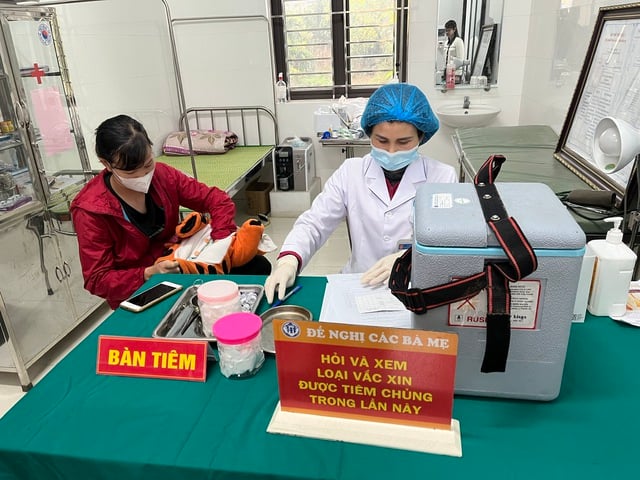
The WHO recommends that Vietnam needs to quickly fill the immunity gap against polio.
PHOTO: TN
Emphasizing the risk of polio entering Vietnam, at the meeting, Mr. Vu Huong, a vaccination expert from the World Health Organization (WHO) in Vietnam, stated that tests in Laos have identified 31 genetic mutations in the polio virus, equivalent to having been circulating in Laos for approximately three years.
The location where the case was detected in Laos is only about 150 km from Vietnam. Besides the 3-year-old patient, Laos has also recorded two other related cases. Epidemiological factors suggest a high risk of polio entering Vietnam due to open trade and the movement of over half a million people annually through the affected region.
Therefore, WHO representatives recommend that Vietnam urgently needs to fill the polio immunity gap as quickly as possible to break the chain of transmission.
The WHO has stated that the polio vaccine currently causing the outbreak is available in Vietnam. Therefore, it is necessary to quickly implement catch-up and supplementary vaccination programs for children as part of the expanded immunization program. Simultaneously, active monitoring and weekly review of all polio cases in hospitals are crucial.
Polio is a "silent" disease that persists for a long time.
According to Mr. Huong, polio has been on the WHO's list of global health emergencies since 2014. After more than 10 years, the disease has still not been removed from the list of global health emergencies due to its complex nature and the difficulty in controlling it, especially with the emergence of mutated polio viruses.
According to WHO experts, in October, Laos launched a rapid-response vaccination campaign for all children under 5 years old in Savannakhet province, where polio cases have been reported. Laos is planning to launch a nationwide non-selective vaccination campaign in February and March 2026, and is also implementing disease response measures according to the standard protocols of the Global Polio Eradication Initiative (GPEI).
Experts also noted that declaring a polio epidemic over could take an average of one year, due to the stringent and lengthy requirements for monitoring cases.
Polio is at risk of entering Vietnam due to an immunity gap in the implementation of routine immunization programs and polio surveillance in the region. The first case of polio in Laos (with a genetic mutation differing by 31 nucleotides) indicates a prolonged period of "silent circulation" in the region.
A global health emergency is the most dangerous situation declared by the WHO, aimed at warning and coordinating the international response to potentially contagious health events that require coordinated action to control, as was done with Covid-19, Ebola, or influenza A/H1N1.
Source: https://thanhnien.vn/tim-thay-virus-bai-liet-bien-doi-31-gen-tai-lao-nguy-co-cao-xam-nhap-viet-nam-185251212101524592.htm
![[Photo] Prime Minister Pham Minh Chinh holds a phone call with the CEO of Russia's Rosatom Corporation.](/_next/image?url=https%3A%2F%2Fvphoto.vietnam.vn%2Fthumb%2F1200x675%2Fvietnam%2Fresource%2FIMAGE%2F2025%2F12%2F11%2F1765464552365_dsc-5295-jpg.webp&w=3840&q=75)































































Comment (0)