

 |
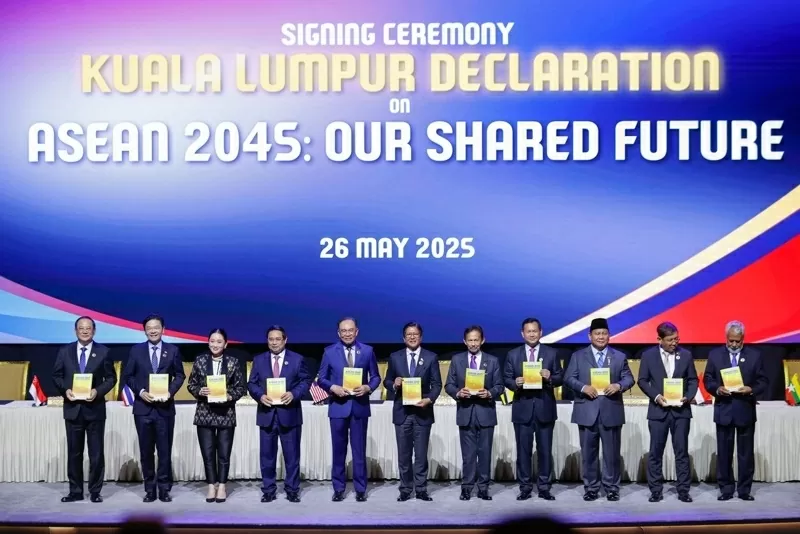
| Prime Minister Pham Minh Chinh and Malaysian Prime Minister Anwar Ibrahim, along with other leaders, signed the Declaration “ASEAN 2045: Our Shared Future” on the occasion of the 47th ASEAN Summit in Malaysia, May 2025. (Source: VGP) |
As ASEAN embarks on its journey towards 2045 with the adoption of the ASEAN Vision 2045 Declaration: Our Shared Future and accompanying strategic plans, it is worth reflecting on Vincent Van Gogh's quote: "Great things are made up of small things connected together . " This spirit accurately reflects ASEAN's approach, as decades of sustained progress and joint efforts have laid a solid foundation for the ASEAN Community.
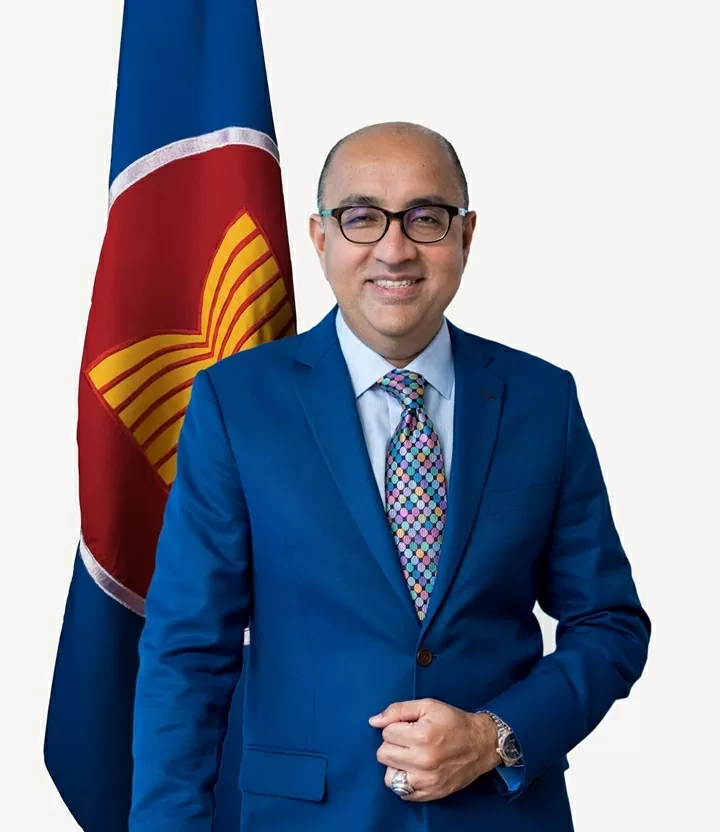 |
| ASEAN Deputy Secretary-General for ASEAN Economic Community Satvinder Singh. (Source: asean.org) |
The aspiration to move forward as a unified community is not new. Ten years ago, ASEAN leaders defined the strategy for the next phase of economic integration: building an integrated, sustainable, and inclusive ASEAN economy that fosters sustainable growth, sparks innovation, and strengthens the region's global economic standing.
The ASEAN Economic Community (AEC) Vision 2025, adopted alongside the visions of the ASEAN Political -Security Community (APSC) and the ASEAN Socio-Cultural Community (ASCC) at the 27th ASEAN Summit in 2015, has become a key instrument for realizing this aspiration.
A decade of implementing AEC 2025
After a decade of implementing AEC 2025, the achievements are truly impressive, clearly reflected in economic indicators, especially trade and investment.
From 2015 to 2024, ASEAN's GDP increased from US$2.5 trillion to US$3.9 trillion, with an average annual growth rate of 5.1%. Total merchandise trade increased from US$2.3 trillion in 2015 to US$3.8 trillion in 2024, while FDI inflows nearly doubled, from US$115.4 billion to US$226 billion.
Trade in services also reached a record high of $1.3 trillion, reflecting the competitiveness in the digital services, logistics, finance, and tourism sectors.
In particular, intra-regional flows clearly demonstrate the complementary nature and resilience of the region. Intra-regional trade accounted for an average of 22.1% of total regional merchandise trade between 2016 and 2024. Intra-regional investment reached US$31.5 billion in 2024, accounting for 13.9% of total investment, becoming the second largest source of FDI in the region after the United States. This trend not only shows the resilience of the region but also reflects the increasingly deep integration of regional value chains.
Collective actions under the AEC 2025 Framework are crucial. It is estimated that initiatives and strategic agreements within this framework have contributed an additional 5% to GDP, equivalent to US$1.1 trillion, along with US$3.3 trillion in trade value and an 8% increase in investment over the past decade.
Notably, ASEAN achieved these results while global FDI inflows increased by only 4% – demonstrating investors' confidence in ASEAN's unified market and integration effectiveness.
 |
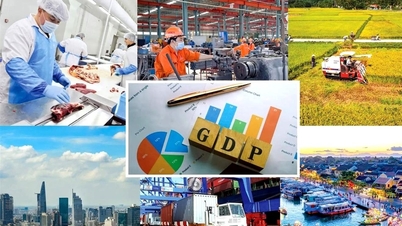
| Illustration: From 2015 to 2024, ASEAN's GDP increased from US$2.5 trillion to US$3.9 trillion, with an average annual growth rate of 5.1%. (Source: VnEconomy) |
The achievements are not just in the overall numbers. At the enterprise level, labor productivity has increased, creating 4 million jobs, labor income has risen by 5% (equivalent to an additional $16 per month), and the female labor participation rate has reached 66% – a leading rate among emerging economies.
For the business community, the focus on procedural reforms and trade facilitation has created a more stable and transparent environment. Initiatives such as the ASEAN Single Window (ASW), the ASEAN Customs Transit System (ACTS), and the Harmonized Tariff Schedule have shortened customs clearance times from 14 days to 3 days, significantly reducing costs and accelerating market access.
Simultaneously, the elimination of 98% of tariffs under the ATIGA framework, along with better utilization of FTAs, has enhanced the competitiveness of producers and exporters. As a result, intra-bloc trade increased by $540 billion, while trade outside the bloc, especially with RCEP partners and other key markets, increased by $1.4 trillion.
Another bright spot is digital transformation. ASEAN has accelerated strongly over the past decade with interconnected digital payments, developing e-commerce, widespread mobile connectivity, and a prominent position in the global technology supply chain.
The ASEAN digital economy is projected to reach US$2 trillion by 2030. The ASEAN Framework Agreement on the Digital Economy (DEFA) and the Unique Enterprise Identification Number (UBIN) initiative will help strengthen trust and enhance interoperability in cross-border digital transactions.
In addition, tourism is also a highlight. Although the number of international visitors dropped sharply to 2.9 million in 2021 due to the Covid-19 pandemic, ASEAN quickly adapted, improving transport connectivity and popularizing digital payments, creating a seamless cross-border travel experience. As a result, in 2024, ASEAN welcomed 127.1 million international visitors, demonstrating its enduring appeal and strong resilience.
 |
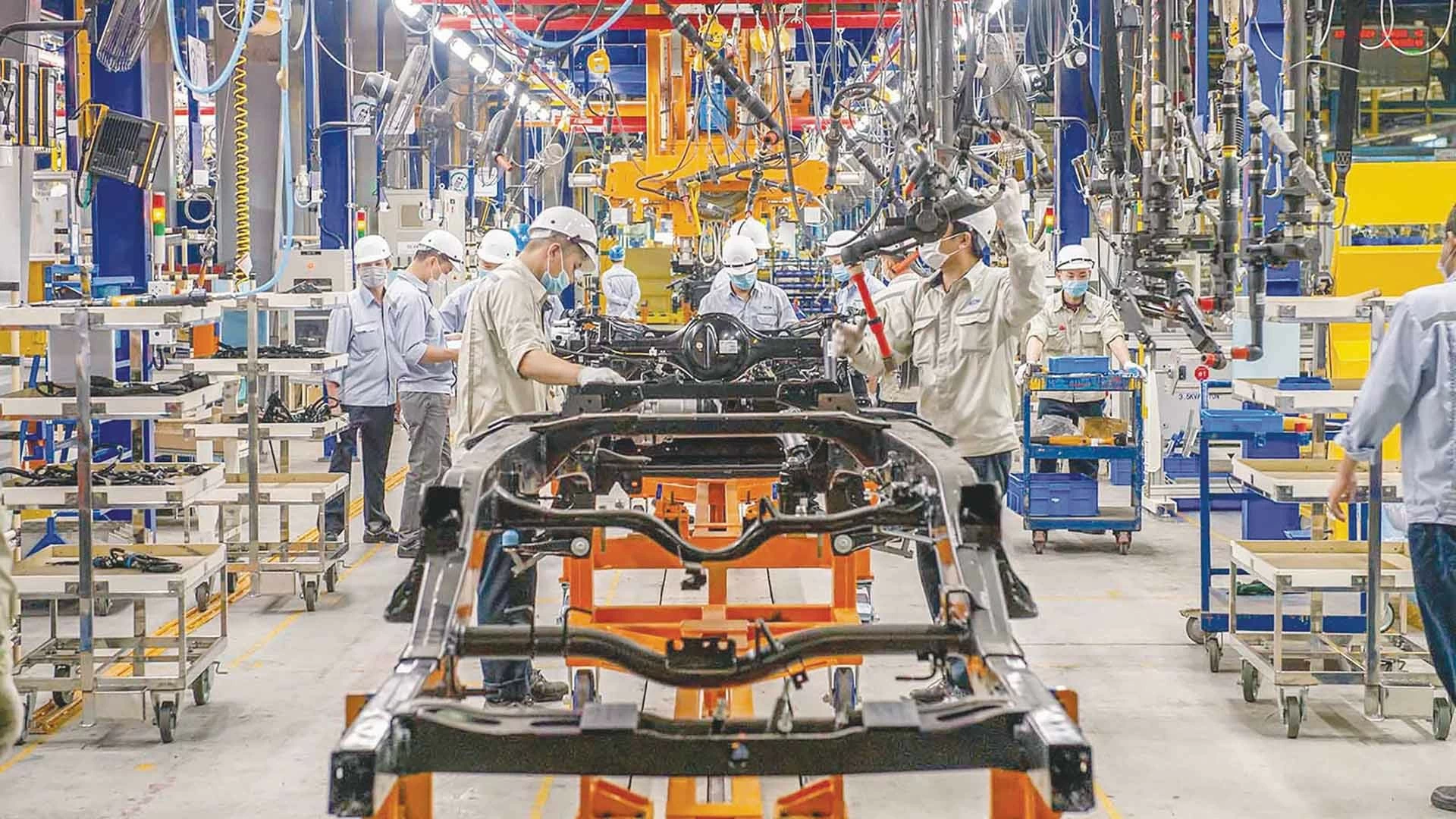
| The urgent need is for ASEAN to integrate sustainability more deeply into its growth model. (Source: asean.org) |
Challenges ahead and the vision for 2045
Alongside its achievements, ASEAN still faces significant challenges, most notably the need for a deeper integration of sustainability into its growth model.
Over the past decade, carbon emission intensity has increased, while the share of renewable energy has only risen modestly. This highlights the urgent need to promote new frameworks such as the ASEAN Carbon Neutrality Strategy, the ASEAN Circular Economy Framework, or the ASEAN Blue Economy Framework.
Looking back, the results of the AEC 2025 Framework have laid a solid foundation for ASEAN to continue its progress. At the 46th ASEAN Summit in May, the adoption of the ASEAN Community Vision 2045 and strategic plans demonstrated a forward-looking spirit, towards a sustainable, innovative, dynamic, and people-centered community.
In this context, the ASEAN Economic Community Strategic Plan 2026-2030 will be the main pillar, not only deepening integration but also strengthening the region's resilience in key areas such as supply chains, food security, energy stability, and a future-ready workforce. ASEAN needs to continue building on the successes achieved, while proactively identifying and promptly addressing new gaps and challenges.
A commitment to continuous improvement and inclusive development will be key to building a strong, sustainable AEC that brings long-term benefits to businesses and people, while affirming ASEAN's position as a leading global economic force.
Source: https://baoquocte.vn/tinh-than-asean-dieu-vi-dai-duoc-tao-nen-tu-nhung-dieu-nho-be-329376.html





























![[Video] The craft of making Dong Ho folk paintings has been inscribed by UNESCO on the List of Crafts in Need of Urgent Safeguarding.](https://vphoto.vietnam.vn/thumb/402x226/vietnam/resource/IMAGE/2025/12/10/1765350246533_tranh-dong-ho-734-jpg.webp)























































Comment (0)