

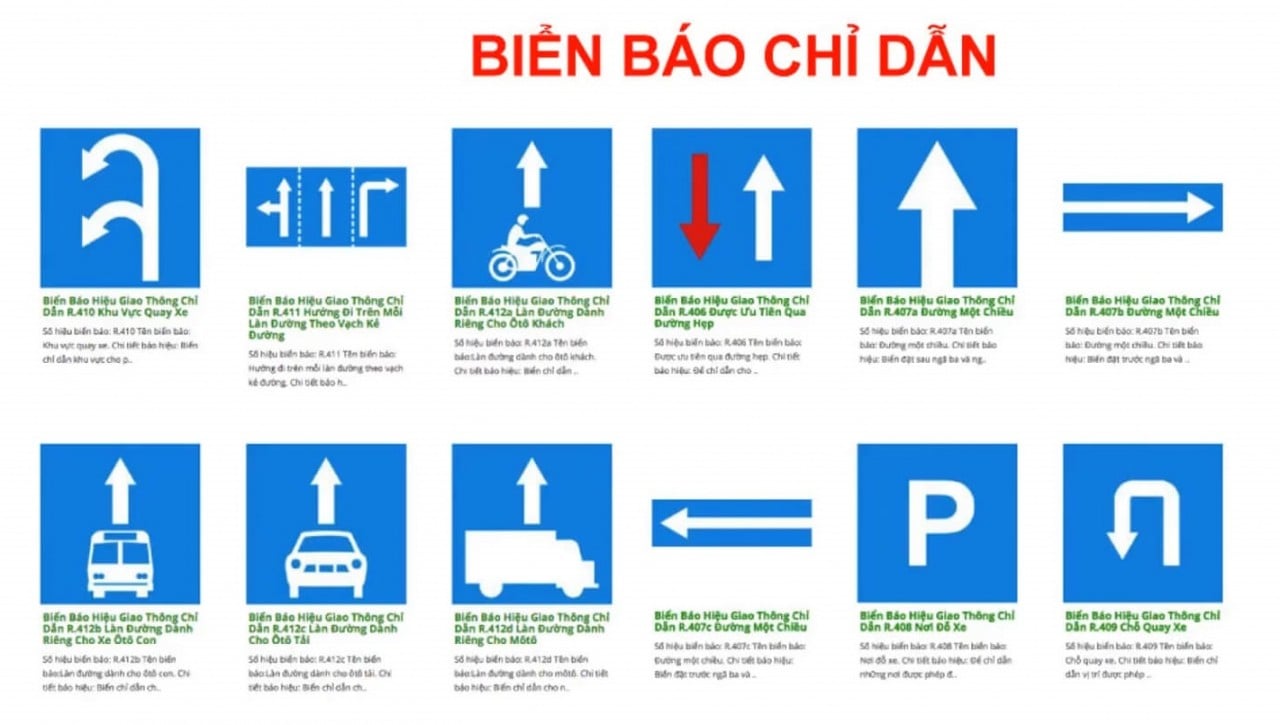
 |
1. Characteristics of directional signs
According to the regulations in QCVN 41:2019/BGTVT, directional signs are a group of signs used to provide information and necessary instructions to road users. Directional signs are mainly rectangular, square, or arrow-shaped, with a blue background.
The effectiveness of traffic signs applies to all lanes in the direction of traffic.
2. A summary of different types of traffic signs and their meanings.
Appendix E of QCVN 41:2019/BGTVT stipulates the following regarding directional signs:
- Sign I.401 "Beginning of priority road"
 |
To indicate that vehicles on the road where this sign is placed have priority to proceed first, place sign I.401 “Beginning of priority road”.
On this stretch of road, vehicles have the right of way through intersections without traffic control.
Vehicles on other roads entering or crossing the intersection must yield the right of way (except for vehicles with priority rights as stipulated by regulations).
If there is traffic control at the intersection, the principle of priority vehicles ceases to apply (except for vehicles with priority rights as stipulated by regulations).
- Sign I.402 "End of priority road"
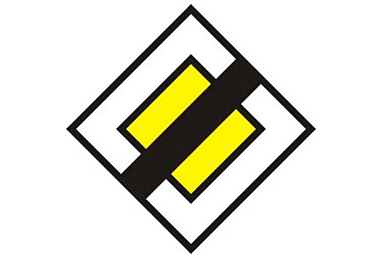 |
At the end of the designated priority section, place sign I.402 "End of priority section".
- Sign I.405 (a,b,c) "Dead end"
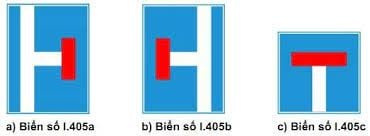 |
+ Sign I.405 (a,b) indicates a turn into a dead-end street. The appropriate sign type depends on the type of dead-end street. This sign is placed on the main road before reaching the intersection where the turn into the dead-end street occurs.
+ Sign I.405c indicates that the road ahead is a dead end. This sign is placed 300 to 500 meters before the dead end, and an additional sign must be placed every 100 meters.
Dead-end roads are roads where vehicles cannot continue. Dead-end roads can include cul-de-sacs (in densely populated areas); roads or bridges that are broken due to natural disasters or war; alternative routes where there are no means of crossing a river or stream; roads leading to a bridge but the bridge is damaged, etc.
- Sign I.406 "Priority given to passage through narrow roads"
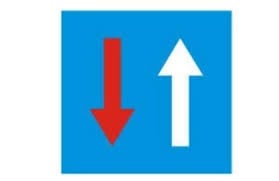 |
+ To indicate to motorized road users that they have the right of way on narrow roads, place sign I.406 "Priority to pass through narrow roads".
+ If a vehicle (motorized or non-motorized) traveling in the opposite direction has already entered the narrowed section of the road, the vehicle traveling in the priority direction must also yield.
- Sign I.407 (a,b,c) "One-way street"
 |
+ To indicate one-way roads, place sign I.407(a,b,c) "One-way road". Sign I.407a is placed after the intersection. When there is already sign R302 at the ends of the median strip, it is not necessary to place sign I.407a. Sign I.407b,c is placed before the intersection and on the road about to enter the one-way road.
+ Traffic sign I.407 (a,b,c) only allows vehicles to proceed in the direction indicated by the arrow, prohibiting U-turns (except for vehicles with priority rights as stipulated).
- Sign I.408 "Parking area"
 |
To indicate where parking is permitted, such as parking lots, bus stops, etc., place sign I.408 "Parking Area".
- Sign 408a "Partial parking on the sidewalk"
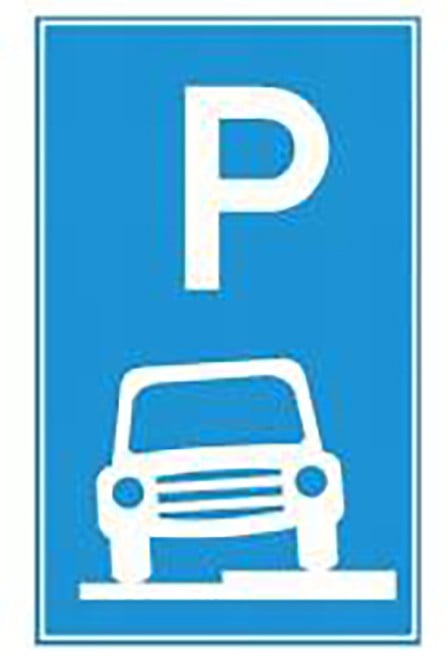 |
To indicate areas where partial parking on wide sidewalks is permitted, place sign I.408a "Partial parking on sidewalk". The vehicle must be parked with the wheels on the passenger side on the sidewalk.
- Sign I.409 "U-turn area"
 |
To indicate a permitted U-turn location, place sign I.409 "U-turn area".
- Sign I.410 "U-turn area"
 |
To indicate areas where U-turns are permitted, place sign I.410 "U-turn area". The sign should describe how to perform a U-turn.
- Sign I.413a "Road ahead has a lane for passenger cars" and sign I.413 (b,c) "Turn onto a road with a lane for passenger cars"
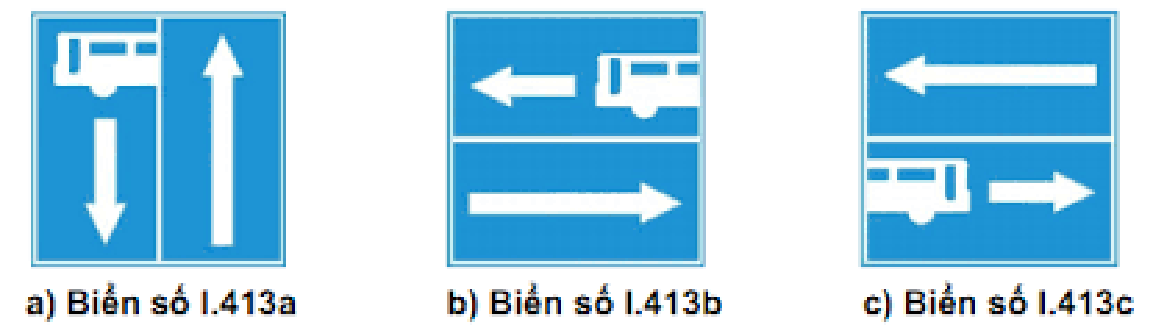 |
+ To indicate to road users that the road ahead has a lane reserved for passenger cars in the opposite direction, place sign I.413a "Road ahead has a lane reserved for passenger cars". The sign is placed at the intersection at the beginning of a one-way road where passenger cars are permitted to travel in the opposite direction.
+ To guide road users to know that at intersections turning right or left leads to a road with a lane reserved for passenger cars, place sign I.413b or sign I.413c indicating "Turn to a road with a lane reserved for passenger cars". The type of sign should be chosen to suit the direction of the turn.
- Sign I.414 (a, b, c, d) "Direction of the road"
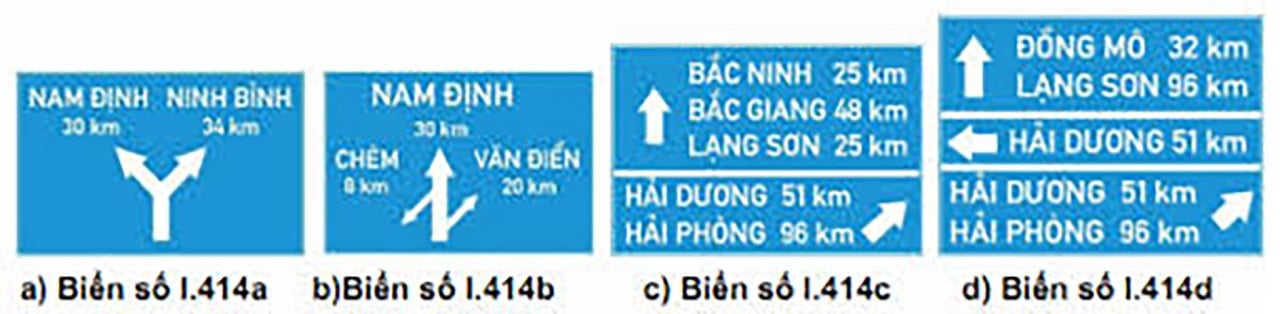 |
+ At road intersections, place sign I.414 (a, b, c, d) "Direction Sign" to indicate the direction of travel to landmarks and residential areas. The sign should indicate both the road number (name) and the distance (rounded to the nearest kilometer; if the distance is greater than or equal to the nearest kilometer).
* Sign I.414 (a,b) is placed at a road intersection and there is only one landmark and residential area on the road direction that needs to be indicated.
* Sign I.414 (c,d) is placed at road intersections where there are two or more place names or residential areas that require directional information on the sign. The more distant place name must be written below.
- Sign I.415 "Arrow indicating direction"
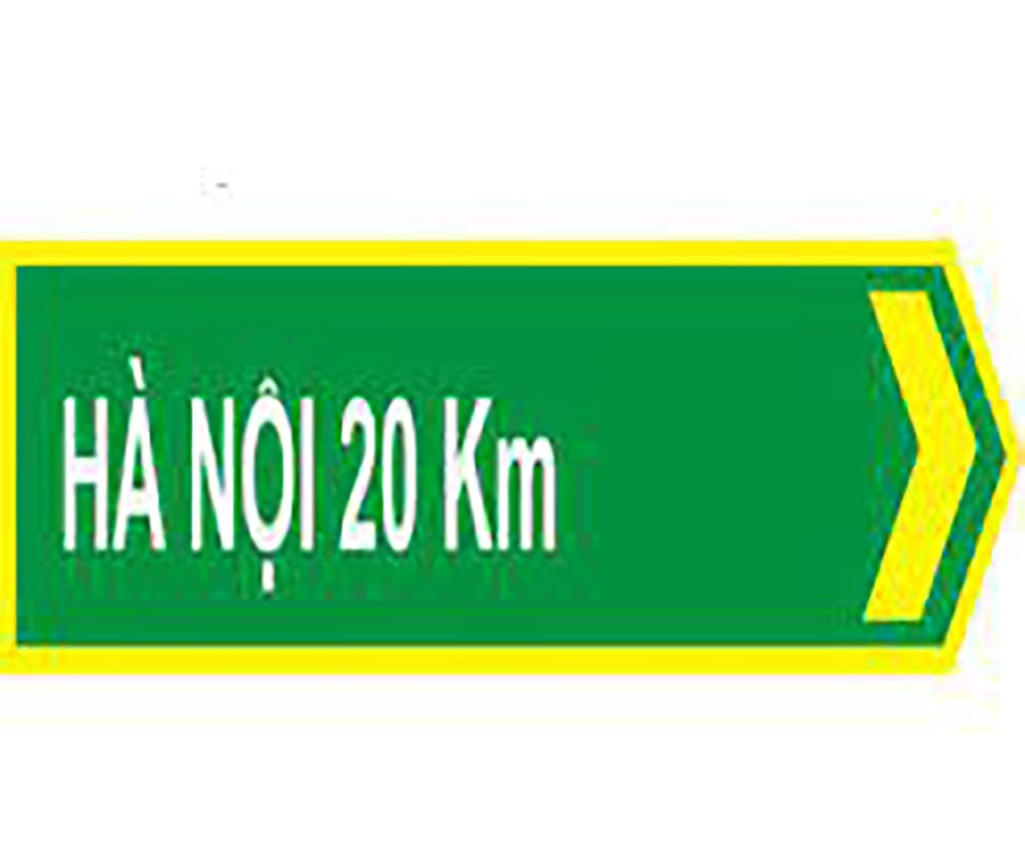 |
In densely populated areas, or at intersections, to indicate the direction to the next nearby landmark and the distance (rounded to the nearest kilometer) to that landmark, sign I.415 "Directional Arrow" must be placed. In the case of nearby landmarks, the distance does not necessarily need to be indicated.
- Sign I.416 "Bypass Road"
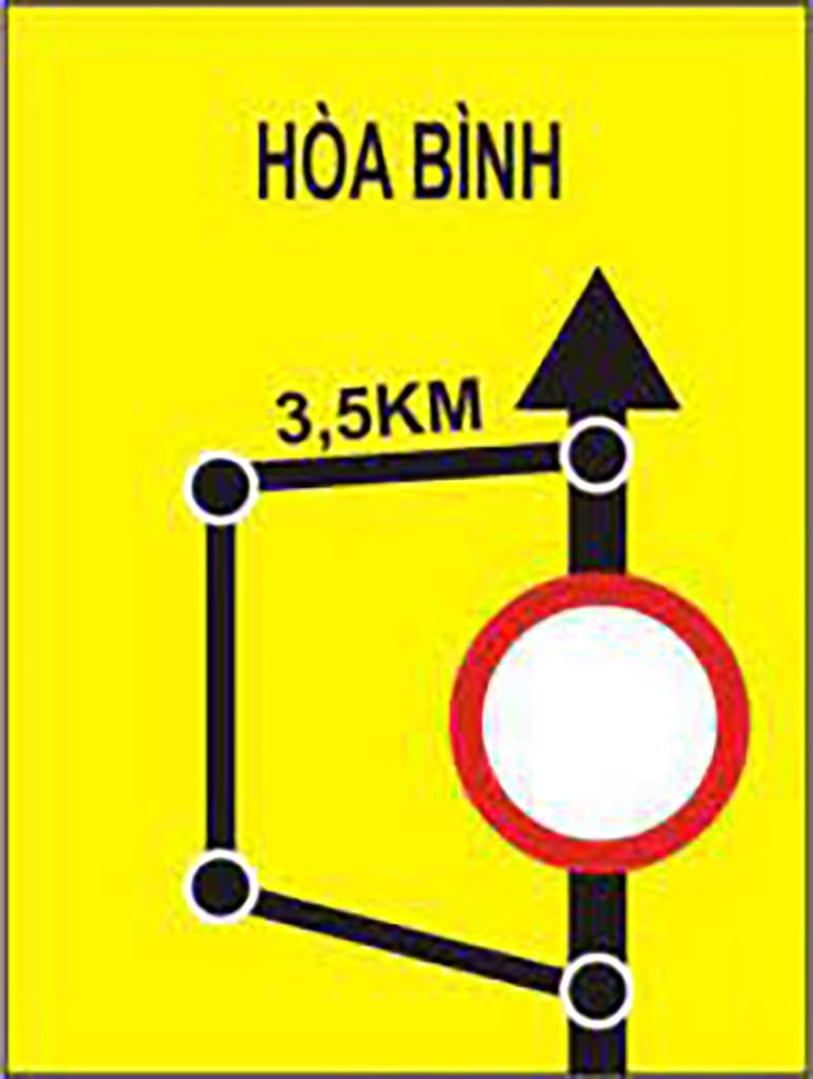 |
To indicate alternative routes or detours in cases where a road is closed due to road or bridge obstruction or construction, and where certain types of vehicles are prohibited, place sign I.416 "Abandonment Road" before intersections.
- Sign I.417 (a,b,c) "Indicating the direction of travel for each type of vehicle"
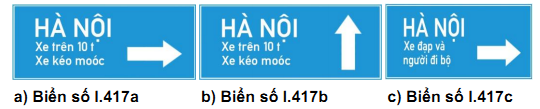
+ At intersections where certain types of vehicles are prohibited or restricted, if necessary, directional signs indicating the route to be taken for each type of vehicle to the next residential area may be placed, such as sign I.417 (a, b, c) "Directional signs indicating the route to be taken for each type of vehicle".
Depending on the type of vehicle, the location of the densely populated area, and the direction of travel, the appropriate type of sign and lettering should be used.
- Sign I.418 "Entrance at locations where turning is prohibited"
 |
+ To indicate a passageway at intersections where turning is prohibited, place sign I.418 "Passageway at locations where turning is prohibited". The sign is placed at the intersection before the road where turning is prohibited.
+ The drawings on the sea should be drawn according to actual regulations.
- Sign I.419 "Boundary indication"
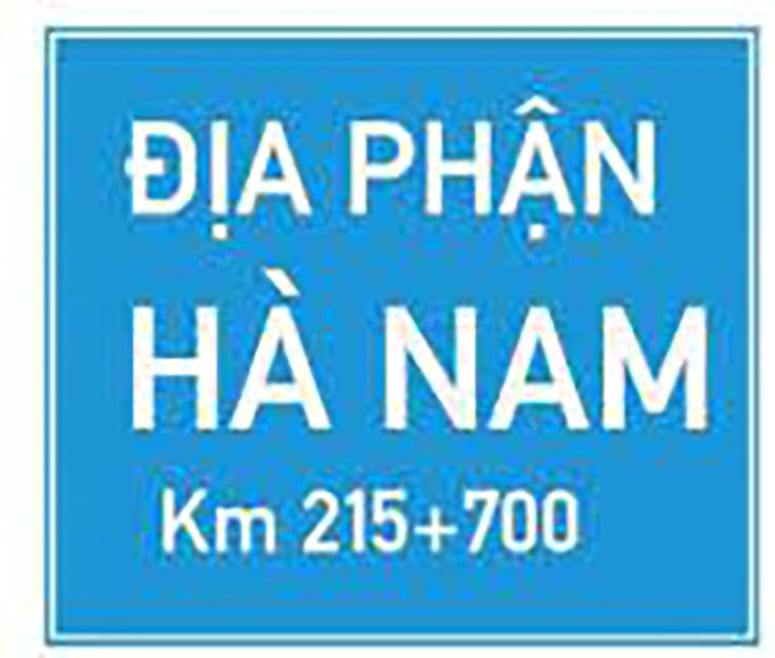 |
+ To indicate administrative boundaries between cities, provinces and districts, place sign I.419(a,b) "Indicating boundaries".
+ Sign I.419b applies to international routes and routes with a high volume of foreign traffic. Sign I.419a applies to other cases.
- Sign I.422 "Historical Monument"
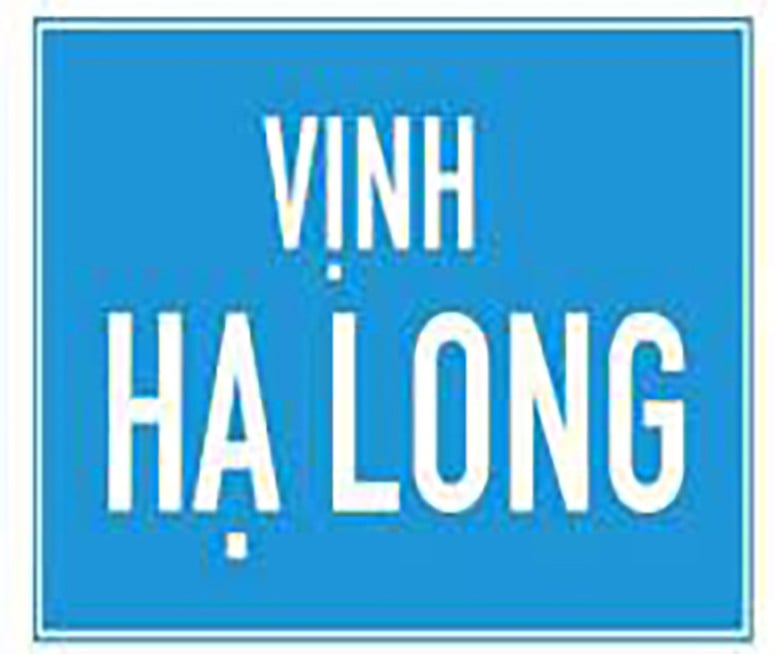 |
To indicate places with historical relics or places with scenic spots, places to visit... on both sides of the road.
- Sign I.423 (a,b) "Pedestrian crossing point"
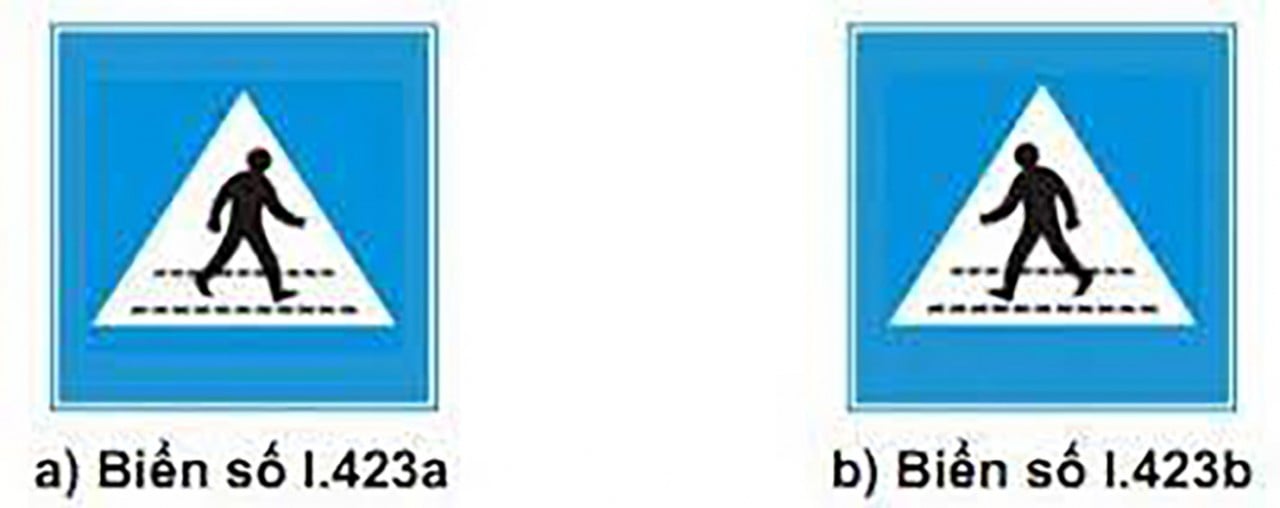 |
To indicate to pedestrians and road users the location of pedestrian crossings, sign I.423 (a,b) "Pedestrian crossing location" is placed.
- Sign I.424 (a,b) "Pedestrian overpass"
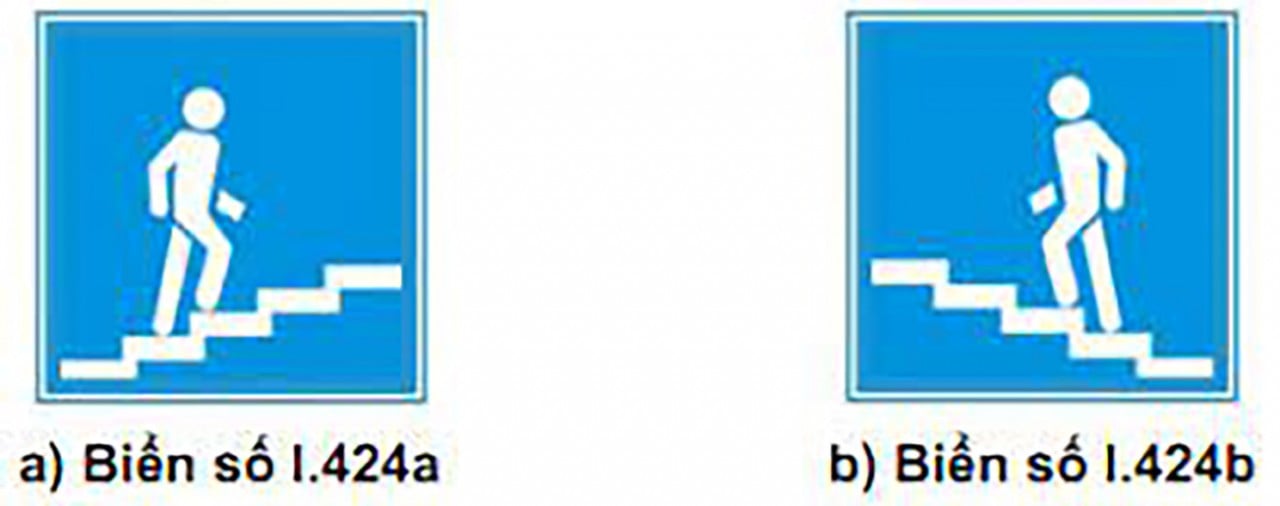 |
To guide pedestrians to use the overpass, place signs I.424 (a,b) "Pedestrian overpass" and I.424 (c,d) "Pedestrian underpass".
- Sign I.427a "Repair Station"
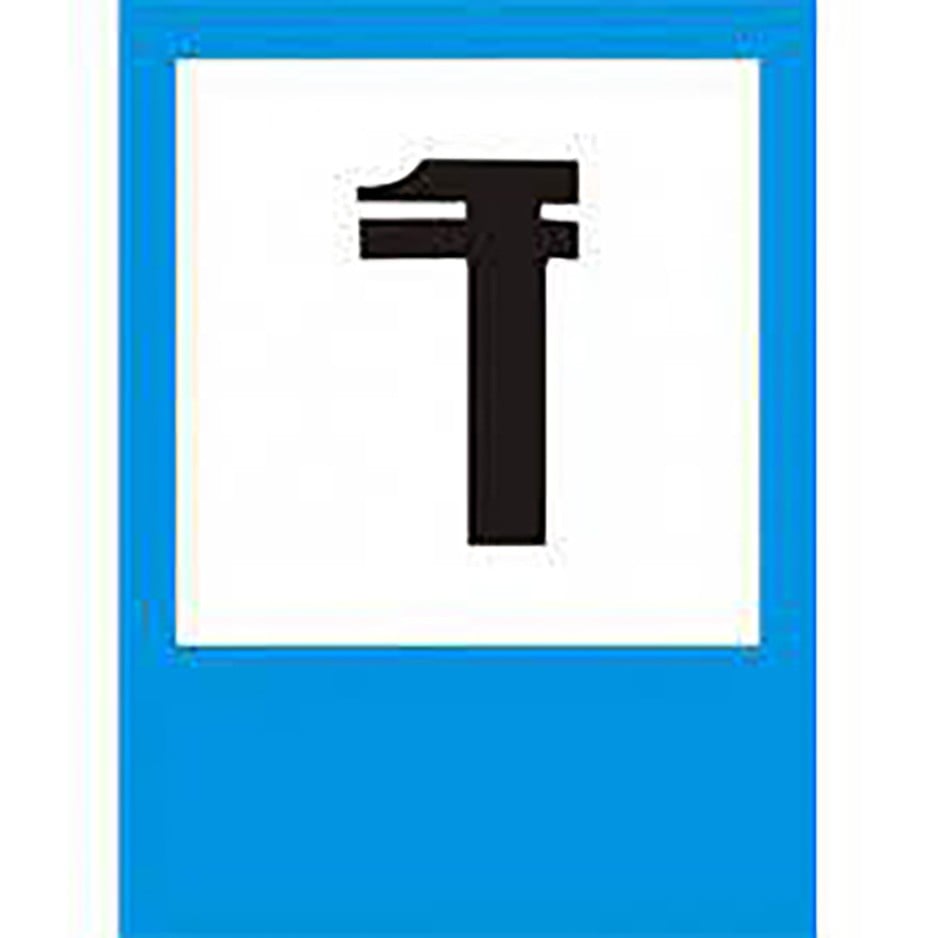 |
To indicate the location of a workshop or station specializing in repairing broken-down cars and motorcycles on the road, sign I.427a "Repair Station" is used.
-Sign I.427b “Vehicle Load Inspection Station”
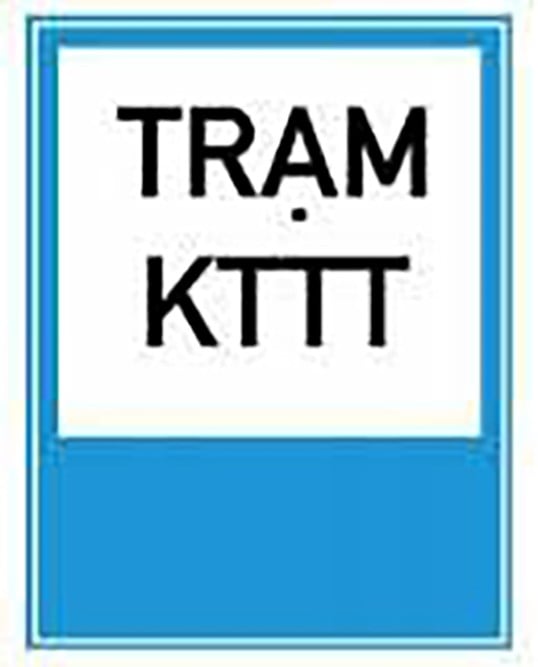 |
To indicate the location of the vehicle weight inspection station, place sign I.427b "Vehicle Weight Inspection Station".
- Sign I.437 "Highway"
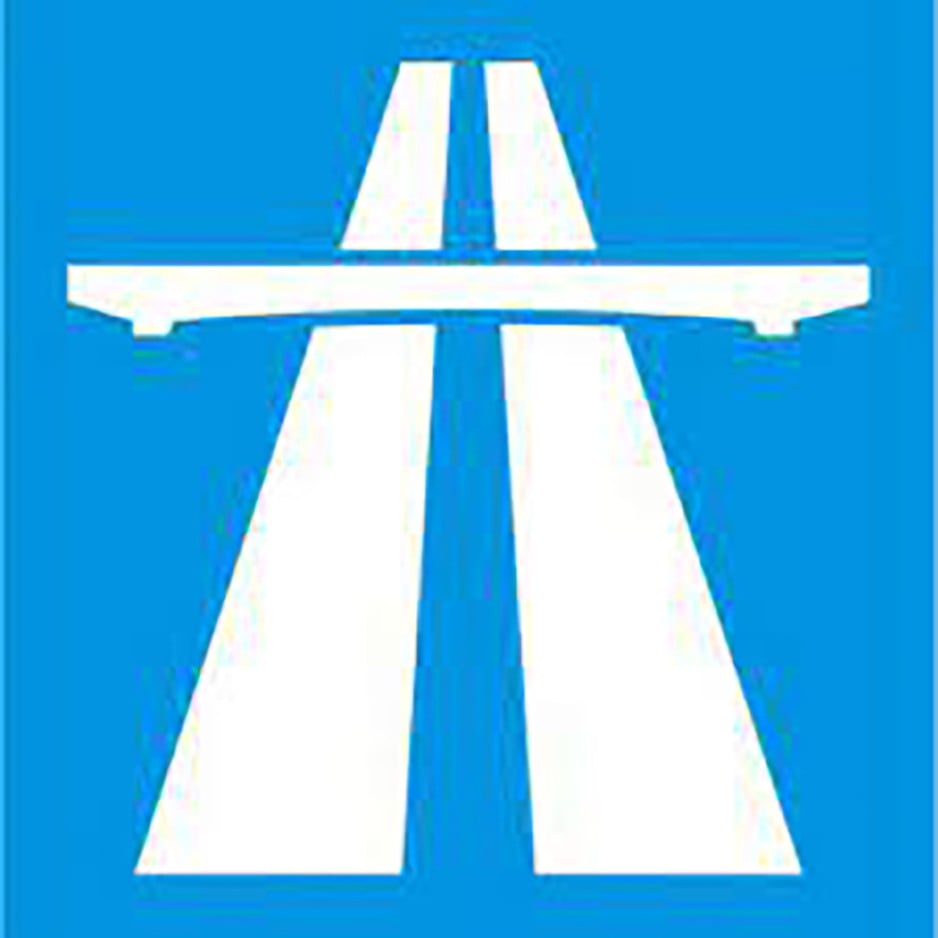 |
To indicate the start of the highway, place sign I.437 “Highway”.
- License plate I.443 "Trailer truck"
 |
To indicate a vehicle towing a trailer or a towing vehicle, place sign I.443 "Vehicle towing a trailer".
The license plate I.443 is placed on the roof of the trailer cabin.
The background is blue, with yellow triangles evenly spaced along the sides of a square.
- Sign I.447 “Interconnected overpass sign”
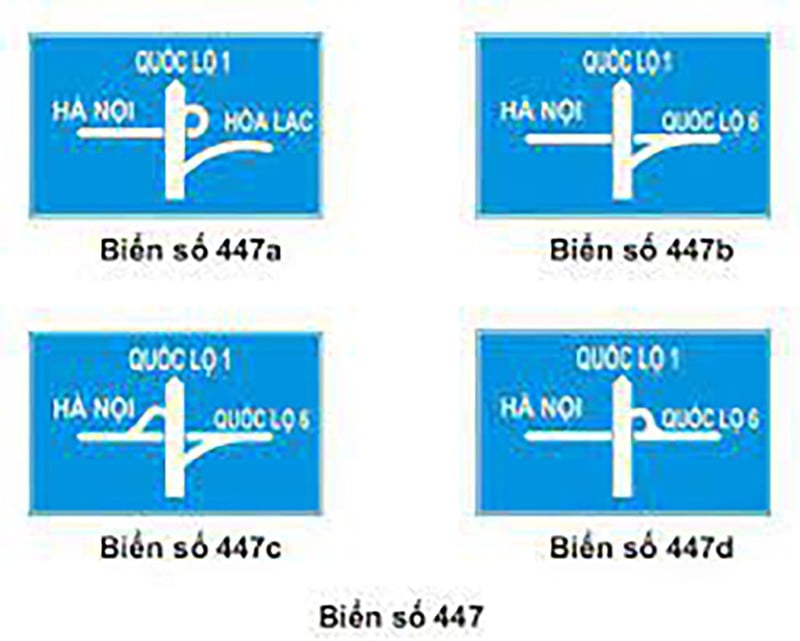 |
The signs are placed before the overpass where traffic is organized to connect different routes. Depending on the intersection, signs I.447a, I.447b, I.445c, and I.447d are placed accordingly. At the turns, signs I.414c and d are used to indicate the directions of travel.
Source






































![[Video] The craft of making Dong Ho folk paintings has been inscribed by UNESCO on the List of Crafts in Need of Urgent Safeguarding.](https://vphoto.vietnam.vn/thumb/402x226/vietnam/resource/IMAGE/2025/12/10/1765350246533_tranh-dong-ho-734-jpg.webp)



























































Comment (0)