

Science has shown that approximately 86% of a person's maximum height is reached before the age of 12, a crucial period for the optimal development of a person's stature, physical strength, and intelligence.
Vietnamese children are facing three nutritional burdens.
Science has shown that approximately 86% of a person's maximum height is reached before the age of 12, a crucial period for the optimal development of a person's stature, physical strength, and intelligence.
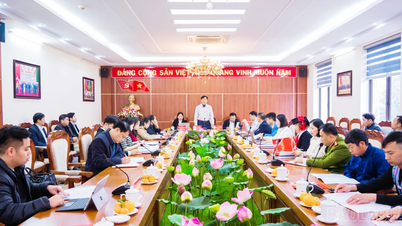
At the 2nd International Conference on Vietnamese Nutrition, themed "School Nutrition," organized by the National Institute of Nutrition, the Japan Nutrition Association, and TH Group , many issues related to school nutrition were raised.
 |
| Science has shown that approximately 86% of a person's maximum height is reached before the age of 12, a crucial period for the optimal development of a person's stature, physical strength, and intelligence. |
Delegates and experts at the conference agreed that health is a precious asset in life, starting with the first 1000 days of life and continuing from the ages of 2-12.
Science has shown that approximately 86% of a person's maximum height is reached before the age of 12, a crucial period for the optimal development of a person's stature, physical strength, and intelligence.
Therefore, the issue of providing proper nutrition for children at this stage – especially school nutrition – has become urgent and needs to be fully understood in order to have effective solutions implemented.
According to Associate Professor Dr. Tran Thanh Duong, Director of the Institute of Nutrition, Ministry of Health , Vietnamese children are facing three nutritional burdens: malnutrition (especially stunting); overweight and obesity; and micronutrient deficiencies.
According to the 2023 national survey data, the rate of stunting in children under 5 years old in Vietnam is 18.2% (placing Vietnam among countries with a stunting rate below 20%, which is the average level according to the World Health Organization classification).
However, this rate remains high in the Northern Midlands and Mountains (24.8%) and the Central Highlands (25.9%). In addition, there has been an increase in the rate of overweight and obesity across all demographics, notably the rate of overweight and obesity among children aged 5-19, which increased from 8.5% in 2010 to 19.0% in 2020 (more than doubling in 10 years).
To address this situation, the Vietnamese government has issued the National Strategy on Nutrition for the period 2021-2030, with specific goals aimed at improving the nutritional status of the entire population, especially school-aged children and adolescents.
Some of the basic objectives of the Strategy include: Reducing the rate of stunting in children under 5 years old to below 15% by 2030; Controlling the rate of overweight and obesity in children, especially in urban areas, with the goal of keeping this rate below 19% for children aged 5-18 by 2030;
Strengthening nutrition education in schools aims for 60% of schools in urban areas and 40% in rural areas to organize school meals with menus that meet recommended needs by 2025, and striving to reach 90% and 80% respectively by 2030.
Achieving this goal requires comprehensive, continuous, and interdisciplinary interventions, including improving nutrition mechanisms and policies to facilitate implementation; strengthening interdisciplinary coordination and social mobilization; enhancing the quality of human resources, international cooperation, and the application of information technology; and promoting scientific research and nutrition education and communication.
In the field of school nutrition, according to Associate Professor Dr. Tran Thanh Duong, to achieve the set goals, in addition to the efforts and initiative of schools and educational organizations, the participation of families, businesses, and the entire community is needed.
Parents need to be equipped with nutritional knowledge to help their children maintain healthy eating habits both at school and at home. Food businesses also play a particularly important role in providing healthy nutritional products and participating in nutrition support programs for children.
One highlight of a practical solution suitable for Vietnam, presented by Assoc. Prof. Dr. Nguyen Thanh De, Director of the Department of Physical Education, Ministry of Education and Training, at the workshop, was the model of a school meal program that ensures balanced nutrition combined with enhanced physical activity for Vietnamese children, students, and university students.
This model, implemented by the Ministry of Education and Training in collaboration with TH Group, is being carried out in 10 provinces and cities nationwide, representing 5 ecological regions of Vietnam.
After conducting nutritional assessments and developing menus suitable for each locality, school meals in the pilot model are approached with a focus on using entirely natural foods, based on the agricultural advantages of the region, and fresh milk is scientifically incorporated into the meal composition.
The main intervention of the Model involves 400 diverse, balanced, and nutrient-rich school meal menus, an afternoon snack including a glass of fresh milk to improve calcium intake, and a combination of nutrition education and physical education (through 130 exercise routines and 60 age-appropriate movement games) to help students improve their health and physical development.
The research results show that the scoring model has had a positive effect on children's height and weight development, while also contributing to improving knowledge about proper nutrition and enhancing physical fitness for all three groups: students, schools, and parents.
Associate Professor Dr. Nguyen Thanh De put forward several specific proposals such as: The need to replicate pilot models; developing policies and moving towards legalizing school nutrition, which would provide a legal basis for management agencies, schools, and businesses to participate in preparing and complying with conditions regarding facilities, personnel, procedures, and expertise in serving school meals; and ensuring a skilled workforce in nutrition within schools.
Regarding international experience, Professor Nakamura Teiji, President of the Japan Nutrition Association, shared the successes of the school meal program in Japan, a model that has achieved outstanding success worldwide.
After World War II, Japan faced a severe nutritional deficit. In this challenging national context, Japan prioritized and emphasized school lunches. In 1954, Japan enacted the School Lunch Law. In 2005, the Japanese government enacted the "Basic Law on Food and Nutrition Education (Shokuiku Basic Act.)".
Thus, it can be seen that the Law on School Nutrition in Japan was established early on and has been modified over time to suit the actual situation regarding nutritional, economic, and social conditions. The law both standardizes school meals and emphasizes the development of nutrition education.
To date, 99% of elementary schools and 91.5% of junior high schools in Japan have implemented this program. As a result, malnutrition has decreased significantly, and Japanese youth are developing strongly physically and intellectually, with average height and stature increasing remarkably compared to 50 years ago.
Speaking about the importance of school nutrition, representing the partner organization, Labor Hero Thai Huong, Founder and Chairwoman of the Strategic Council of TH Group, expressed that health is the greatest asset in life. Humans are the subjects of society and the decisive resource for national development. The physical, intellectual, and spiritual development of each individual is crucial.
A nation is only strong when its people are fully developed both physically and intellectually, and the prerequisite for this development is essential nutrition such as grains, vegetables, food and dairy products, along with a sustainable healthcare system.
And she urged, "Let us all work together to build and nurture the greatest asset in our lives in the best way possible."
Source: https://baodautu.vn/tre-em-viet-nam-dang-phai-doi-mat-voi-ba-ganh-nang-ve-dinh-duong-d229853.html













































































Comment (0)