

Each year, approximately 180,000 people worldwide die from fungal meningitis. The leading cause of fungal meningitis is Cryptococcus neoformans (C. neoformans), a fungus that can infect the human brain.
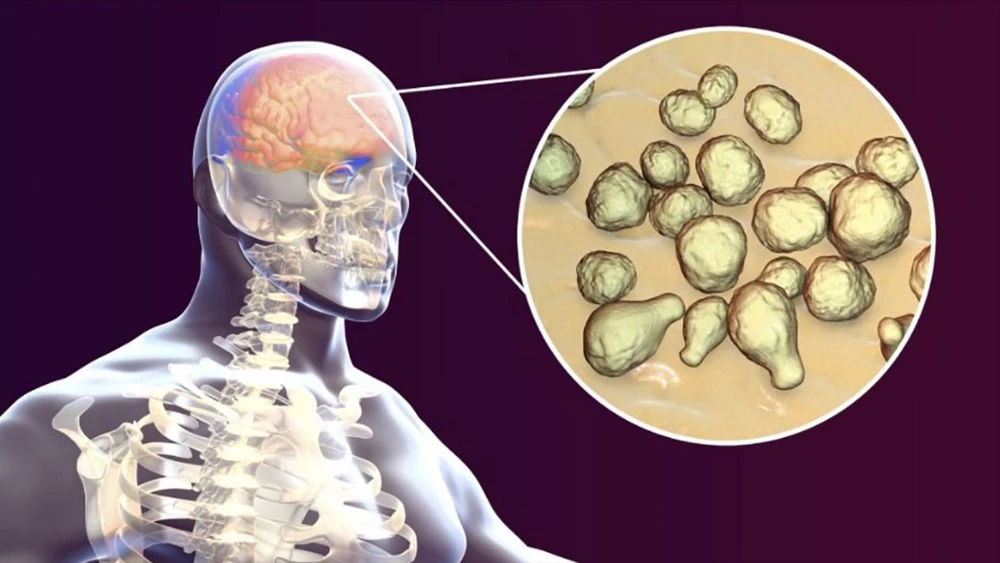
The only antifungal drug currently available to treat this disease is amphotericin B. Although amphotericin B has effective bactericidal activity against C. neoformans, treatment of meningitis caused by this fungus still has a high failure rate and recurrent infections with no clear cause. Through research, researchers at the Institute of Microbiology of the Chinese Academy of Sciences have determined that glucose in the brain can counteract the antifungal resistance that C. neoformans possesses thanks to a protein called Mig1.
Studies have shown that in mice, Mig1 inhibits the synthesis of ergosterol—a component of fungal cell membranes and a target of amphotericin B. Additionally, Mig1 promotes the production of inositolphosphorylceramide—another component of fungal cell membranes that competes with amphotericin B for ergosterol, thereby limiting the drug's effect. The use of an inositolphosphorylceramide inhibitor in combination with amphotericin B improves the efficacy of treatment against cryptococcal meningitis in mice.
MINH CHAU
Source


![[Photo] Prime Minister Pham Minh Chinh attends the Conference summarizing and implementing tasks of the judicial sector.](/_next/image?url=https%3A%2F%2Fvphoto.vietnam.vn%2Fthumb%2F1200x675%2Fvietnam%2Fresource%2FIMAGE%2F2025%2F12%2F13%2F1765616082148_dsc-5565-jpg.webp&w=3840&q=75)































































































Comment (0)