

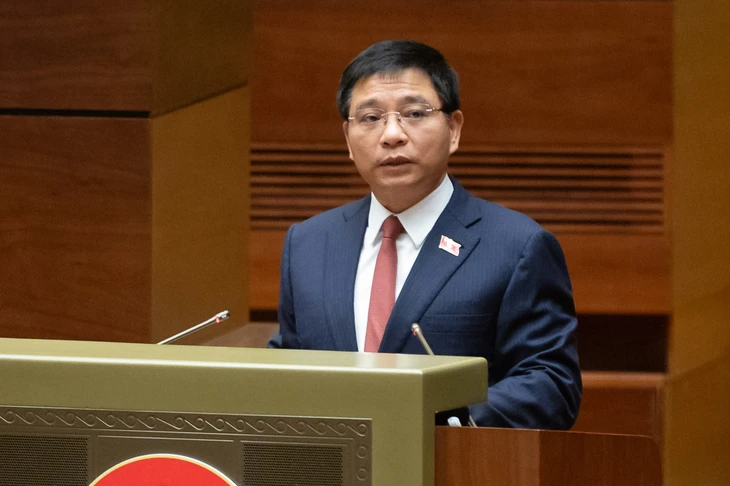
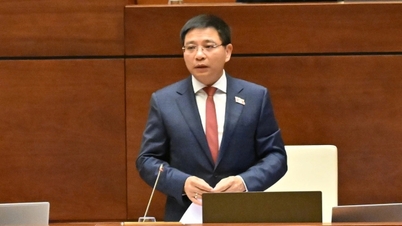
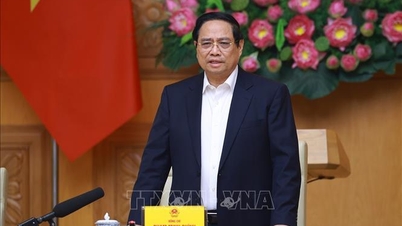
Minister of Finance Nguyen Van Thang - Photo: GIA HAN
On the morning of December 8, Minister of Finance Nguyen Van Thang, authorized by the Prime Minister, presented to the National Assembly a report on four contents of the draft law amending and supplementing a number of articles of the Law on Value Added Tax (VAT).
Problems with VAT policy in the agricultural and animal feed sectors
According to the Government, this amendment aims to help overcome the consequences of storms and floods, quickly restore production and business activities, especially in the agricultural sector, and remove "bottlenecks" in value-added tax refunds.
On practical basis, the submission stated that in November 2024, the National Assembly issued the Law on Value Added Tax, which will take effect from July 1, 2025.
Through implementation, associations and businesses have reflected on difficulties in value-added tax policies for the agricultural and animal feed sectors and tax refund conditions.
Accordingly, businesses stated they must pay 5% input VAT on agricultural products purchased and sold commercially.
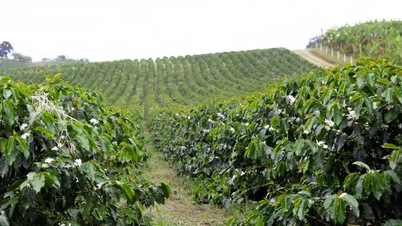
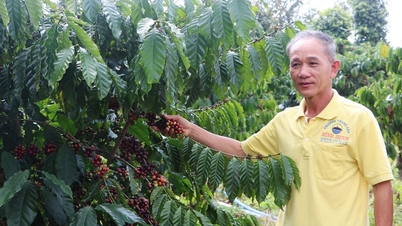
VAT collected and then refunded for items whose production output is mostly for export (such as catfish, pepper, coffee, etc.) leads to waste of time and capital stagnation for businesses while credit institutions do not disburse this tax when providing working capital, causing financial pressure and reducing business efficiency.
According to businesses, current legal regulations have led to discrimination between domestically produced agricultural and aquatic products and imported agricultural and aquatic products because imported agricultural and aquatic products are not subject to VAT when imported into Vietnam.
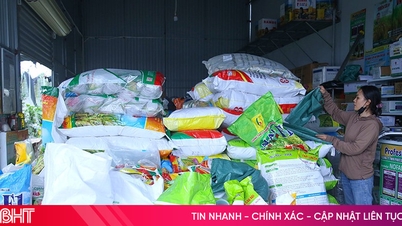
On the other hand, because animal feed is not subject to tax, it cannot be deducted or refunded input VAT, which leads to increased costs and selling prices for animal feed production enterprises, which will affect livestock farmers.
Besides, this regulation does not ensure fairness and may reduce competitiveness with imported animal feed products because imported animal feed is not subject to VAT.
"Because of the current regulations that buyers are only entitled to a tax refund when the seller has declared and paid taxes, this has led to the fact that when exporting, businesses are entitled to a refund of input value-added tax, but are delayed because they have to wait to determine that the seller has declared and paid taxes, causing difficulties and risks for businesses requesting tax refunds, because businesses requesting tax refunds do not have legal or technical tools to check the seller's tax compliance status at the time of preparing tax refund dossiers," the submission stated.
No tax on unprocessed crop and livestock products...
The draft law consists of 2 articles, in which the Government proposes to amend and supplement Clause 1, Article 5 of the current law (on non-taxable subjects) to include products of crops, planted forests, livestock, aquaculture, and fishing that have not been processed into other products or have only undergone normal preliminary processing by organizations and individuals that produce, catch, sell, and are at the import stage.
Enterprises, cooperatives, and cooperative unions that purchase unprocessed crops, planted forests, livestock, and aquaculture products or fishery products that have only undergone normal preliminary processing and sell them to other enterprises, cooperatives, and cooperative unions are not required to calculate VAT according to regulations of the Minister of Finance.
On the other hand, additional provisions on tax deduction are added in the direction that input VAT of goods and services not subject to VAT is fully deductible.
The Government believes that the above proposal does not affect state budget revenue but also reduces procedures for calculating, declaring, paying and deducting taxes.
At the same time, the VAT principle is still ensured that input VAT of goods and services used for production and business of goods and services subject to VAT is fully deductible, and these products when sold to final consumers are still subject to 5% VAT.
In addition, this regulation also contributes to supporting the export of agricultural, forestry, aquatic and seafood products when businesses do not have to pay in advance to pay taxes and then carry out tax refund procedures, while contributing to simplifying procedures, avoiding wasting time and opportunity costs for businesses, reducing fraud in the purchase and sale of invoices as well as VAT refunds.
In addition, the Government also proposed to remove the content of unprocessed crop, forest, livestock, aquaculture products that have not been processed into other products or have only undergone normal preliminary processing and are used as animal feed or medicinal materials, applying VAT according to the tax rate prescribed for crop, forest, livestock, and aquaculture products.
This proposal aims to ensure that animal feed products are implemented synchronously according to the provisions of the law on animal feed and to remove difficulties for agricultural production, especially in the context of the agricultural sector being heavily affected by the consequences of natural disasters and prolonged floods.
Source: https://tuoitre.vn/trinh-quoc-hoi-sua-thue-gia-tri-gia-tang-go-kho-van-de-5-hiep-hoi-nganh-hang-ti-do-tung-kien-nghi-20251208090126349.htm






















![[Photo] Urgently help people soon have a place to live and stabilize their lives](/_next/image?url=https%3A%2F%2Fvphoto.vietnam.vn%2Fthumb%2F1200x675%2Fvietnam%2Fresource%2FIMAGE%2F2025%2F12%2F09%2F1765248230297_c-jpg.webp&w=3840&q=75)





















































Comment (0)