

The Hmong people in Tuyen Quang have a rich culture, especially during festivals. The Gau Tao Festival is the most important festival for the Hmong, usually held at the beginning of the new year to pray for blessings, favorable weather, and a bountiful harvest. Their traditional clothing is very distinctive and colorful, especially during festivals. Hmong women's clothing is made from hand-woven linen, embroidered with intricate patterns, and often features vibrant colors such as red, yellow, and green. The Hmong mainly live in simple wooden houses built on rugged, rocky mountain terrain. Their houses typically have thatched roofs and low doors, providing warmth during the cold winter months. A unique feature of Hmong architecture is the stone walls surrounding their homes, which serve both to protect the family and to enhance their aesthetic appeal.
The Dao ethnic group has the Coming-of-Age Ceremony, a very important ritual marking the maturity of a Dao man. The ceremony is not only spiritually significant but also an occasion for the entire Dao community to celebrate, sing, and dance together. The Dao people are also famous for their religious rituals such as worshipping the forest god and the new rice offering ceremony, expressing their reverence for nature and their ancestors.
Dao women are highly skilled in embroidery. Their clothing is often decorated with intricate geometric patterns, using vibrant colors such as red, yellow, and white. In particular, headscarves and silver bracelets are indispensable accessories in the traditional attire of Dao women...
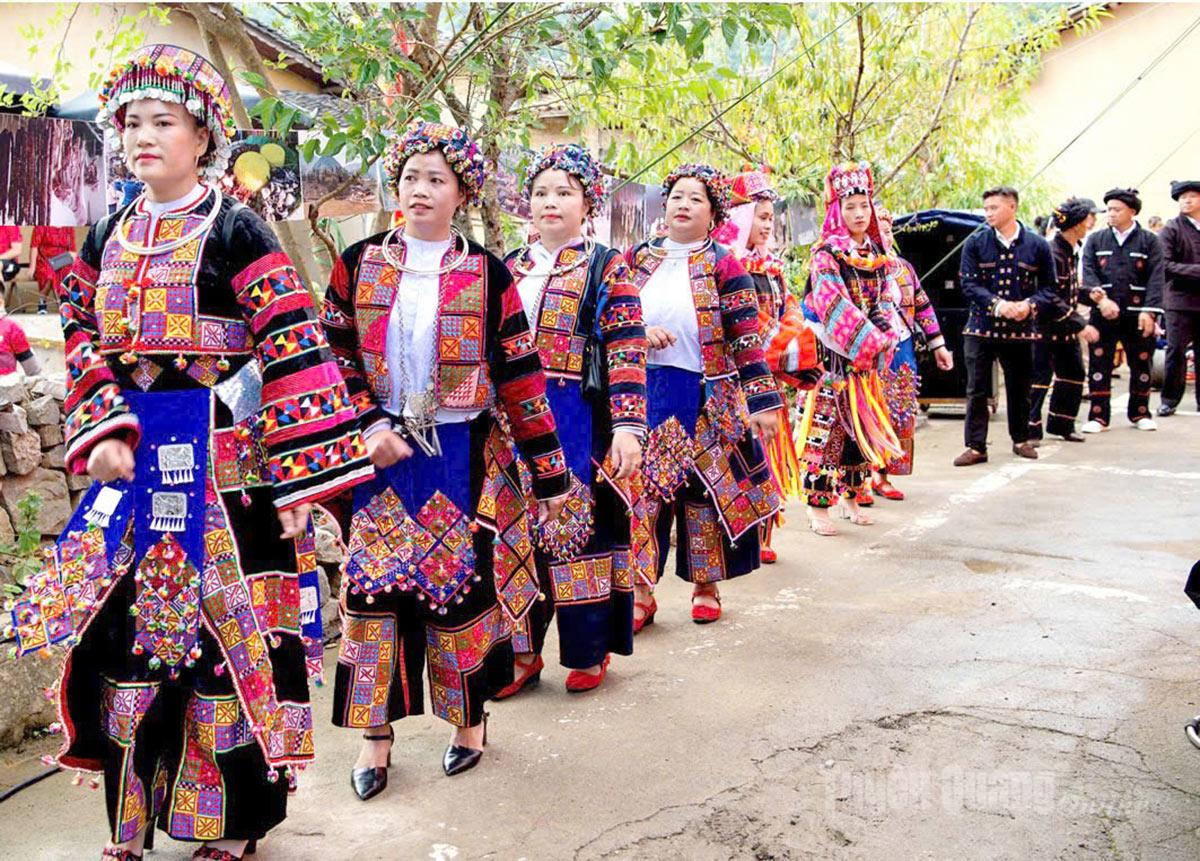 |
| Lolo girls performing their traditional dance. (Photo: Contributor) |
The Lolo people , one of the smallest ethnic groups in Vietnam, live primarily in the high mountainous regions of Tuyen Quang province, such as Lung Cu and Meo Vac. They have important festivals such as the Harvest Festival, the Rain Prayer Festival, and the New Year's Dance Festival, expressing gratitude to nature and their ancestors. The Lolo people have a polytheistic belief system, believing in the existence of deities who govern all aspects of life, such as mountain gods, river gods, and earth gods.
The traditional clothing of the Lolo people is one of their most important cultural highlights. Lolo women's attire is made from brocade fabric with intricate, colorful patterns. They often wear silver jewelry and traditional headscarves during festivals. Lolo clothing is not only a symbol of their skillful weaving but also a way for them to express their individuality and social standing.
The Tay people are the largest ethnic minority in Tuyen Quang, possessing a rich and distinctive culture, from their cuisine and clothing to their traditional rituals. The Long Tong Festival (the festival of going down to the fields) is one of the most important festivals of the Tay people, held at the beginning of the year to pray for a bountiful harvest and peace for the family. The Tay are also famous for their ancestor worship rituals and cultural activities such as Then singing, a unique form of their folk art. A distinctive feature of the Tay people is their stilt house architecture.
The stilt houses of the Tay people are built primarily of wood, with roofs thatched with palm leaves or straw, creating a cool living space in summer and a warm one in winter. The Tay stilt houses are not only dwellings but also cultural symbols, venues for community activities and important rituals. Then singing is also one of the most unique art forms of the Tay people, deeply rooted in spirituality and tradition. The Tay people often perform Then singing during major ethnic festivals, especially the Long Tong Festival. This is an opportunity for the community to gather, celebrate, and demonstrate solidarity among members of society...
The Nung ethnic group possesses a rich culture, encompassing unique rituals, beliefs, and customs, most notably the New Rice Festival. This festival, usually held after the rice harvest, expresses the people's gratitude to heaven and earth, deities, and ancestors for granting them a bountiful harvest. In addition, the Nung people also hold ceremonies related to the human reproductive cycle, such as weddings, naming ceremonies, and funerals. Nung cuisine is also unique and deeply rooted in the highlands. Some famous traditional Nung dishes include braised pork belly (steamed pork belly), pickled pork, and five-colored sticky rice.
The San Chay ethnic group: The traditional houses of the San Chay people are usually stilt houses or houses that are half stilt and half ground. There are many altars in their homes. Besides ancestor worship, they also worship heaven and earth, the local deity, the midwife goddess, the god of agriculture, the god of livestock, etc. The altars of the San Chay people are quite simple, sometimes just a bamboo tube for incense sticks. San Chay women wear indigo skirts and long blouses decorated with patterns on the armpits and back. They wear square indigo headscarves. Men wear long or short indigo shirts and brown or white trousers. The San Chay people have a lyrical folk song style – Sinh Ca, a type of courtship singing between men and women, consisting of two types: singing in the village at night and singing on the road or in the market. They have a variety of dances such as drum dance, shrimp catching dance, bird dance, fish stabbing dance, lamp lighting dance… The most unique musical instruments are the earthenware drum and the bamboo flute…
The San Diu ethnic group: The treasure of the San Diu people is the Soọng cô singing style – a National Intangible Cultural Heritage recognized by the Ministry of Culture, Sports and Tourism. In particular, the San Diu people are always conscious of preserving and spreading this cultural heritage, ensuring that Soọng cô remains vibrant in their lives. In the San Diu language, "Soọng" means to sing, and "cô" means to chant, so Soọng cô means singing. This is a popular form of singing during festivals and spring, expressing love for their homeland, love for labor, and relationships between people…
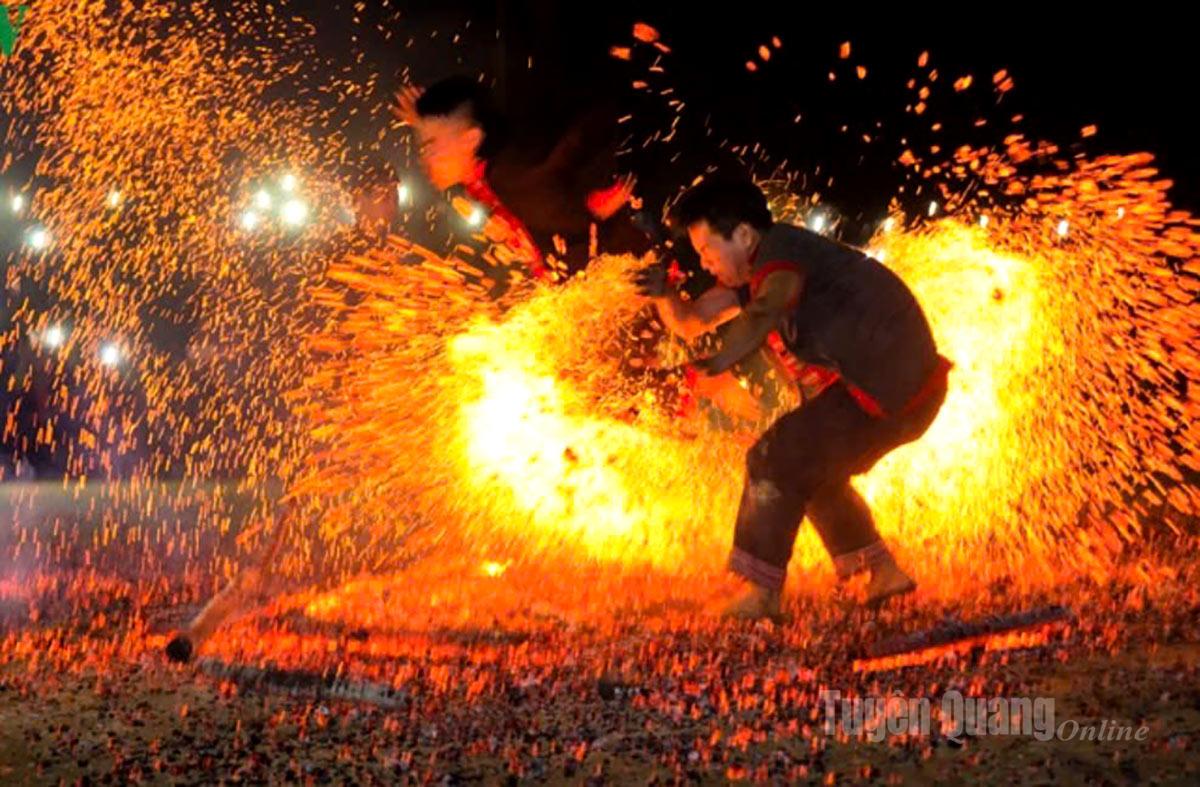 |
| The Pà Thẻn people's Fire Dance performance. Photo: Contributor. |
The Pà Thẻn ethnic group is distinguished by its traditional weaving art and the mystical Fire Dance festival. These cultural heritages are closely linked to the material and spiritual life of the Pà Thẻn people. Currently, traditional weaving and the Fire Dance festival are generating income for the people through tourism development…
In addition, there are many other ethnic minority groups with rich and diverse identities that have made a great contribution to the cultural heritage of the ethnic groups of Tuyen Quang in particular and the whole country in general.
Hieu Anh
( Synthetic )
Source: https://baotuyenquang.com.vn/van-hoa/du-lich/202507/tuyen-quang-noi-hoi-tu-ban-sac-van-hoa-cac-dan-toc-thieu-so-3f77217/

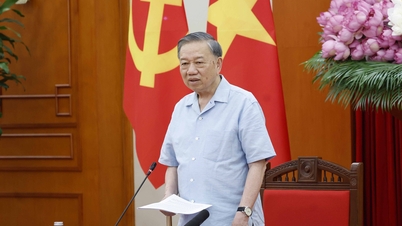
![[Photo] General Secretary and President To Lam presides over a meeting on preparations for the review of one year of operation of the three-tiered government system.](https://vphoto.vietnam.vn/thumb/1200x675/vietnam/resource/IMAGE/2026/06/02/1780391821195_a1-bnd-4595-9717-jpg.webp)












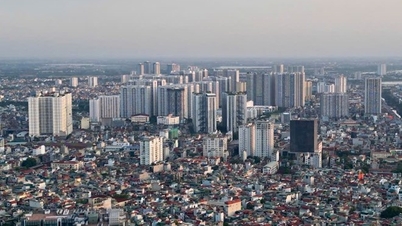
![[Image] Affirming the aspirations and new standards of the Vietnamese real estate market in the new era.](https://vphoto.vietnam.vn/thumb/1200x675/vietnam/resource/IMAGE/2026/06/03/1780441948766_giai-thuong-bat-dong-san-2026-minh-duy-6-7364-jpg.webp)







































Comment (0)