

Located on the banks of the Perfume River, while the Temple of Literature (Van Thanh Mieu) worships "saints of literature" (Confucius, scholars of literature), the Temple of Martial Arts (Vo Thanh Mieu, often called Vo Mieu) worships "saints of martial arts" (Jiang Ziya, martial arts champions).
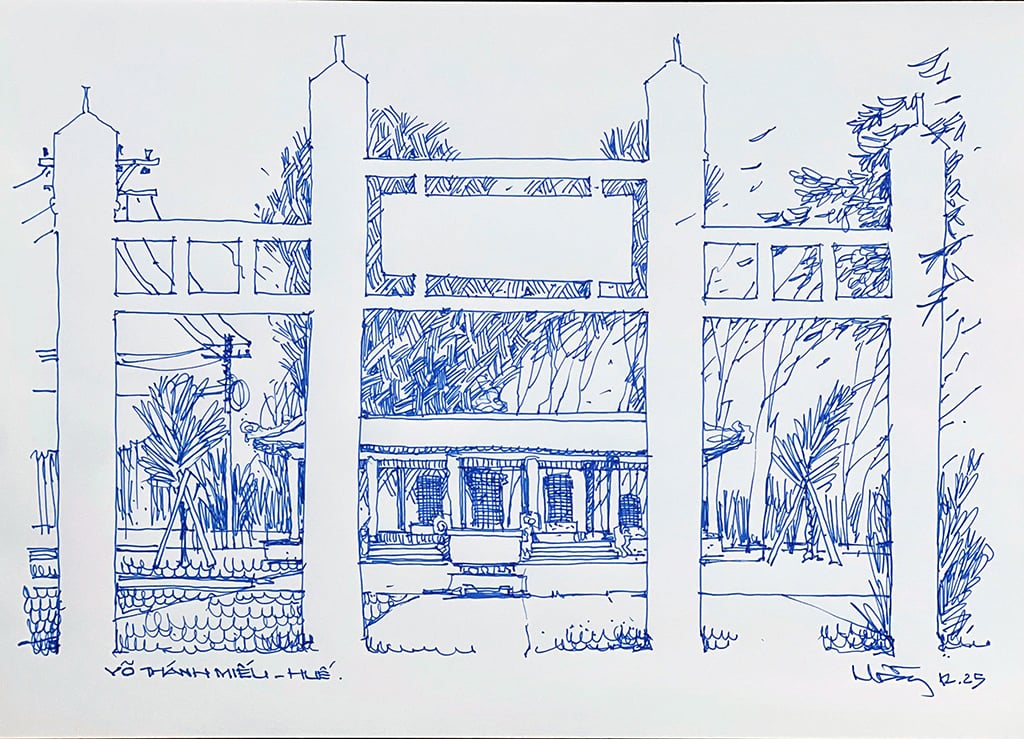
The Martial Arts Temple is the only place in Vietnam that honors outstanding military figures - sketch by architect Tran Xuan Hong.
In 1835, Emperor Minh Mạng ordered the construction of the Martial Arts Temple, organized martial arts competitions, and erected steles commemorating meritorious military generals to highlight the importance of military prowess in defending the country. Besides Jiang Ziya, the Martial Arts Temple worships 11 Chinese generals such as Guan Zhong, Han Xin, and Yue Fei… Vietnamese generals worshipped include Tran Hung Dao (during the Tran dynasty), Le Khoi (during the early Le dynasty), and four famous generals from the Nguyen dynasty: Nguyen Huu Dat, Nguyen Huu Tien, Nguyen Van Truong, and Ton That Hoi. Surprisingly, Emperor Minh Mạng, due to his Confucian ideology, acknowledged Ly Thuong Kiet's "superior martial prowess" but, being a eunuch, "excluded" him from the list.
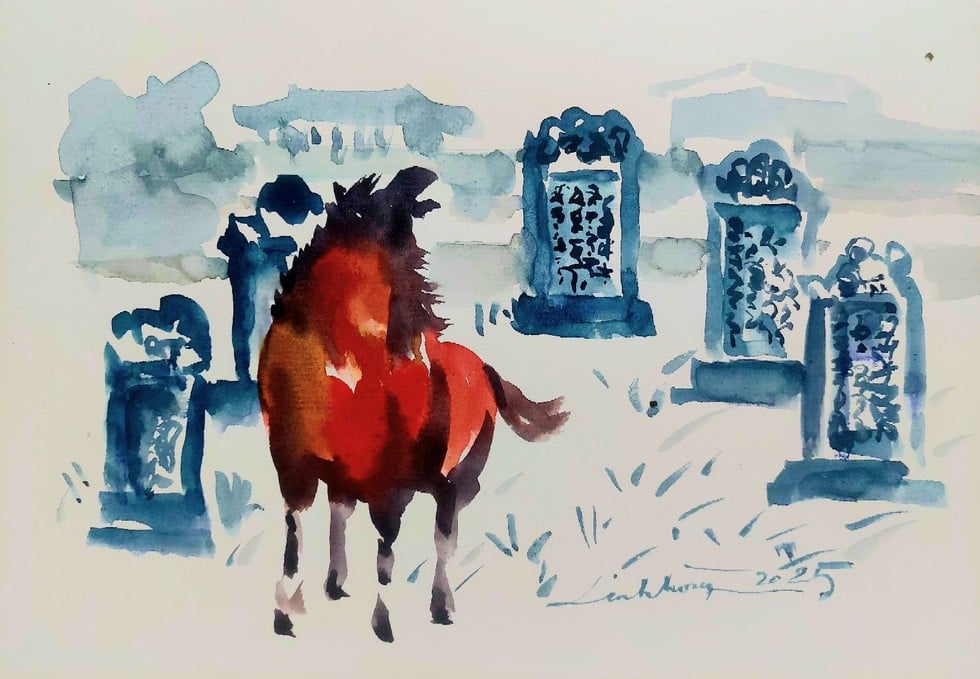
During the reign of Emperor Tự Đức, there was also the An Tây stele (now lost) inscribed with the names of brave generals who contributed to pacifying the southwestern border, including Nguyễn Tri Phương - sketched by architect Linh Hoàng.
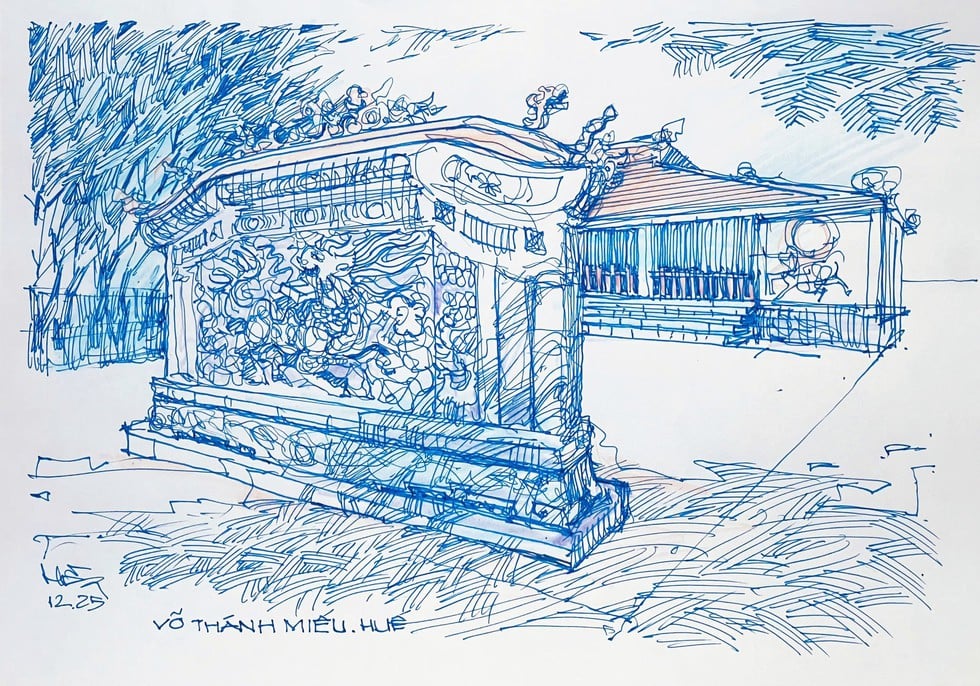
Screen in front of the main temple - sketch by architect Tran Xuan Hong
One of the unique features of the Martial Arts Temple is its system of stone steles commemorating the achievements of martial arts masters and the names of top-ranking martial arts scholars. In front of the temple are three "Martial Arts" steles (from the Minh Mạng era). The central stele is inscribed with a poem praising the virtues of martial arts masters, while the two steles on either side bear the names and achievements of famous generals of the Nguyễn dynasty. Notably, General Tôn Thất Bật's name was later removed from the stele after he was accused of treason (a mark of this is still present on the stele here). In addition, the Martial Arts Temple also has two "Martial Arts Scholar" steles (from the Tự Đức era) commemorating high-ranking military officers (similar to how the Temple of Literature honors doctoral graduates) from the 1865, 1868, and 1869 examinations.
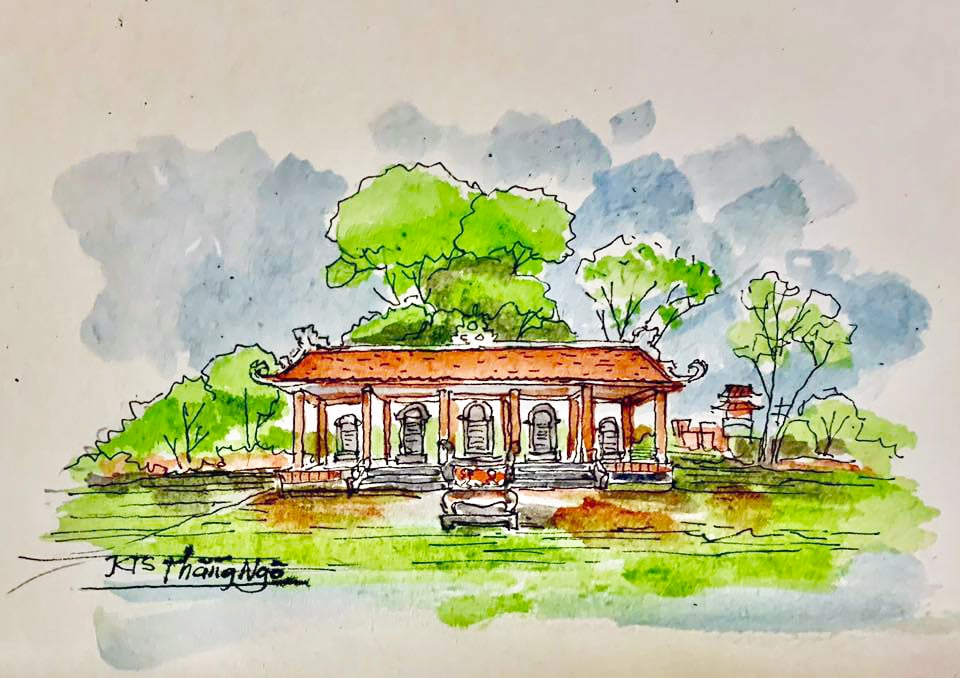
After years of neglect, in 2025, a memorial house was erected, housing five ancient steles to protect them from rain and sun - a sketch by architect Thang Ngo.
According to the Southeast Asian Journal, the Martial Arts Temple consists of a main temple building with a front hall (5 bays) and a main hall (3 bays and 2 wings). In front of the courtyard, on either side are two rows of 5-bay buildings (Left and Right wings) symmetrically arranged across the central sacred axis. Initially, the Martial Arts Temple was surrounded by a low wall. Due to the vicissitudes of time, the original architecture has almost completely disappeared, leaving the Martial Arts Temple in ruins.
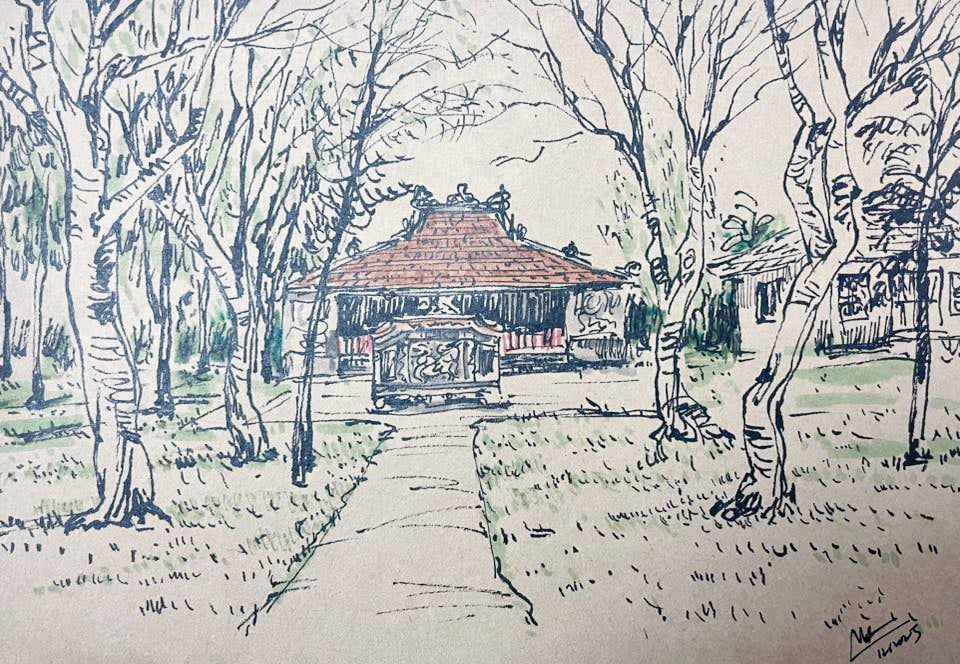
Entrance to the main area - sketch by artist Tran Binh Minh
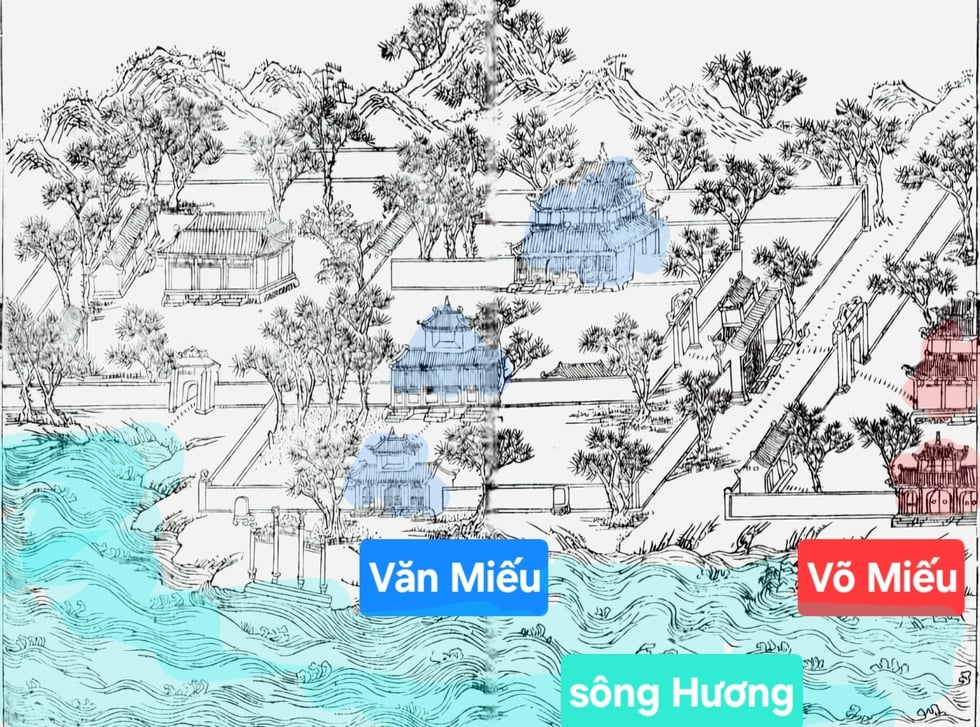
The Temple of Literature (left) and the Temple of Martial Arts (right) in a painting from 1845 - Archival painting from the Southeast Asia Magazine.
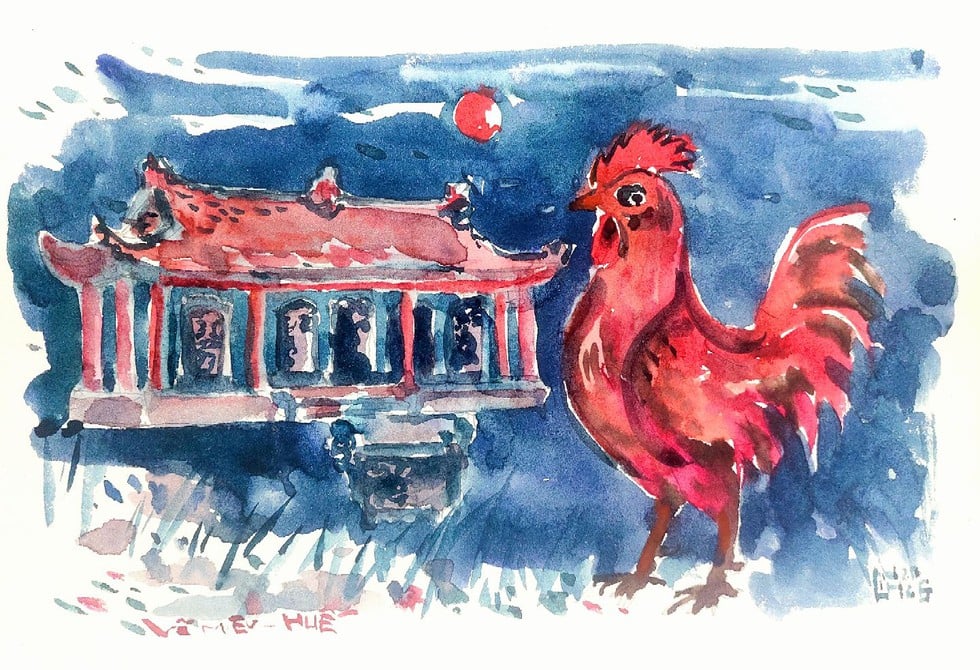
Previously, outside the main temple, there was a three-room house used for slaughtering animals for sacrificial rituals - a sketch by architect Linh Hoang.
Recently, the main temple has been reinforced. An entrance gate and a stele house have been erected, and five ancient steles have been gathered inside to protect them from rain and sun.
Source: https://thanhnien.vn/vi-sao-ly-thuong-kiet-khong-duoc-tho-tai-vo-thanh-mieu-185251213222948534.htm




![[Image] Vietnam's colorful journey of innovation](/_next/image?url=https%3A%2F%2Fvphoto.vietnam.vn%2Fthumb%2F1200x675%2Fvietnam%2Fresource%2FIMAGE%2F2025%2F12%2F14%2F1765703036409_image-1.jpeg&w=3840&q=75)


































![[Image] Vietnam's colorful journey of innovation](https://vphoto.vietnam.vn/thumb/402x226/vietnam/resource/IMAGE/2025/12/14/1765703036409_image-1.jpeg)























Comment (0)