


Hanoi deciphers: Why are taxis, motorbike taxis, and trucks the pioneers in switching to electric vehicles?
The program to transition to green transportation in the capital city will not be implemented indiscriminately. Instead, Hanoi has clearly defined a priority roadmap for vehicle groups with an early transition timeframe, along with accompanying support policies, to ensure it aligns with practical conditions and the capacity of businesses and residents to respond.
Prioritize reducing high emissions and optimizing operating costs.

Mr. Dao Viet Long, Deputy Director of the Hanoi Department of Construction. Photo: Dan Tri Newspaper.
According to Mr. Dao Viet Long, Deputy Director of the Hanoi Department of Construction, commercial transport vehicles are included in the conversion roadmap earlier than private vehicles for two core reasons.
Firstly, this group of vehicles operates at a very high frequency, running continuously in urban areas and traveling large distances each day. Therefore, the amount of emissions released into the environment, including exhaust fumes, noise, and air pollution in the inner city, is much higher than that of regular private vehicles. The early transition of this group means that the capital city will significantly reduce its polluting factors.
Secondly, these vehicles are directly linked to business operations. Although the initial purchase cost of some electric vehicles (especially trucks and commercial vehicles) is still high, studies and reports show that the total cost of ownership for many commercial and service vehicles over their entire lifespan is often lower. This is due to fuel savings and reduced recurring maintenance costs, helping businesses improve profitability. In addition, green transitions improve corporate image and open up market opportunities, as many customers and partners (especially corporations committed to sustainability) prioritize partnering with green logistics providers.
A clear roadmap reduces the pressure for simultaneous change across the board.

According to Mr. Dao Viet Long, the transition to green vehicles is divided into specific stages, starting with the group of vehicles used for commercial transportation.
- Motorcycles and motorbikes used for commercial transportation (including ride-hailing motorbikes): 20% will be converted before January 1, 2027, 50% before January 1, 2028, and 100% will be completed before January 1, 2030.
- Taxis and passenger cars with up to 8 seats used for commercial transportation: From July 1, 2026, 100% of replacement and new investments must be clean energy vehicles. This will be followed by conversion milestones of 50% before January 1, 2028, and 100% completion before January 1, 2030.
"These conversion rates are proposed based on feedback and input from various units, not as a one-sided coercion. Therefore, businesses, both transportation companies and transportation connectivity software providers, will have the entire period from 2026 to 2030 to proactively plan their transformation, without being pressured to change simultaneously," Mr. Long emphasized.
Avoid mass transformation; listen to and work alongside the people.
The Deputy Director of the Hanoi Department of Construction also refuted misleading information that all currently operating vehicles would have to be converted immediately from July 1, 2026. Mr. Long affirmed that the regulation only applies to vehicles that are replaced or newly invested in after July 1, 2026.
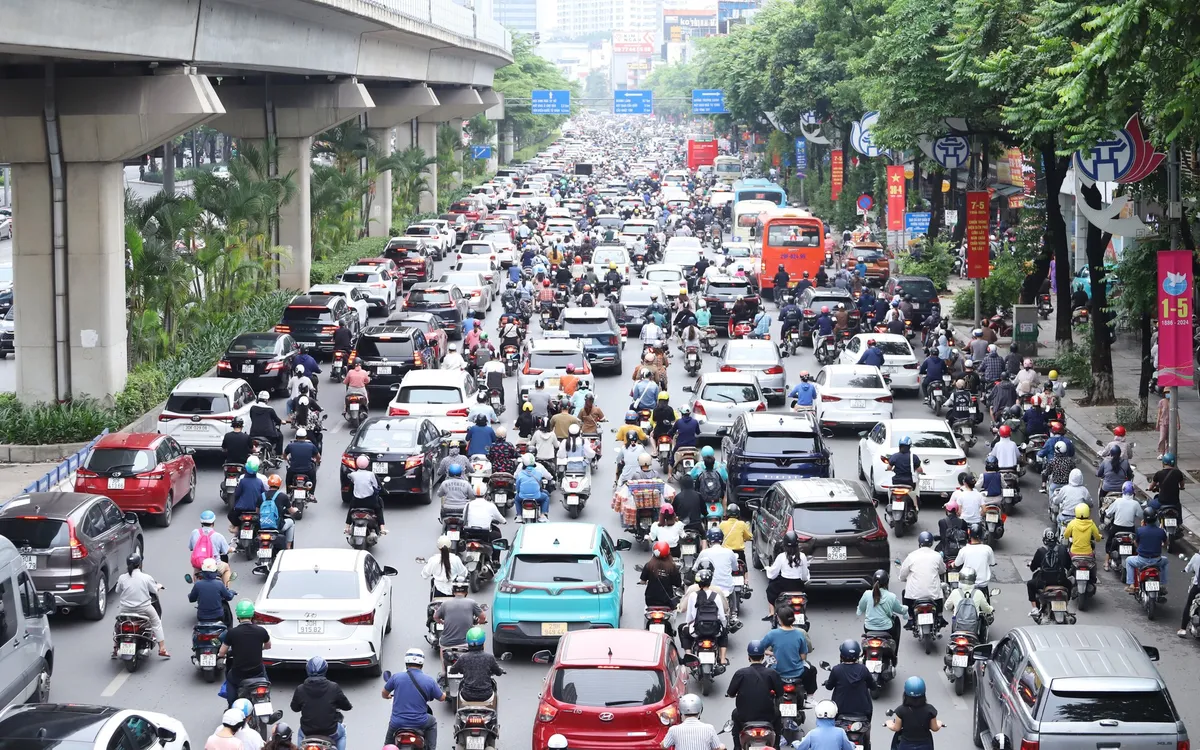
"Operating vehicles can still be used for normal transportation; those that are still within their service life and meet technical standards do not need to be converted immediately. Hanoi is not imposing a mandatory mass conversion to prioritize certain electric vehicle providers, but is only implementing it according to the natural cycle of vehicle replacement to avoid creating sudden pressure on people and businesses," Mr. Long said.
For other types of road transport, including official vehicles and private vehicles, Hanoi will implement low-emission zone policies and plans to research and propose appropriate measures to restrict them from January 1, 2035 onwards.
Mr. Long assessed: "This is not a roadmap for accelerated progress through orders, but a calculated process with priorities, proportional transition steps, and especially with accompanying financial support to minimize pressure."
Affirming the spirit of policy-making, Mr. Long shared: "During the policy-making process, the city always maintains a spirit of listening, sharing, and openness. All opinions, not only from businesses, but also feedback from citizens, experts, social critiques from the Fatherland Front and other organizations, are seriously considered to improve policies."
The transition to low-emission vehicles and solutions aims to improve environmental quality, reduce air pollution risks, and create safer, more sustainable living conditions for the community. Hanoi hopes to receive the understanding, support, and cooperation of its citizens and business community in this major transition.
Source: https://vtv.vn/vi-sao-taxi-xe-om-xe-tai-la-nhom-tien-phong-chuyen-sang-xe-dien-100251211110426457.htm


![[Photo] Prime Minister Pham Minh Chinh holds a phone call with the CEO of Russia's Rosatom Corporation.](/_next/image?url=https%3A%2F%2Fvphoto.vietnam.vn%2Fthumb%2F1200x675%2Fvietnam%2Fresource%2FIMAGE%2F2025%2F12%2F11%2F1765464552365_dsc-5295-jpg.webp&w=3840&q=75)






















































Comment (0)