

Does hardware prevail over algorithms?
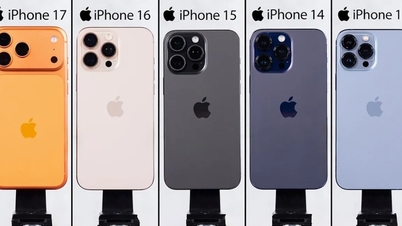
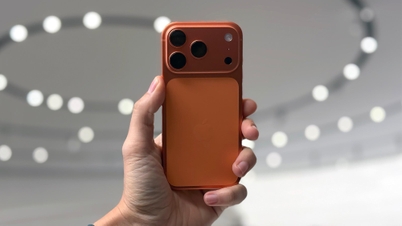
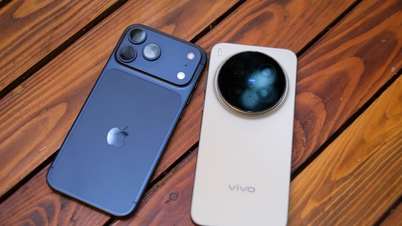
On the iPhone 17 Pro Max, Apple changed its strategy by equipping it with a 4x telephoto lens (instead of 5x like the previous generation) along with a 48MP Tetra Prisma sensor, aiming to use a cropping algorithm from the center of the sensor to create an 8x zoom with "optical quality". Practical experience shows that at close zoom levels (below 5x), the iPhone performs very well: consistent colors, sharp details, and smooth lens transitions. At the default 1x-2x zoom levels, both phones produce comparable images for their segment, with not much difference between them.

The X300 Pro's impressive zoom capabilities, even without external lenses, make it a favorite among those who enjoy photographing insects or macro photography.
However, when you push the zoom level to 10x, 20x, and beyond, the vivo X300 Pro truly becomes a different kind of "monster." Equipped with a massive 1/1.4-inch 200MP telephoto sensor (much larger than the iPhone's sensor), vivo doesn't just rely on algorithms. The amount of optical data captured is so large that 10x or even 20x zoom photos from the X300 Pro still retain the texture of the object's surface, and distant text remains sharp. Meanwhile, photos from the iPhone at the same focal length start to show a "painting-like" effect, with details becoming blurred due to the noise reduction algorithm being overworked.
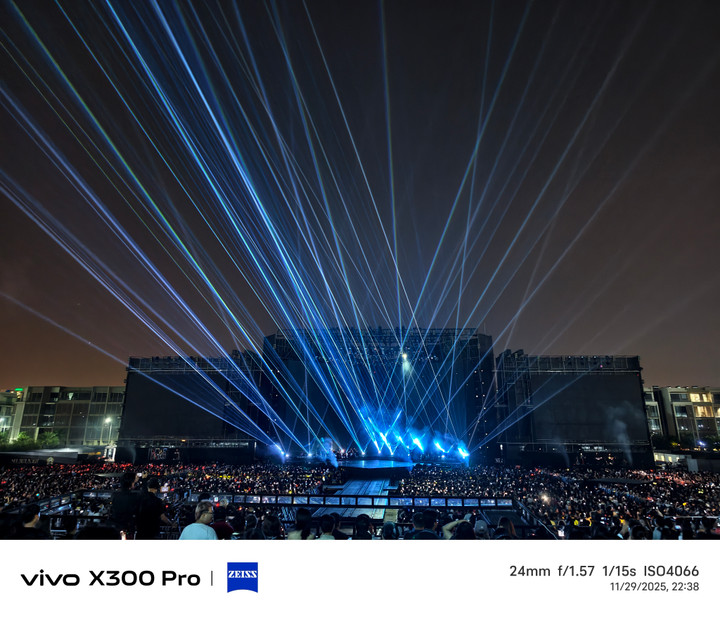

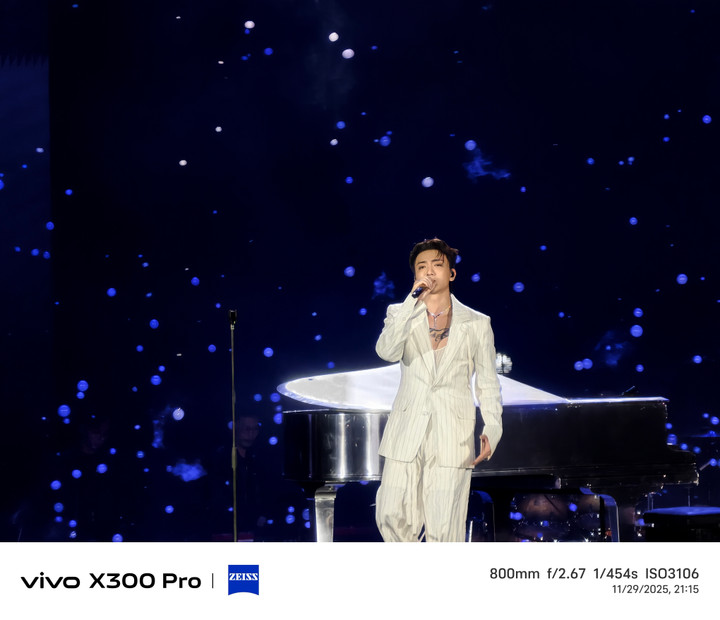
Photos taken at the actual location and on stage (using the official external lens for the vivo X series).
In a recent concert in Ho Chi Minh City, the vivo X300 Pro demonstrated its zoom capabilities, further enhanced by its genuine external lens kit – a new "toy" in the camera phone market this year. The X300 Pro was able to "reach further" and capture the artists' movements on stage with exceptional clarity, while the iPhone 17 Pro Max was completely outmatched.
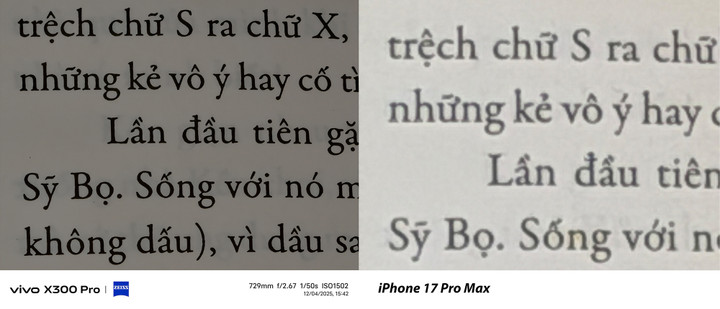
Comparing the text capture capabilities of two cameras at the same 10x zoom level.
Besides zoom, night photography used to be a weakness of Android phones, but now the "wind has shifted" to create balance in the market. The perennial problem of iPhones—lens flare and ghosting when shooting directly at streetlights or neon signs—has not been completely resolved on the iPhone 17 Pro Max.
In contrast, the ZEISS T* coating on the vivo X300 Pro proves its superior value. Night photos from the vivo are clear, streetlights are neatly focused, and the night sky is deep and dark, without any hazy appearance. In particular, thanks to its large telephoto sensor, the vivo X300 Pro confidently activates the zoom lens even in low light conditions, instead of automatically switching to the main camera and digitally cropping like iPhones often do, resulting in better detail and clarity in night zoom photos.
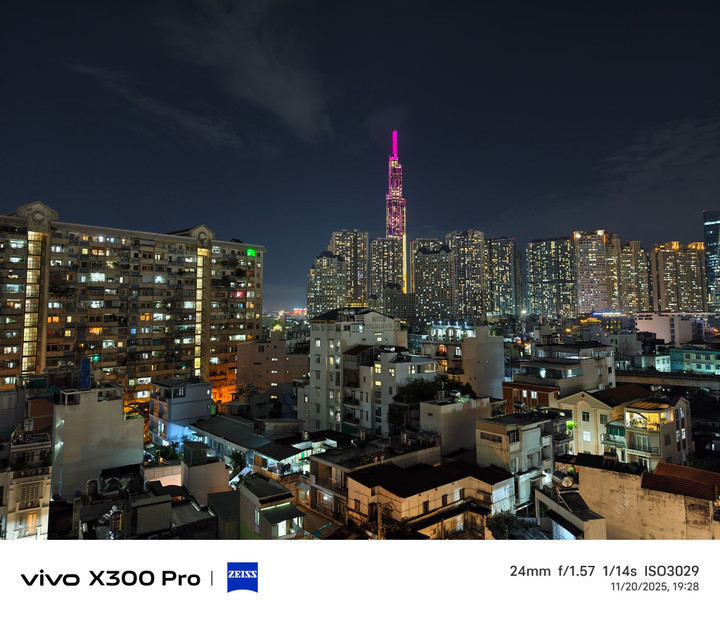
Nighttime photos remain clear and highly detailed even when taken in automatic mode and without a tripod.
The X300 Pro excels in portrait photography.
This is a category where personal taste will determine the winner, but vivo is demonstrating a deeper understanding of East Asian consumers.
The iPhone 17 Pro Max maintains its stance of "extreme realism." Human skin is reproduced in detail down to the pores, the color tone is often slightly yellowish, and the contrast is high. This is good for documentary photography or professional post-processing, but for the "shoot it right away" needs of most users, portraits from the iPhone are often criticized for being less flattering and sometimes highlighting the subject's flaws.
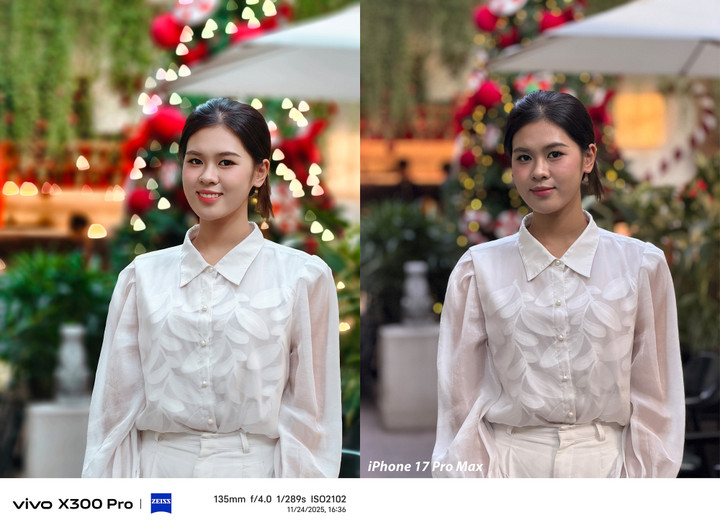
The vivo X300 Pro's portrait photos feature vibrant colors, bright, rosy skin tones, and numerous background customization options.
In contrast, the vivo X300 Pro, backed by ZEISS, has transformed portrait photography into an artistic experience. It offers a full range of standard portrait focal lengths, from 50mm, 85mm to 135mm. The 85mm focal length on the large sensor creates a natural optical bokeh effect, separating the background smoothly without the harshness of software-based bokeh. The "selling point" is the ZEISS filters (such as Biotar swirl, Sonnar cream…) and the "Humanistic Portrait" algorithm, which give the subject's skin a rosy, radiant look while preserving its natural texture.
This advantage is better demonstrated in low-light conditions, or when the environment is dim in the late afternoon. Practical experience shows that the iPhone 17 Pro Max suffers from capturing subjects with dull skin, pale and lifeless colors, and lackluster foreground and background lighting. Conversely, the X300 Pro excels in every aspect, offering more personalization options and diverse post-processing capabilities thanks to AI support.
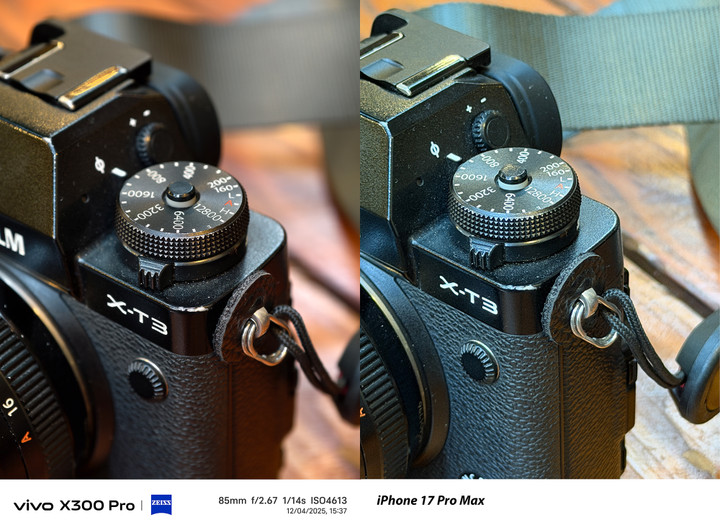
Under the same poor lighting conditions (obscured by dense foliage and numerous red lights), the iPhone 17 Pro Max produced images with a bluish tint, a cool tone, and less detail than its competitor.
Performance and overall experience
In terms of performance, both the A19 Pro in the iPhone and the Dimensity 9500 in vivo are more than powerful enough for all the tasks users need on a smartphone. The difference lies in the everyday user experience.
In terms of battery and charging, this is a "knock-out" victory for vivo. The 6,510 mAh BlueVolt battery offers significantly longer real-world usage time compared to the iPhone's approximately 5,000 mAh battery. vivo's 90W charging speed (fully charged in about 40 minutes) also far surpasses Apple's charging speed, completely changing user habits. However, in terms of ecosystem, the iPhone still wins thanks to its seamless integration with Mac computers, iPads, and Apple Watch.
Who should choose what?
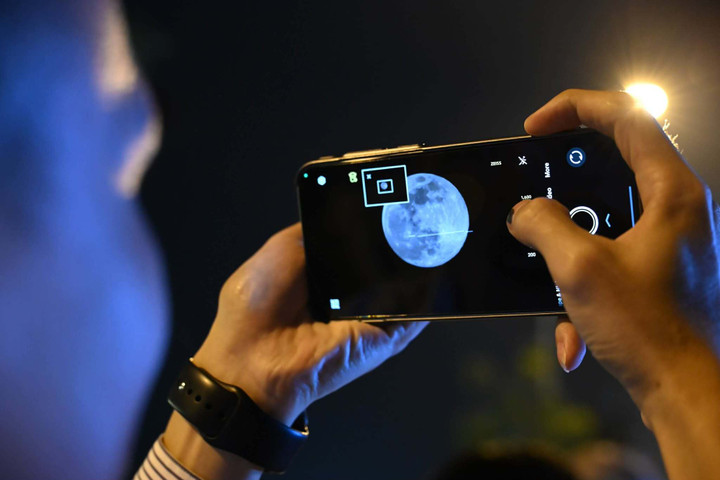
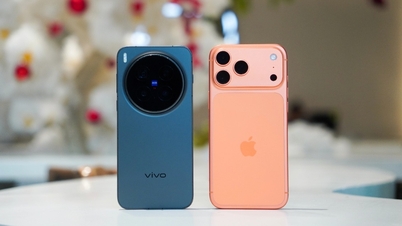
The X300 Pro offers a more exciting and enjoyable experience compared to the iPhone 17 Pro Max.
The showdown between the vivo X300 Pro and the iPhone 17 Pro Max doesn't have an absolute winner; it's simply a matter of choosing the one that best suits your needs. Choose the vivo X300 Pro if you're a photography enthusiast (especially for street photography, portraits, and telephoto zoom), need a phone with a powerful battery and super-fast charging, and want instantly beautiful photos with vibrant colors without the need for post-processing.
However, if you're already deeply immersed in the Apple ecosystem and are accustomed to and proficient in using professional photo editing tools on a computer, then the iPhone 17 Pro Max would be a suitable choice.
Source: https://vtcnews.vn/vivo-x300-pro-so-tai-camera-voi-iphone-17-pro-max-ar992343.html





















































































Comment (0)