

Vietnam's economy continues its recovery, with GDP growth in the first quarter of 2024 estimated at 5.66%. Although challenges remain ahead, with the right opportunities and concerted efforts, the economy can continue to accelerate.
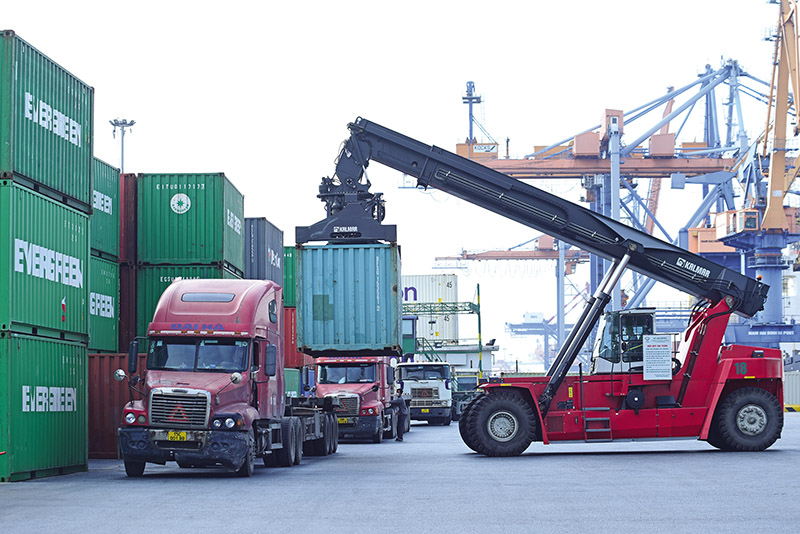 |
| Imports and exports were a bright spot in the first quarter of 2024, with total trade increasing by 15.5% compared to the same period last year. (Image : DM) |
If all goes according to plan, GDP growth in the first quarter of 2024 will reach 5.66%.
As predicted by many international organizations, Vietnam's GDP growth in the first quarter of 2024 is estimated at 5.66%, according to official figures released by the General Statistics Office last weekend.
"This is positive growth given the current uncertainties in the global and regional economy. The economy is following the growth scenario outlined in Government Resolution No. 01," Deputy Minister of Planning and Investment Tran Quoc Phuong told a reporter from Investment Newspaper.
According to the 2024 growth scenario outlined in Resolution No. 01/NQ-CP on the main tasks and solutions for implementing the Socio-Economic Development Plan and the State Budget Estimate for 2024, in order for the economy to achieve a growth target of 6-6.5%, the first quarter must grow by 5.2-5.6%; the second quarter by 5.8-6.2%; the first six months by 5.5-6%; the third quarter by 6.2-6.7%; the first nine months by 5.7-6.2%; and the fourth quarter by 6.5-7%. Thus, the 5.66% growth figure is even higher than the high threshold of the growth scenario developed by the Government .
"Positive" was also the word used by Ms. Nguyen Thi Huong, Director General of the General Statistics Office, when discussing the economic situation in the first quarter of 2024. According to Ms. Huong, this result shows that the efforts of the Government and the Prime Minister in managing the economy are gradually yielding results.
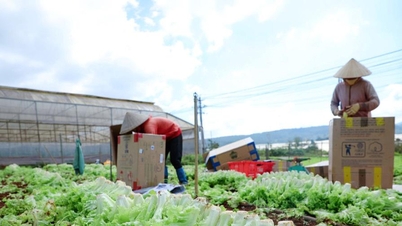
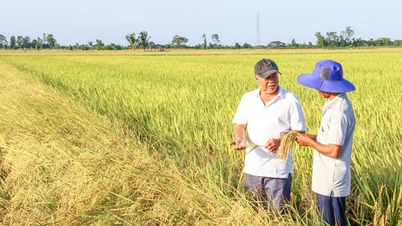
According to data from the General Statistics Office, the 5.66% growth rate in the first quarter of 2024 is the highest among the first quarters of the past five years (from 2020 onwards, GDP growth in the first quarters has been 3.21%; 4.85%; 5.12%; 3.41% and 5.66% respectively). Within this overall growth, the agriculture, forestry and fisheries sector increased by 2.98%, contributing 6.09%; the industry and construction sector increased by 6.28%, contributing 41.68%; and the service sector increased by 6.12%, contributing 52.23%.
Thus, while the agriculture and forestry sector continues to play a pivotal role, the industrial and service sectors have shown significant recovery. "The driving force behind the economic growth in the first quarter was the recovery of industrial production and the service sector," said Deputy Minister Tran Quoc Phuong.
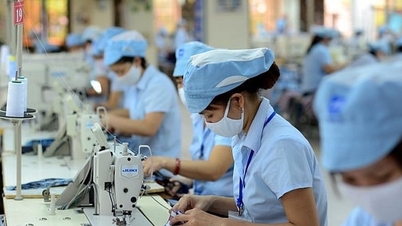
Statistics have also shown this. A clear example is that the industrial output value of the manufacturing sector increased by 6.98%, contributing 1.73 percentage points to the overall economic growth. The recovery of this sector has played a crucial role in leading the economy to maintain its growth momentum.
Meanwhile, the service sector also recovered positively, especially tourism. In the first quarter of the year, the number of international visitors to Vietnam reached 4.6 million, an increase of 72% compared to the same period last year and an increase of 3.2% compared to the same period in 2019 - a year before the Covid-19 pandemic. The number of Vietnamese people leaving the country reached 1.2 million, an increase of 11.5% compared to the same period last year.
Similarly, import and export figures are also a positive highlight, with total import and export turnover in the first three months of the year reaching US$178.04 billion, an increase of 15.5% compared to the same period last year. Of this, exports alone reached US$93.06 billion, an increase of 17% compared to the same period last year. The strong recovery of goods trade is highly appreciated by experts from the World Bank (WB) and the Asian Development Bank (ADB). According to Mr. Shantanu Chakraborty, ADB Country Director for Vietnam, public investment, domestic consumption, and export recovery are the three main drivers of Vietnam's economic growth in 2024.
Continue to face difficulties
Although the economy has achieved positive results and the recovery momentum is being maintained, it is clear that significant difficulties and challenges still lie ahead.
In an interview with a reporter from the Investment Newspaper, Deputy Minister Tran Quoc Phuong also emphasized this point. According to the Deputy Minister, the fact that more than 74,000 businesses left the market in the first quarter of 2024, an increase of nearly 23% compared to the same period last year, or that credit growth is currently only at 0.26%... are indicators that the economy is still facing many challenges.
"This is something we've mentioned a lot recently. The business sector is still facing difficulties, so capital absorption remains low, and although production and business have recovered, it's still slow," Deputy Minister Tran Quoc Phuong said.
In fact, although industrial production is still experiencing positive growth, according to data from the General Statistics Office, there are still 9 localities where the Industrial Production Index decreased compared to the same period last year. The main reason is that these localities have low growth or a decrease in the Manufacturing and Processing Industrial Production Index compared to the same period last year.
For example, Quang Nam only increased by 0.5%; Quang Ngai increased by 0.2%; while Bac Ninh still decreased by as much as 8.8%. Last year, these were also the localities with the lowest Industrial Production Index for Processing and Manufacturing. In particular, Bac Ninh experienced a very sharp decline, causing the "capital" of the electronics industry in the North to have negative growth last year. The situation in Bac Ninh in the first quarter of this year has not improved much either.
Information indicates that in the first quarter of 2024, six localities still experienced negative GRDP growth. Da Nang, one of the country's major economic centers, also saw negative growth (-0.83%). In this locality, during the first quarter, the service sector – which is the main contributor to the city's overall growth – only increased slightly by 0.14%, while the industrial and construction sectors continued to experience negative growth of 3.55%.
Commenting on the challenges and difficulties facing the economy, Dr. Vo Tri Thanh, former Deputy Director of the Central Institute for Economic Management Research (CIEM), speaking at the recent Workshop on Identifying Bright Spots in Business and Investment in 2024, on the one hand mentioned the bright spots of the economy, such as exports, attracting foreign investment, and controlling inflation, but on the other hand, also expressed concern about market and investor confidence. Dr. Vo Tri Thanh emphasized the slowdown in private investment, low credit growth, and the lack of a clear recovery in the real estate market.
"Consumer spending seems to be slowing down, and there are still signs of concern regarding private investment and credit," said Mr. Vo Tri Thanh.
This is a fact. Besides figures showing the withdrawal of businesses from the market, or the low growth rate of outstanding credit, a noteworthy figure is the low purchasing power of the economy.
According to data from the General Statistics Office, total retail sales of goods and consumer service revenue in the first three months of this year, after deducting price factors, increased by only 5.1%, half the 10.1% increase of the same period last year. The weak domestic market purchasing power, while foreign market purchasing power has not yet recovered, will affect the production, business, and export activities of enterprises.
Seize opportunities, overcome challenges.
There are worries and concerns, but Mr. Vo Tri Thanh himself emphasized the opportunities of the economy, highlighting the bright spots amidst difficulties and the fact that some challenges have become less difficult, saying: "Don't be too pessimistic, seize the opportunities to overcome the challenges."
The 5.66% growth rate in Q1 2024 was the highest in the first quarters of the past five years. Specifically:
The agriculture, forestry, and fisheries sector increased by 2.98%, contributing 6.09%;
The industrial and construction sector increased by 6.28%, contributing 41.68%;
The service sector grew by 6.12%, contributing 52.23%.
Indeed, many localities across the country have seized opportunities to overcome challenges. Bac Giang is a prime example.
At a recent briefing conference organized by the Bac Giang Provincial Party Committee, Bac Giang Provincial Party Secretary Duong Van Thai stated that Bac Giang's GRDP growth in the first quarter of 2024 reached 14.18%, ranking first nationwide. Budget revenue also achieved positive results.
"We need to continue addressing land clearance issues, accelerating the disbursement of public investment capital, and attracting investment to maintain the momentum of economic growth," Mr. Duong Van Thai directed.
Bac Giang can be considered a "rising star" not only in attracting investment, but also in overall economic development in the northern region in recent years. Thanks to efforts to improve the investment environment and complete planning early, in recent years, Bac Giang has attracted a series of big names, such as Foxconn, Luxshare ICT, Hana Micron… These investment projects have significantly contributed to boosting Bac Giang's Industrial Production Index and GRDP growth. In the first quarter of 2024, Bac Giang's Industrial Production Index increased by 23.8%, more than double the 10.5% increase of the same period last year.
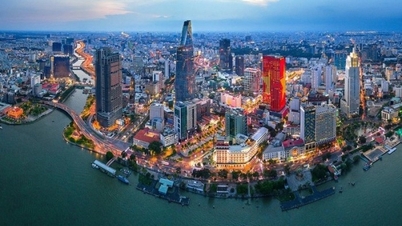
Also striving to overcome challenges, Ho Chi Minh City achieved a GRDP growth rate of 6.54%, exceeding even the forecast (5.5%). In the first quarter of last year, the country's economic powerhouse only grew by 0.7%. Meanwhile, Hanoi had a growth rate of 5.5%, lower than the 5.81% growth rate of the first quarter of last year. These growth rates will create momentum for the remaining quarters of the locality, as well as for the economy in general.
"Achieving an annual growth rate of 6-6.5% is a major challenge, requiring the concerted efforts and unity of the entire political system," said the head of the General Statistics Office, proposing a series of solutions such as persistently maintaining macroeconomic stability, continuously updating growth and inflation scenarios to harmoniously manage fiscal and monetary policies to promote economic growth. Along with that, boosting exports, focusing on developing the domestic market, and accelerating the disbursement of public investment capital are also crucial.
These are precisely the solutions that the Government has been directing extensively recently. It's not just about strongly promoting and renewing traditional growth drivers, but also about effectively exploiting new growth drivers.
Source




































































































Comment (0)