

Speaking at the "Improving Packaging and Packing for Export Fruits" workshop, held in Ho Chi Minh City on December 12th, Mr. Nguyen Ngoc Minh Thy, Vice President of the Vietnam Packaging Association (VINPAS) and General Director of Liksin Packaging Printing Industry Corporation, stated that post-harvest losses for fruits and vegetables in developing countries are very high, reaching 30-44%.
Among the causes of very high fruit and vegetable losses, the packaging used for preserving the fruit is a major factor.
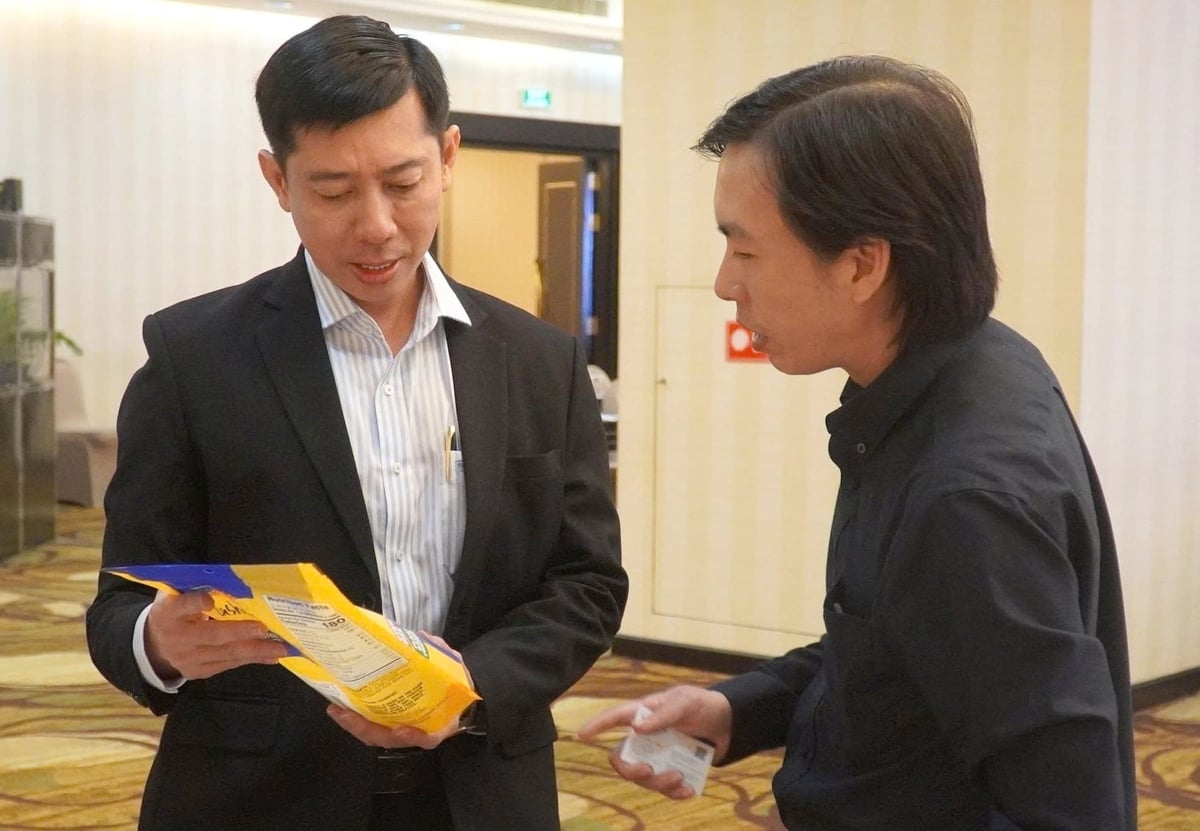
Mr. Nguyen Ngoc Minh Thy (left) introduces a type of food packaging from Liksin. Photo: Son Trang .
According to Mr. Nguyen Ngoc Minh Thy, Vietnamese fruit packaging still has many limitations, such as low sustainability due to its heavy reliance on virgin plastic and cartons that do not meet high recycling standards. Fruit packaging also lacks active packaging technology, resulting in a high post-harvest spoilage rate (estimated at 15-30%).
Furthermore, the fruit packaging industry lacks smart packaging due to the lack of deep integration of sensors for real-time quality monitoring. Packaging efficiency (OEE) remains low because packaging designs are not optimized for automation and are prone to errors.
Peter Johnson, an international expert on the tropical fruit value chain at GQSP Vietnam, UNIDO, commented that the durability of cardboard boxes used for fruit is low, with most of the bottom layers of the boxes being crushed and compressed. The packaging design is unsuitable for cooling or maintaining the temperature of the fruit. The packaging is not suitable for the type of fruit product, leading to inefficiency in transportation. The purchase of cardboard boxes is primarily to save costs when transporting fruit, but buyers lack awareness of the associated losses.
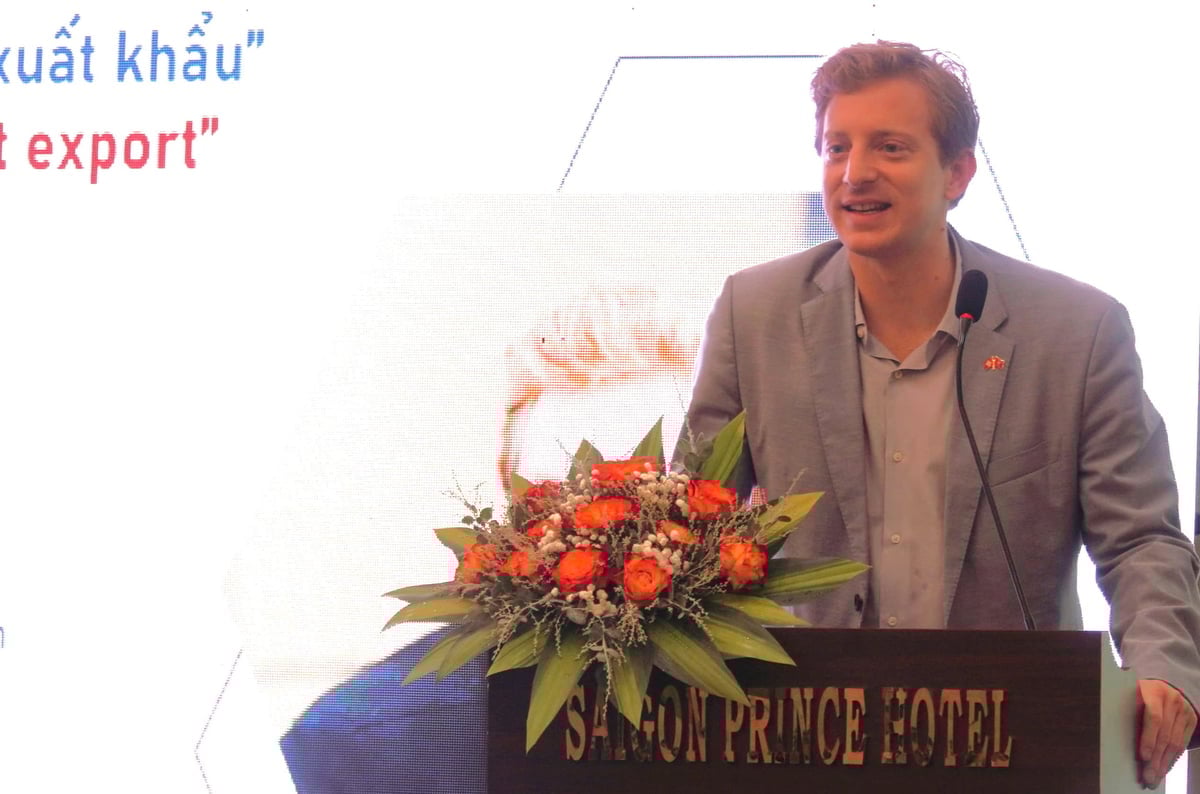
Mr. Andri Meier speaking at the conference. Photo: Son Trang .
Mr. Andri Meier, Deputy Head of Development Cooperation at the Swiss Embassy in Vietnam, emphasized, “Vietnam’s fresh fruit industry is dynamic and growing rapidly. However, it still faces many systemic challenges, including high post-harvest losses, inconsistent quality, fragmented supply chains, limited adoption of advanced packaging solutions and technologies, while export markets are increasingly demanding requirements for sustainability, traceability, and food safety.”
The solutions to these challenges also represent the core spirit of the workshop: enhancing the sharing of technical knowledge, exchanging practical experiences, and promoting innovative and sustainable approaches. Switzerland continues to affirm its role as a reliable partner and is committed to accompanying Vietnam on its journey to building a more competitive, sustainable, and higher value-added agricultural export sector.”
Source: https://nongnghiepmoitruong.vn/trai-cay-rau-cu-that-thoat-cao-vi-bao-bi-khong-tot-d789062.html


















































































Comment (0)