

In 2024, Vietnam's fiber exports are estimated to reach $4.48 billion, an increase of 2.85% compared to 2023. This is a very positive figure given the extremely difficult circumstances facing the industry.
Yarn is a crucial export sector within Vietnam's textile and garment industry. Data from the Vietnam Textile and Garment Association shows that in 2024, yarn exports are estimated to reach US$4.48 billion, a 2.85% increase compared to 2023. Looking at yarn export statistics from 2019 to the present, exports have fluctuated between US$3.7 billion and US$5.6 billion – a significant figure in the industry's overall exports.
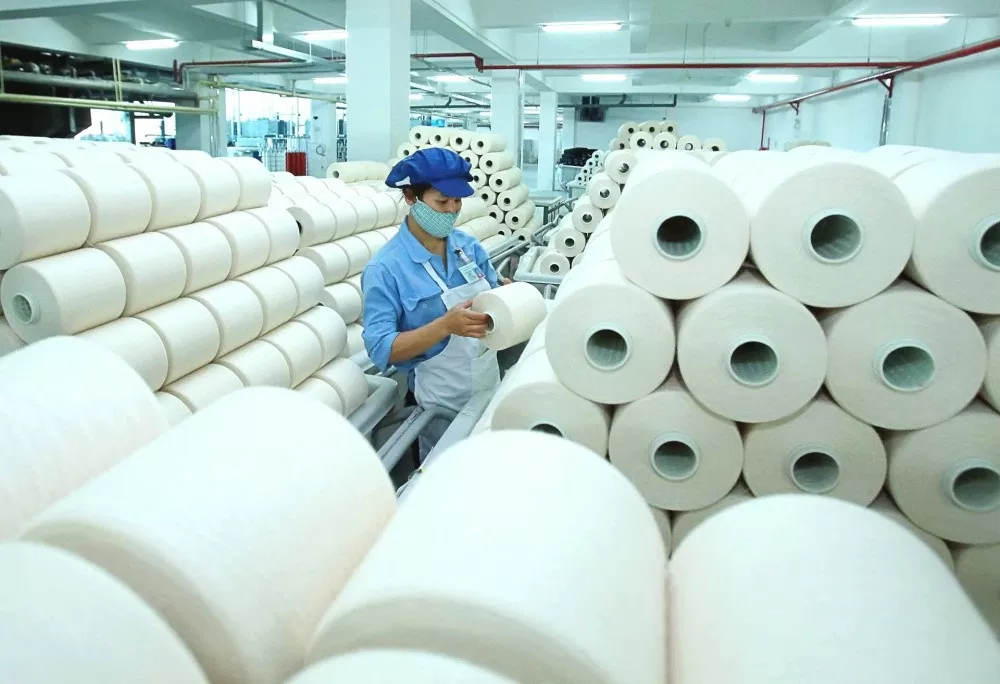 |
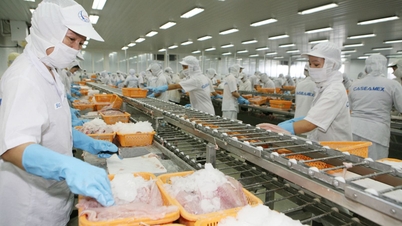
| In 2024, Vietnam's fiber exports grew by 2.58%. (Illustrative image) |
Regarding the challenges facing the textile industry, a representative from the Vietnam Textile and Garment Group stated that the industry is facing external challenges such as sensitivity to fluctuations in macroeconomic factors, especially raw material prices; and internal challenges such as supply chain linkages and differences in management, leading to differences in efficiency.
Although the market remains relatively sluggish for yarn businesses due to very low order prices, many yarn businesses within the Vietnam Textile and Garment Group have achieved profitability and surpassed the break-even point thanks to various cost-saving and production optimization solutions.
For Phong Phu Corporation, in the yarn sector alone, revenue for the first nine months of 2024 reached VND 696 billion, with a profit of VND 60.2 billion, equivalent to 80% of the annual revenue plan. Phu Bai Yarn Joint Stock Company achieved VND 955 billion in revenue and pre-tax profit of VND 9.2 billion in the first nine months of 2024, equivalent to 91% of the annual revenue plan.
Also surpassing the break-even point, Vinatex Phu Hung Joint Stock Company had revenue of VND 656.23 billion by the end of October 2024, with a profit of VND 4.3 billion; Hue Textile and Garment Joint Stock Company had a yarn profit of VND 16.77 billion in the first nine months, equivalent to 99% of the pre-tax profit plan for 2023. Many other yarn businesses in the group, such as Vinatex Hong Linh Joint Stock Company, Viet Thang Corporation, and Vinatex Phu Cuong Yarn Factory, have reduced losses compared to the same period in 2023 and are closer to the break-even point.
Mr. Vu Duc Giang, Chairman of the Vietnam Textile and Garment Association, said that entering 2024, the textile and garment industry is gradually improving, with more abundant and diverse orders. However, this is only for the garment industry; businesses in the yarn industry are still facing significant difficulties.
According to the Vietnam Textile and Garment Association, before the US implemented the Uyghur Forced Labor Prevention Act, Vietnam's yarn exports to the Chinese market were very good. However, since the act was implemented, China has proactively produced yarn from Xinjiang cotton for domestic consumption, as well as for export to Africa and the Middle East, which has affected Vietnam's yarn industry.
“ This impact will not only last until 2025 but will extend further. If the US does not amend the Uyghur Forced Labor Prevention Act, it will affect the global textile industry, not just Vietnam, ” Mr. Giang emphasized.
According to Mr. Giang, the solution to this problem is that domestic businesses must restructure some yarn lines to adapt to the demands of the textile and dyeing industry, such as sustainable yarns, environmentally friendly yarns, recycled yarns, etc. At the same time, they must diversify the sources of cotton supply for domestic yarn production.
Source: https://congthuong.vn/vuot-qua-kho-khan-xuat-khau-soi-cua-viet-nam-tang-truong-285-trong-nam-2024-362690.html
























![[Image] Close-up of the newly discovered "sacred road" at My Son Sanctuary](/_next/image?url=https%3A%2F%2Fvphoto.vietnam.vn%2Fthumb%2F1200x675%2Fvietnam%2Fresource%2FIMAGE%2F2025%2F12%2F13%2F1765587881240_ndo_br_ms5-jpg.webp&w=3840&q=75)

























































Comment (0)