

This is the result of the project "Research on developing a basic biochemical index for environmental toxicology in working-age Vietnamese people" carried out by Assoc. Prof. Dr. Nguyen Van Son and his colleagues at the Institute of Occupational and Environmental Health. The project is part of the Program for the Development of Basic Sciences in the fields of chemistry, life sciences, earth sciences, and marine sciences for the period 2017–2025.
The objective of this project is to develop several analytical techniques related to toxicology in the human body of Vietnamese people, and to create a basic set of biochemical indices on environmental toxicology in working-age Vietnamese people that can be used as a reference in the diagnosis and prevention of certain diseases caused by environmental pollution.
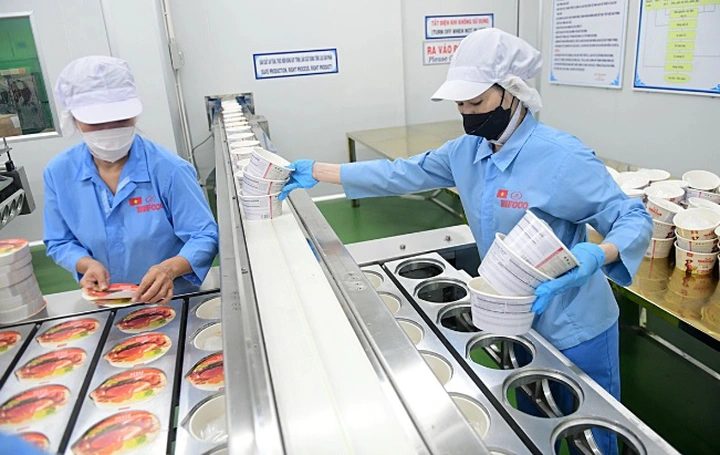
Illustrative image.
The research results have formed a dataset on the content of metals, organic compounds, and metabolites in biological samples of Vietnamese people; a dataset on gene polymorphisms and gene expression for genes related to the metabolism of toxins in the body; and 7 analytical techniques that meet international standards.
According to the research team's report, the implementation of this project marks Vietnam's development of a basic biochemical index for environmental toxicology in normal-aged Vietnamese people. The dataset provides specific information on the concentration limits of several substances and chemical compounds of environmental origin in the urine and/or blood of normal-aged Vietnamese people. This data serves as a reference for managers, scientists, doctors, and healthcare professionals not only in scientific research but also in preventing exposure to environmental pollutants.
The dataset is applied in the field of environmental health, specifically to determine whether an individual or group of people in a community has been exposed to unusually high levels of a particular chemical, especially in environmental incidents. When the concentration of a chemical or its metabolites falls outside (usually higher) the reference values, it indicates that exposure to that chemical has exceeded normal levels.
Simultaneously, the dataset is used as a replacement for toxicology testing on the control group, reducing research and survey costs; it serves as a basis for studies on occupational and community health surveillance, monitoring chemical concentrations and gene expression to increase sensitivity and specificity in early risk detection in people exposed to toxins.
The research and development techniques developed in this project are advanced, state-of-the-art techniques on par with those in the world and the region. These are the first techniques developed and applied in Vietnam to determine basic biochemical toxicological parameters in biological samples, and are used to train and enhance the capacity of occupational health and public health laboratories nationwide.
The research results also mark the completion of economical molecular biological techniques for determining polymorphisms, genotypes, and gene expression suitable for Vietnamese conditions, based on leveraging the achievements of human genome sequencing to avoid costs and enable practical applications.
The mission makes a significant contribution to the training and development of young researchers in the fields of toxicology, molecular biology, and modern analytical techniques. Through the practice of advanced techniques such as atomic absorption spectroscopy, ICP/MS, high-performance liquid chromatography, and PCR, researchers enhance their professional skills and refine technical procedures with wide-ranging applications in the practical assessment of environmental chemical exposure in Vietnam.
Vietnam is currently developing rapidly, with breakthroughs in industry, agriculture, services, and socio-economic conditions. However, the living environment is also becoming more polluted by industrial fumes, traffic, pesticides, increased use of household chemicals, and more industrial wood products in daily life… These products contain many chemicals ranging from metals to organic solvents and anti-moth treatments. Therefore, developing a standardized set of biochemical indicators and analytical techniques is essential to create a scientific foundation for assessing exposure in the community and supporting policy planning to protect public health.
Source: https://mst.gov.vn/xay-dung-bo-chi-so-hoa-sinh-co-ban-ve-doc-chat-hoc-moi-truong-tren-nguoi-tuoi-lao-dong-197251211211505766.htm














![[Photo] Prime Minister Pham Minh Chinh holds a phone call with the CEO of Russia's Rosatom Corporation.](/_next/image?url=https%3A%2F%2Fvphoto.vietnam.vn%2Fthumb%2F1200x675%2Fvietnam%2Fresource%2FIMAGE%2F2025%2F12%2F11%2F1765464552365_dsc-5295-jpg.webp&w=3840&q=75)

















































Comment (0)