

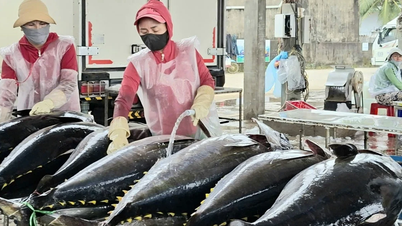
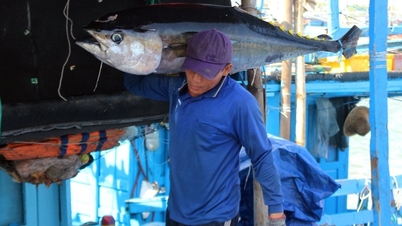
Vietnam's tuna exports to the EU in the first month of 2024 all increased compared to the same period last year. In particular, exports of fresh, frozen, and dried tuna (HS code 03) increased 317 times.
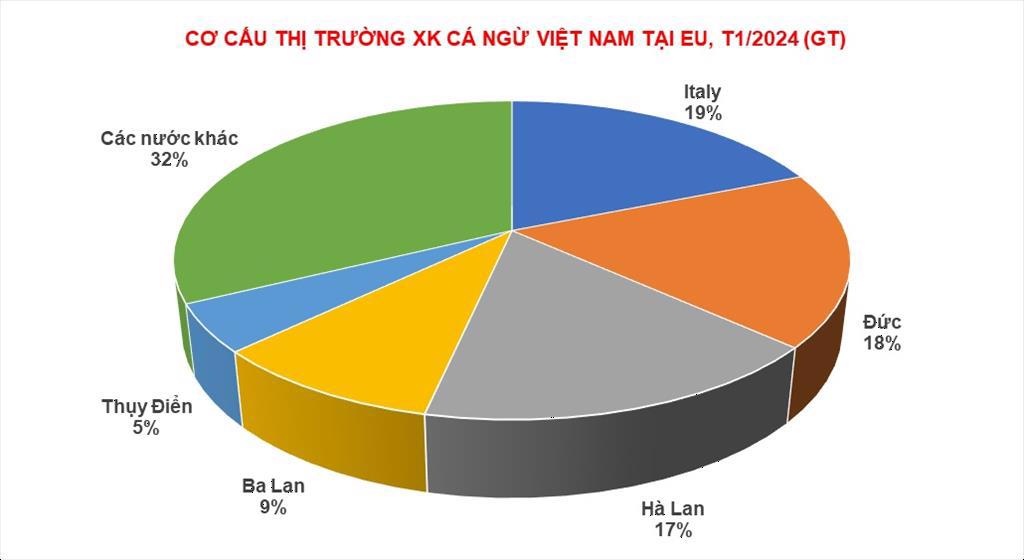 |
| In January 2024, Vietnamese tuna was exported to 21 EU member countries. |
According to data from the General Department of Customs, in the first month of 2024, Vietnam's tuna exports to the EU market continued to surge compared to the same period in 2023, with a 96% increase, reaching over $17 million.
Notably, exports of fresh, frozen, and dried tuna (HS code 03, excluding frozen tuna meat/loin (HS code 0304)) increased 317 times. Exports of other processed tuna, primarily frozen steamed tuna loin, increased more than 9 times. This indicates that tariff preferences under the EU-Vietnam Free Trade Agreement (EVFTA) are creating a strong attraction for Vietnamese tuna products to Europe in the first month of the year.
According to the Vietnam Association of Seafood Processing and Export (VASEP), in January 2024, Vietnamese tuna was exported to 21 EU member countries. Italy, Germany, and the Netherlands remained the top three importers of Vietnamese tuna. Exports to all three markets showed good growth compared to the same period last year.
In the Italian market, tuna exports continued their phenomenal growth in the first month of 2024, increasing by 364% compared to January 2023. Italy is currently the largest importer of fresh and frozen tuna from Vietnam.
Along with Italy, tuna exports to Poland are also increasing sharply. While Vietnam exported few orders to this market in January 2023, in January 2024, Poland became the fourth largest tuna importer in the EU with sales exceeding $1.6 million.
Besides Poland, exports to Sweden, Belgium, and Cyprus are also skyrocketing, increasing 11-fold, 2-fold, and 5-fold respectively.
According to VASEP, tuna exports to the EU are expected to continue increasing in the first quarter of the year due to the impact of tariff preferences under the EVFTA agreement. Although the price of raw tuna on the world market has cooled down, tensions in the Red Sea have led to higher shipping costs, which will keep the price of finished tuna products high, thus restraining demand in the markets.
Furthermore, the "IUU yellow card" continues to be a challenge; if not resolved in 2024, it will cause Vietnamese seafood exports to the EU to stagnate due to inadequate procedures for verifying and certifying harvested seafood, stemming from insufficient resources, human resources, and infrastructure. Sectors such as tuna will be most affected.
Source link




























































![[Video] Sunset at Lap An Lagoon – Where the sun sets over the fishing nets](https://vphoto.vietnam.vn/thumb/1200x675/vietnam/resource/IMAGE/2026/05/31/1780192137701_beach-landscape-sea-water-nature-grass-745871-pxhere-com.jpeg)

































Comment (0)