

The fisheries sector is transforming itself with a circular economy model.
For decades, the fisheries sector has been one of Vietnam's most important economic sectors, with stable export revenues of 9-11 billion USD annually, contributing to the livelihoods of millions of people in coastal and rural areas. However, the industry is facing many challenges. Fishery resources are declining, climate change is becoming more severe, diseases are spreading, the quality of fish fry is unstable, and input costs are rising. Furthermore, the risk of the "IUU yellow card" and strict environmental requirements from export markets are making it difficult for the traditional fisheries sector to maintain its competitiveness. Therefore, the fisheries sector needs a new, more sustainable and effective direction.
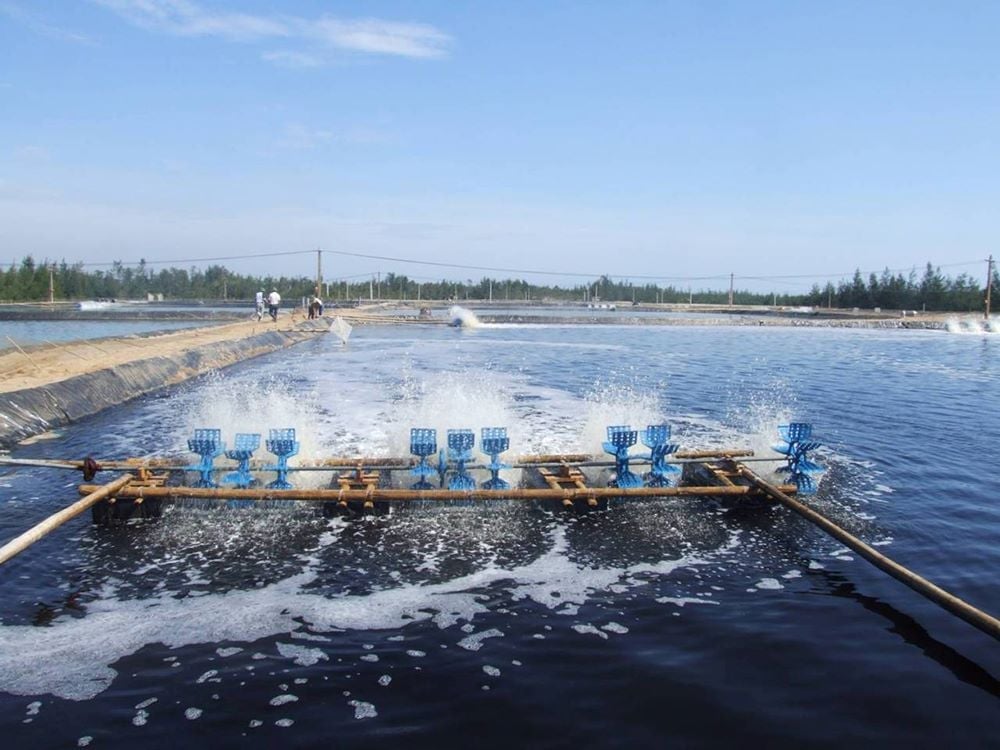
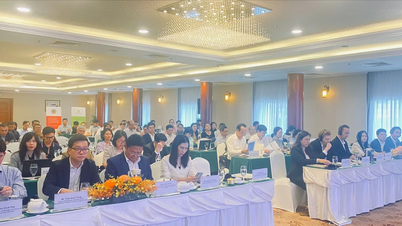
Circular economy is a crucial solution for restructuring the fisheries industry. Photo: Minh Cuong.
In this context, the circular economy is considered a crucial solution for restructuring the fisheries industry. Currently, the seafood processing industry generates approximately 1 million tons of by-products annually, but only about 40% is utilized, mainly for low-value fishmeal. The remainder is not properly processed, leading to waste and environmental pollution. According to Ms. Le Hang, Deputy Secretary General of the Vietnam Association of Seafood Processing and Export (VASEP), the circular economy helps save resources, reduce emissions, enhance product value, and is the "key" for Vietnamese fisheries to meet international standards for sustainable development.
In fact, Ms. Le Hang stated that many models and solutions for integrated aquaculture have been and are being applied throughout the entire aquaculture industry chain. For example, in aquaculture, closed-loop recirculating aquaculture systems (RAS) help control the environment and reduce pollution. The shrimp-rice model utilizes rice straw as feed for shrimp, while using shrimp waste as fertilizer for rice, forming a closed cycle. Similarly, integrated multispecies farming models (IMTA) such as fish-oyster-seaweed or shrimp-sea cucumber-seaweed utilize excess nutrients, reduce waste, and improve water quality.
In processing, the technology is applied through advanced biological extraction, enzyme, and drying technologies. As a result, by-products are processed into collagen, chitosan, refined fish oil, or organic fertilizers. These products increase the value of by-products and open up new avenues for the development of the marine biotechnology industry.
The rapid development of industrial aquaculture has also created strong momentum for the integrated aquaculture economy. In 2024, aquaculture production reached approximately 832,000 tons, an 8.5% increase compared to the previous year, contributing nearly $900 million to exports. The four main product groups: marine fish, mollusks, lobsters, and seaweed continued to experience stable growth. Many farms adopted RAS (Recirculating Aquaculture System), automated environmental monitoring systems, and HDPE cages resistant to strong waves, improving productivity and protecting the environment. Notably, IMTA (Integrated Aquaculture Technology) models in Quang Ninh, Khanh Hoa, and Ninh Thuan provinces have both improved water quality and increased profits by 30-40%, demonstrating the feasibility of this new direction.
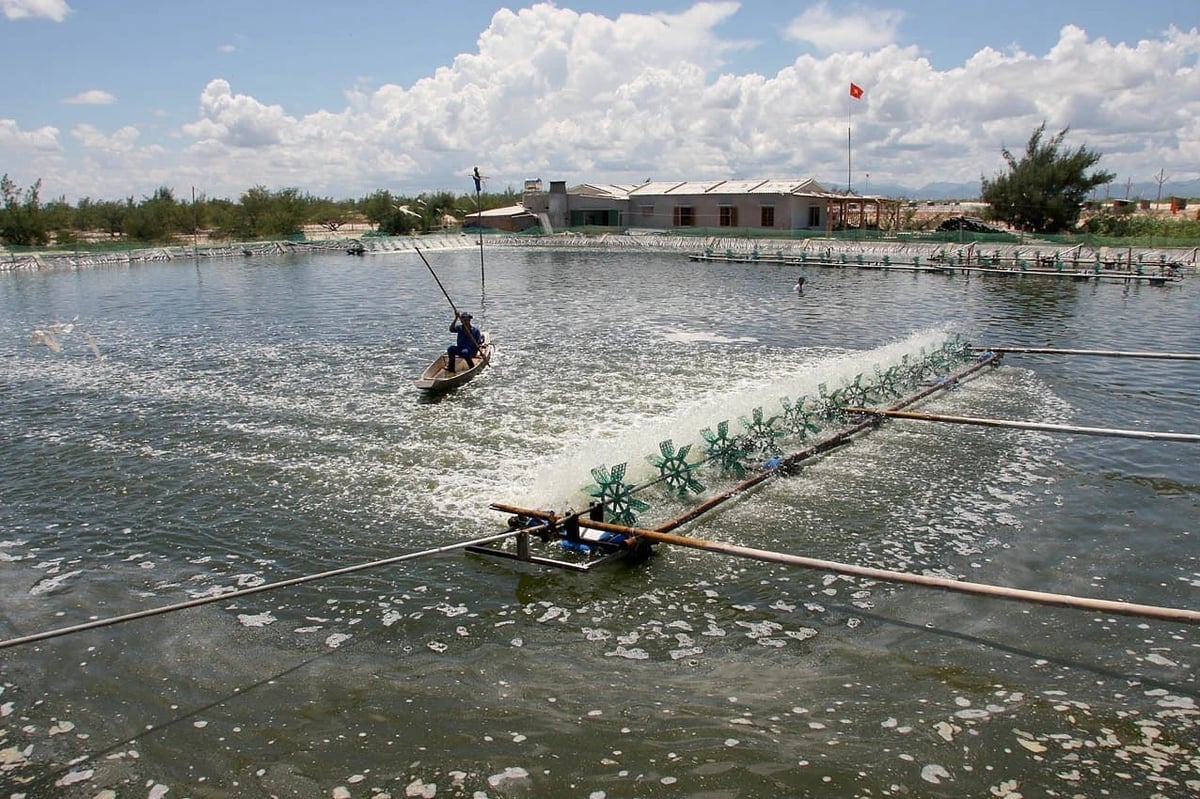
Microbial preparations are increasingly being used in aquaculture. Photo: Hong Tham .
Furthermore, as the marine economy becomes one of the country's growth pillars, contributing nearly 4% of GDP, the application of the circular economy in fisheries becomes even more crucial. Many resolutions emphasize the need to shift from "exploitation" to "sustainable aquaculture and processing," while simultaneously protecting ecosystems and increasing resilience to climate change. Therefore, the circular economy is not only a new production trend but also a "key" to enabling Vietnam's fisheries sector to develop more sustainably, efficiently, and competitively in the international market.
Removing bottlenecks to accelerate green transition
Despite significant progress, the implementation of the circular economy in the fisheries sector still faces many difficulties and challenges. Firstly, wastewater treatment infrastructure in many aquaculture areas is lacking and inconsistent, while modern circular technologies such as RAS require substantial investment, deterring many businesses from adopting them.
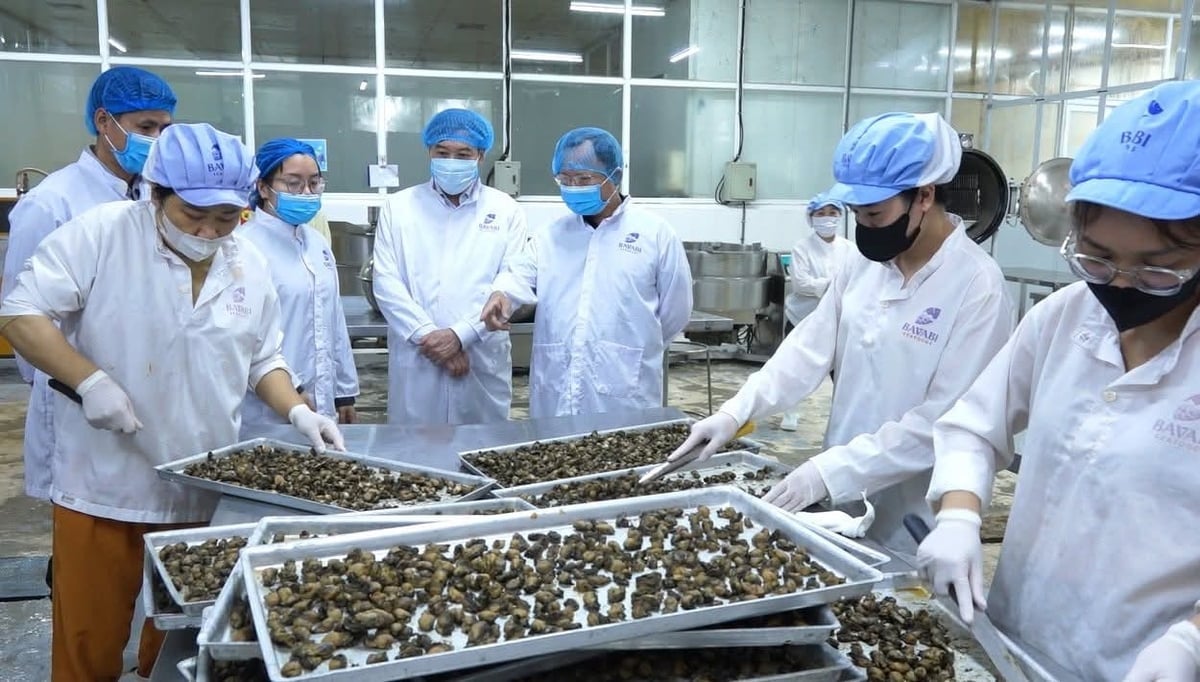
KTTH is applied through advanced biological extraction, enzyme, and drying technologies. Photo: Ngan Ha.
Furthermore, the deep processing of by-products requires enzymes and modern equipment, while fragmented production makes it difficult for businesses to collect raw materials, leading to wasted by-products. Moreover, the market for high-value bio-products remains limited, meaning that the profits from these products are not yet attractive enough to encourage widespread investment. In addition, there is a shortage of engineers and technicians capable of operating circular systems, while green financing resources – essential for sustainable projects – are also insufficient.
We need robust mechanisms to promote the circular economy.
Faced with these bottlenecks, experts suggest that Vietnam needs to develop a clear circular economy strategy, accompanied by a synchronized system of mechanisms. First, it is necessary to improve the institutional framework, including establishing environmental standards for industrial aquaculture, issuing a set of circular economy criteria for the fisheries sector, and clearly defining the responsibility for recycling materials under the EPR mechanism. Next, preferential tax policies and green credit should be implemented to encourage farms to switch to RAS and IMTA, while also investing in waste treatment infrastructure.
Furthermore, the formation of industrial clusters for seafood by-products will help concentrate collection and deep processing, creating a foundation for the development of the marine biotechnology industry. Regional-level integrated farming models also need to be implemented synchronously in concentrated marine aquaculture areas, combining onshore RAS hatcheries, multi-species offshore farming, and utilizing by-products for deep processing. This will not only improve production efficiency but also reduce environmental pressure and increase the economic value of by-products.
In particular, the human factor remains the decisive element in the success of the circular economy. Vietnam needs to focus on training engineers, technicians, and quality management personnel capable of operating and maintaining circular models. Simultaneously, strengthening international cooperation with countries possessing advanced technology such as Norway, Canada, and Japan, as well as international organizations like the UNDP, will help Vietnam access new technologies, improve management capacity, and expand markets for bio-products.
The circular economy (CI) is not only an inevitable trend but also a strategic path for Vietnam's fisheries sector to develop in a green, clean, and efficient direction, enhancing competitiveness and moving towards building a modern, sustainable fisheries industry. At the same time, the widespread application of the CI will make a significant contribution to the national strategy on the marine economy, transforming marine potential into a long-term development resource for the country.
Source: https://nongnghiepmoitruong.vn/tai-cau-truc-nganh-thuy-san-tu-tu-duy-kinh-te-tuan-hoan-d788849.html






![Looking back at the peak month of combating IUU: [Part 3] Synchronizing fisheries infrastructure](https://vphoto.vietnam.vn/thumb/402x226/vietnam/resource/IMAGE/2025/12/13/1765608279533_2109-b32-133759_237.jpeg)





![Anticipating future trends: [Part 1] New livelihoods from floating tank frog farming model](https://vphoto.vietnam.vn/thumb/402x226/vietnam/resource/IMAGE/2025/12/13/1765607984017_dsc06888-210118_726-133559.jpeg)






















































Comment (0)