

In a petition sent to 9 ministers, 14 associations argued that the draft regulations imposing recycling fees were "unreasonably high, even higher than in some European countries."
The 14 associations that submitted the petition include: Transparent Food; Ho Chi Minh City Food and Beverage; Vietnam Seafood Processing & Export; Vietnam Dairy; High-Quality Vietnamese Goods Businesses; Vietnam Beer, Wine and Soft Drinks; Vietnam Textile and Garment; American Businesses in Vietnam; Vietnam Wood & Forest Products; Vietnam Tea; Vietnamese Motorcycle Manufacturers; Vietnamese Automobile Manufacturers; Vietnam Plastics; and Pesticide Manufacturing & Trading Businesses.
The draft recycling cost norms were submitted to the Prime Minister by the Ministry of Natural Resources and Environment in July. According to associations, the draft contains many unreasonably high recycling rates (Fs), causing difficulties for production and business. Fs includes the costs of sorting, collecting, transporting, and recycling packaging products, as well as administrative costs supporting the fulfillment of recycling responsibilities by manufacturers and importers.
Associations argue that some recycling costs are higher than the average of 14 developed, high-cost Western European countries. For example, aluminum packaging and containers are 1.26 times more expensive to recycle; glass is 2.12 times more expensive. According to the associations, recycling costs should only be 30-50% of those in Western Europe because while raw material and technology costs may be similar, labor costs in Vietnam are only one-tenth of those countries.
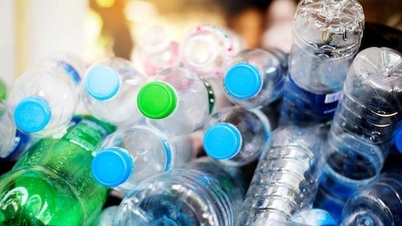
According to estimates from associations, the recycling fees for just three types of packaging—paper, plastic, and metal—are estimated at 6.127 billion VND per year. Of this, more than 50% of the fees (approximately 3.064 billion VND per year) are allocated to support the recycling of high-value packaging such as metal and cardboard.
This is considered inappropriate because current recycling costs do not account for the value of recovered materials, thus ignoring the profit margin of recycling businesses from recovered materials or packaging. In reality, businesses that process high-value recovered materials such as iron, steel, aluminum, and rigid plastic bottles make a significant profit. For example, associations report that officially licensed recyclers earn approximately 700-1,286 billion VND per year from recycling aluminum cans.
"It is completely unreasonable for businesses and consumers to have to pay trillions of dong more to support recycling companies that are making huge profits," the associations commented.
Furthermore, this significant cost will create considerable difficulties for businesses in the current challenging economic climate. Consumers will also be negatively impacted by rising prices. Therefore, associations are proposing a more reasonable adjustment to the recycling quota.
The associations also proposed addressing shortcomings in the implementation of recycling contributions in Vietnam. For example, changing the method of submitting recycling contributions from an advance payment at the beginning of 2024 to a final settlement based on actual quantities at the end of the year (i.e., payment in April 2025), so that businesses can still fulfill their environmental responsibilities but reduce pressure – similar to how corporate income tax is paid at the beginning of the next period.
Businesses also hope to be allowed to combine both self-recycling and paid recycling support in the same year for the same type of packaging or discarded product, instead of being forced to choose one of the two methods; and to have preferential policies for environmentally friendly packaging or the use of recycled materials.
The VCCI representative had previously supported environmental protection, but wanted to offer suggestions for establishing appropriate recycling standards. Without feasible standards, the policy of extended producer responsibility would not be effectively implemented.
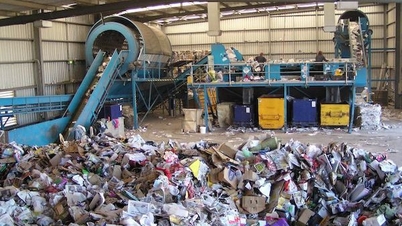
The EPR Office (the unit responsible for organizing, managing, supervising, and supporting the implementation of product and packaging recycling responsibilities and waste collection and treatment responsibilities of manufacturers and importers) stated that the method for determining recycling cost estimates has been surveyed at many facilities. The results show that actual recycling costs vary between facilities due to many factors such as technology, equipment, country of origin, output products, and input material quality requirements. This leads to differences in proposed related costs among groups.
Recycling products, depending on their specifications, require different levels of investment in technology and equipment, resulting in varying standard recycling costs. Businesses that produce recycled products directly from waste products and packaging will incur significantly higher recycling costs compared to producing raw materials for production. Therefore, it is proposed that Fs be determined based on the calculation of the standard production costs of the basic products of the recycling process, following the principle of support.
According to the Environmental Protection Law, from January 1, 2024, manufacturers and importers must fulfill their responsibility to expand the recycling of discarded products and packaging. Businesses can choose to organize the recycling of products and packaging themselves or contribute financially to the Vietnam Environmental Protection Fund to support recycling.
The Ministry of Natural Resources and Environment is tasked with issuing specific recycling standards for each type of product and packaging, with adjustments made every three years. The agency submitted the draft to the Prime Minister in July.
Duc Minh
Source link



![[Photo] Prime Minister Pham Minh Chinh holds a phone call with the CEO of Russia's Rosatom Corporation.](/_next/image?url=https%3A%2F%2Fvphoto.vietnam.vn%2Fthumb%2F1200x675%2Fvietnam%2Fresource%2FIMAGE%2F2025%2F12%2F11%2F1765464552365_dsc-5295-jpg.webp&w=3840&q=75)
![[Photo] Closing Ceremony of the 10th Session of the 15th National Assembly](/_next/image?url=https%3A%2F%2Fvphoto.vietnam.vn%2Fthumb%2F1200x675%2Fvietnam%2Fresource%2FIMAGE%2F2025%2F12%2F11%2F1765448959967_image-1437-jpg.webp&w=3840&q=75)



































![[OFFICIAL] MISA GROUP ANNOUNCES ITS PIONEERING BRAND POSITIONING IN BUILDING AGENTIC AI FOR BUSINESSES, HOUSEHOLDS, AND THE GOVERNMENT](https://vphoto.vietnam.vn/thumb/402x226/vietnam/resource/IMAGE/2025/12/11/1765444754256_agentic-ai_postfb-scaled.png)




































Comment (0)