

Stabilizing production and responding to climate change.
Over the past period, thanks to the attention and support from the central government and the efforts of the local authorities, irrigation and dike works in An Giang province have been invested in and constructed, gradually completing the entire system. Currently, the irrigation system in the province includes 4,035 sluices, 6,314 canals with a total length of 18,343 km, 33 reservoirs, 2,802 pumping stations, 3,128 embankments and dikes with a length of over 8,800 km, and 234 sea and river embankment works with a length of 87.84 km. In addition, An Giang also has 133 km of coastal dikes along the western coast, 22.7 km of Class III dikes in the eastern part of the Bay Xa canal, 32 km of dikes along the O Mon - Xa No canal, 35.87 km of estuary dikes, 128.63 km of river dikes, and hundreds of kilometers of specialized dikes.

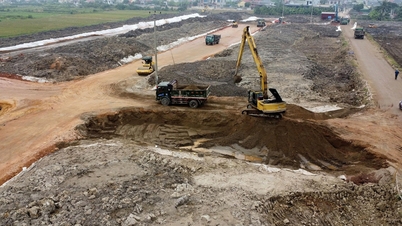
The Cai Lon sluice gate has been put into operation, contributing to effective water control in An Giang province.
As one of the key agricultural production areas in the country, An Giang's irrigation and dike systems play a crucial role in ensuring water supply for agricultural production, preventing and mitigating natural disasters, droughts, and saltwater intrusion, as well as guaranteeing drinking water for the people. In reality, recent years have seen increasingly severe climate change, droughts, and saltwater intrusion, threatening the production and livelihoods of hundreds of thousands of households living along the coastal communes of the province, such as Hon Dat, Binh Giang, Binh Son, An Bien, An Minh, and Kien Luong. Irrigation works such as the Cai Lon - Cai Be sluice gate, the western coastal sluice gate system, flood-prone dike systems, and hundreds of pumping stations and inland regulating sluice gates have been operated synchronously, contributing to flexible control of salinity and freshwater levels, protecting hundreds of thousands of hectares of rice, vegetables, and fruit trees.
In addition, the irrigation system has also performed well in providing freshwater for daily life. During the peak of the 2024-2025 dry season, An Giang basically controlled water resources, avoiding serious shortages of drinking water, thanks to the efficient operation of the system. Mr. Nguyen Van Tuan (residing in Nui Trau hamlet, Hoa Dien commune) shared: “Previously, rice cultivation here was very difficult because during the dry season, saltwater from the Rach Gia - Ha Tien canal flowed in, causing a shortage of freshwater. Now, the province has invested in temporary dams using Larsen sheet piles to prevent saltwater intrusion and retain freshwater, so we can produce with peace of mind, no longer worrying about our rice crops being affected by salinity.”
Optimizing the operational efficiency of the project.
According to Nguyen Huynh Trung, Head of the Provincial Irrigation Department, An Giang currently lies within three ecological zones: freshwater (upstream), freshwater-brackish (middle zone), and saltwater-brackish (coastal). Based on natural conditions and production planning, the province's irrigation system is divided into sub-regions and areas: North Vam Nao, South Vam Nao, Long Xuyen Quadrangle, Chau Thanh - Rach Gia, along the Cai Lon - Cai Be River, buffer zone of U Minh Thuong National Park, coastal area of An Bien - An Minh, O Mon - Xa No dike, Bay Nui highlands, and island areas.
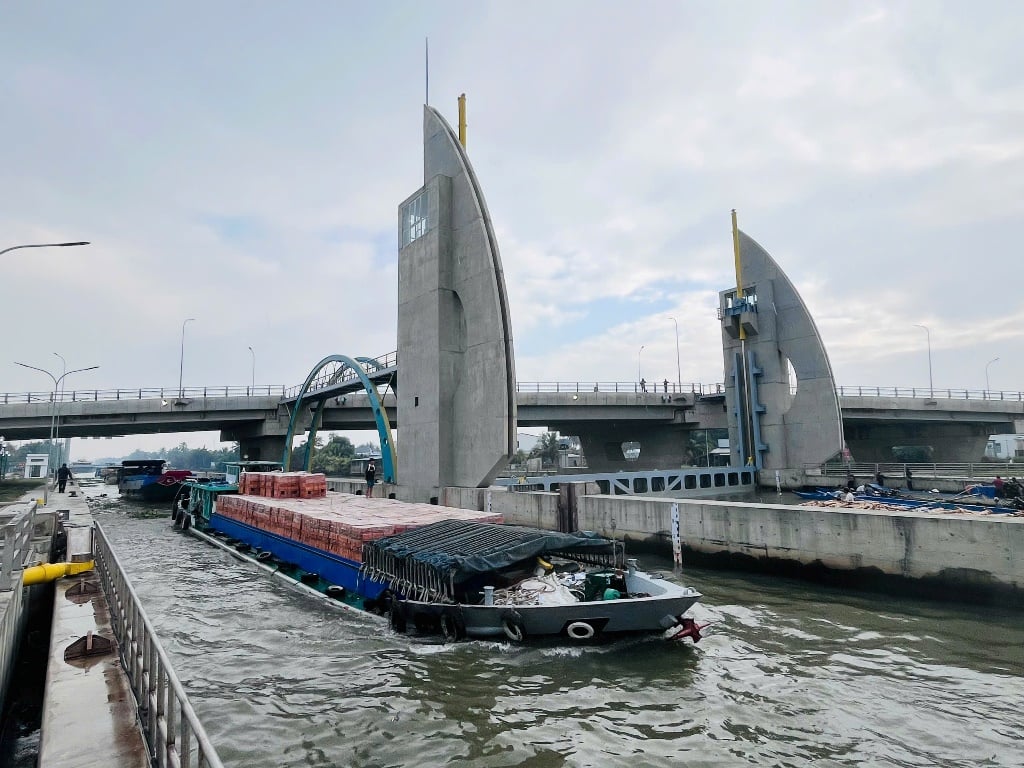
The Vam Ba Lich sluice gate (Chau Thanh commune) operates to control salinity, ensuring clean water for the Rach Gia area and surrounding regions.
Given the current state of the irrigation system, the objectives are to provide sufficient water for agricultural production; minimize damage from floods, droughts, saltwater intrusion, and tidal surges; ensure access to clean water for residents, especially in mountainous and island areas; prevent and control subsidence and landslides; and facilitate water and land transportation. The province will develop a plan for operating the irrigation system that is appropriate to the natural conditions, production situation, and water needs of each sub-region and area.
During the period 2025-2030 and beyond, An Giang will continue to invest in completing the system of water source control works and preventing saltwater intrusion from the West and East Seas; constructing water transfer, supply, and pumping works, especially in the U Minh Thuong area. Along with this, the province will complete the 3-phase power system to serve the operation of sluice gates; develop inland irrigation systems associated with water-saving and advanced irrigation techniques. In addition, the province will promote the application of science and technology, gradually modernizing sluice gate operation using SCADA systems and improving the quality of irrigation human resources. |
Source: https://baoangiang.com.vn/an-giang-van-hanh-hieu-qua-he-thong-thuy-loi-a423892.html











































































Comment (0)