

The decision was made after Japan's Ministry of Internal Affairs and Communications approved the city's proposal on October 3rd. The new tax rate is expected to take effect next year, marking the first increase since the tax was introduced in 2018.
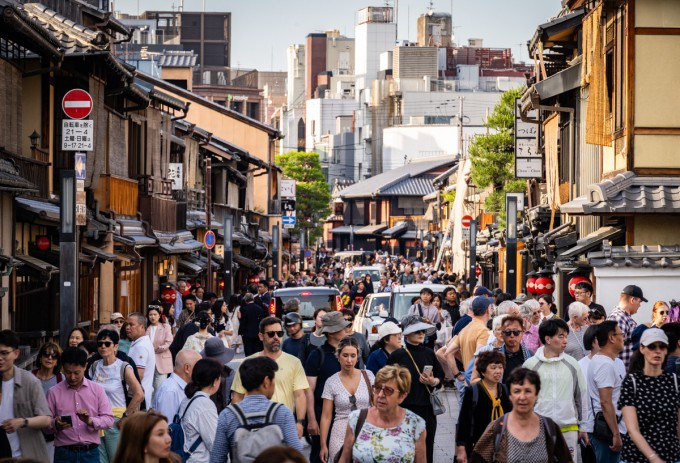
Under the new regulations, Kyoto expects revenue from the accommodation tax to increase from 5.2 billion yen (approximately 800 billion VND) to 12.6 billion yen (over 1.9 trillion VND). City officials say this revenue will be used to "enhance attractiveness" and promote sustainable tourism.
Currently, tourists visiting Kyoto only have to pay a maximum tax of 1,000 yen (approximately 150,000 VND) per night.
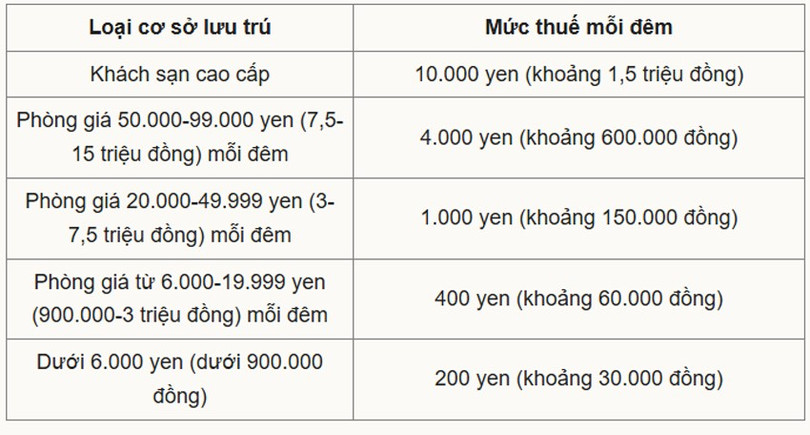
The new tax rate is calculated based on the nightly room rate, applied in tiers.
The tax increase comes amid a resurgence of tourism in Japan after the pandemic. Last year, the country welcomed a record 36.9 million international visitors, a 15.6% increase compared to 2019. While this surge in visitors brings economic benefits, it also creates several problems, particularly tourism overcrowding.
At Mount Fuji, the "traffic jams" on the slopes have raised concerns about pollution and safety. Many local governments have had to plan to improve infrastructure and expand public transportation to meet the demand.
Experts believe that Kyoto's imposition of the tax is not intended to deter tourists. Instead, it is a way to ensure that tourists "share the costs of measures to cope with tourism overcrowding."
"After years of record demand, destinations are looking for ways to ease pressure on infrastructure and local communities," said Nicholas Smith, Head of Digital for Holidays at online travel company Thomas Cook.
According to him, these taxes are designed to be reinvested in the very things that make the city attractive, such as cultural preservation, public transport, sanitation, and better tourist management.
Mr. Smith believes Kyoto's tiered tax system will have "negligible negative impact if coupled with value creation." "High-end travelers are typically interested in quality and uniqueness. When they see that their contribution supports local sustainability and improves the destination, it enhances, not diminishes, their experience," he added.
Source: https://baohatinh.vn/ap-thue-luu-tru-dat-nhat-lich-su-o-co-do-kyoto-post297090.html


![[Photo] General Secretary and President To Lam meets with National Assembly delegates from ethnic minorities.](https://vphoto.vietnam.vn/thumb/1200x675/vietnam/resource/IMAGE/2026/04/20/1776696701056_a1-bnd-8331-3342-jpg.webp)
![[Image] National Assembly discusses the implementation of the socio-economic development plan.](https://vphoto.vietnam.vn/thumb/1200x675/vietnam/resource/IMAGE/2026/04/20/1776696707422_ndo_br_img-20260420-185419-jpg.webp)



















































































Comment (0)