A 'seven-legged' octopus unexpectedly washed ashore on the Scottish coast.
This deep-sea creature is impressively large, and its origin and reasons for washing ashore are shrouded in mystery, attracting the attention of researchers.
Báo Khoa học và Đời sống•11/12/2025
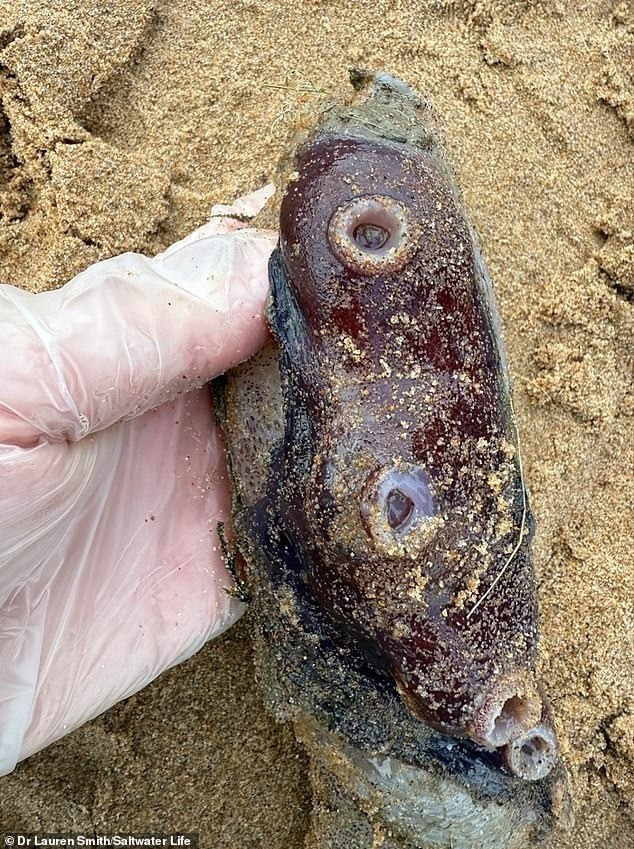
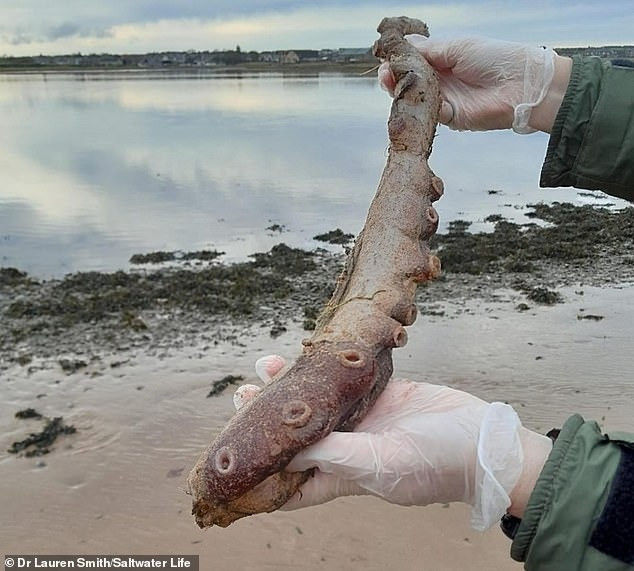
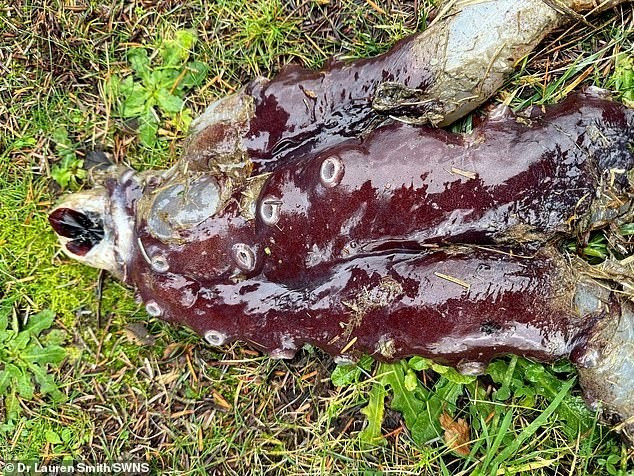
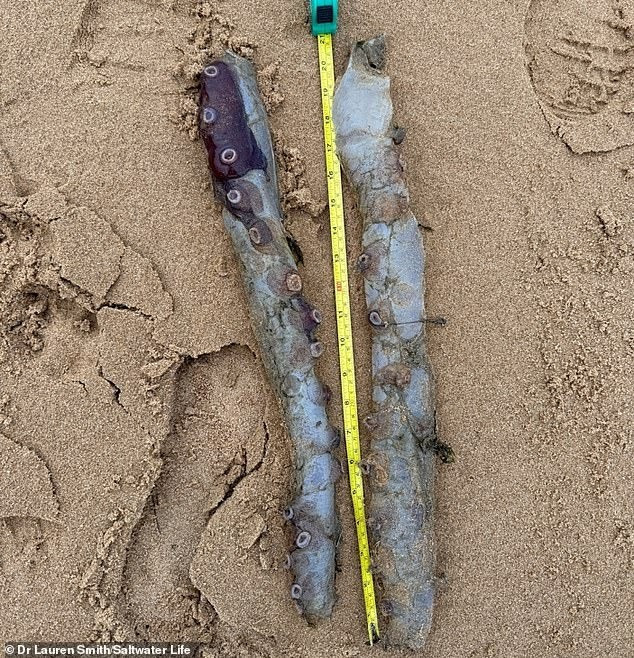
The carcass of a "seven-legged" octopus has been discovered by locals washed ashore near the Ythan estuary, close to the Forvie National Nature Reserve in Newburgh, Aberdeenshire, Scotland. The octopus was quite impressive in size. One of its tentacles alone measured approximately 51 cm in length. Researchers believe this deep-sea creature was a female.
Dr. Lauren Smith, a marine biologist at the Saltwater Life research organization, called it "an extraordinary find." She said the way the octopus washed ashore "is a mystery." According to Dr. Lauren, the "seven-legged" octopus was likely attacked by a whale before its carcass washed ashore. Another possibility is that it got caught in a fisherman's net and was thrown back into the sea. Alternatively, the deep-sea creature may have become disoriented, swam into shallow water, and its carcass then drifted ashore.
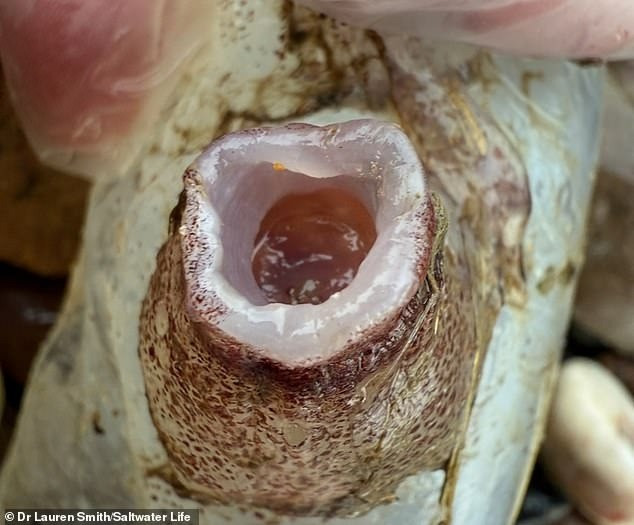
Dr. Lauren learned about the carcass of a "seven-legged" octopus after a friend sent her photos of the marine creature that were later discovered on November 30th. Initially, it was speculated that it might be a giant squid (Architeuthis dux). However, upon closer examination, the creature that washed ashore on the Scottish coast was identified as Haliphron atlanticus. This species was officially identified in the 19th century and is also known as the spotted octopus or the "seven-legged" octopus.
This species of octopus is found in tropical and temperate seas worldwide , from the Azores Islands west of Portugal, Puget Sound in Washington state, and Chatham Rise, New Zealand. They typically live in waters deeper than 500 meters. While males are relatively small, only about 21 cm long, females can reach body lengths of up to 4 meters. Readers are invited to watch the video : More new species discovered in the Mekong River region. Source: THĐT1.



 Báo Khoa học và Đời sống•11/12/2025












![[Photo] Closing Ceremony of the 10th Session of the 15th National Assembly](/_next/image?url=https%3A%2F%2Fvphoto.vietnam.vn%2Fthumb%2F1200x675%2Fvietnam%2Fresource%2FIMAGE%2F2025%2F12%2F11%2F1765448959967_image-1437-jpg.webp&w=3840&q=75)




























![[OFFICIAL] MISA GROUP ANNOUNCES ITS PIONEERING BRAND POSITIONING IN BUILDING AGENTIC AI FOR BUSINESSES, HOUSEHOLDS, AND THE GOVERNMENT](https://vphoto.vietnam.vn/thumb/402x226/vietnam/resource/IMAGE/2025/12/11/1765444754256_agentic-ai_postfb-scaled.png)













































Comment (0)