

With the global Halal economy projected to reach $10 trillion by 2028, this is considered a promising market for Vietnamese agricultural products.
The market potential and opportunities are enormous.
According to the Ministry of Foreign Affairs , the global Halal economy is estimated to reach $7.7 trillion in 2025, and is projected to increase to $10 trillion by 2028. Many countries, especially Muslim-majority nations, are now actively participating in this market.
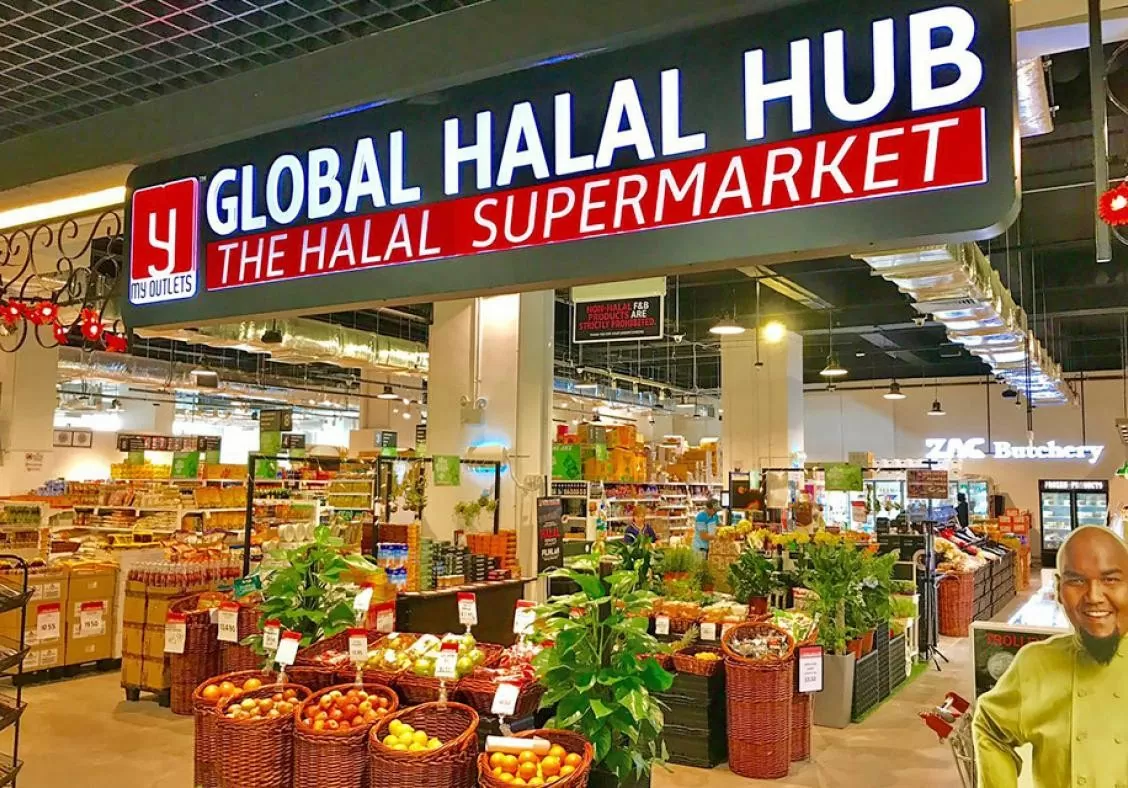 |
| Halal food market (Photo: Consovasukien.vn) |
Vietnam has many favorable conditions to participate more deeply in the global Halal market thanks to the decisive direction of the Party and State leaders; and the attention of localities and businesses. In addition, Vietnam has strengths in supplying agricultural products, food, tourism, textiles, etc., and is an important link in global supply chains with 17 Free Trade Agreements (FTAs) signed. Vietnam also has good relations with many major Muslim countries around the world .
Effective and systematic participation in the global Halal market will help unlock the potential of the Halal market, creating new impetus for the country's sustainable economic development. This will, in turn, form a new and important component of the economy: the Halal ecosystem.
Affirming the potential and advantages of this market bloc, Mr. Phung Duc Tien - Deputy Minister of Agriculture and Rural Development - said that, in addition to traditional markets such as China, the US, Japan, the EU... the Ministry will focus on exporting agricultural and aquatic products to Halal markets, the Middle East...
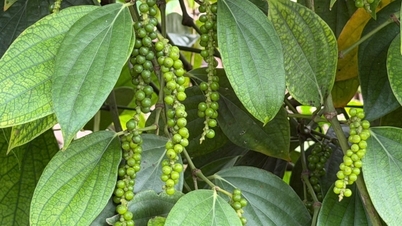
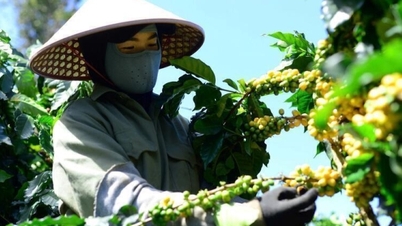
Mr. Truong Xuan Trung, Vietnam's Commercial Counselor in the United Arab Emirates (UAE), assessed that Vietnam is one of the world's leading exporters of agricultural and aquatic products, as well as processed agricultural products such as rice, tea, cashew nuts, coffee, pepper, fruits and vegetables, and beverages. Vietnam is also located in Southeast Asia and Asia, a region with a large Muslim population, including Indonesia, Malaysia, and the Middle East.
Furthermore, Vietnam has a policy of developing relations with countries in the Middle East and Africa; this includes promoting cooperation in the production, import, and certification of Halal products. This also creates favorable conditions for Vietnamese businesses to export products to Halal markets.
According to Mr. Truong Xuan Trung, the scale and demand of the Halal market are enormous. Looking at the growth figures for consumption of major product groups in the UAE market, Vietnam has strengths in product categories such as agricultural products, processed agricultural products, and grains.
Of course, wanting to do something is one thing. Conquering this market is a whole different process. This is because it's a market with many specific and very strict requirements. Among them, everyday food products must be certified according to Halal standards.
"To further promote the export of Vietnamese goods to the Halal market, Vietnamese businesses need to obtain Halal certification to meet the export standards for Muslim countries," said Mr. Truong Xuan Trung.
It's only in the initial stages.
According to experts, despite being a large, highly potential market with favorable geographical location, Vietnamese goods in general, and agricultural and aquatic products in particular, are only in the initial stages of entering the Halal market. Each year, approximately 50 Vietnamese companies receive Halal certification for their products, primarily seafood, beverages, canned foods, confectionery, vegetarian food, and pharmaceuticals. If properly utilized and developed, this will help Vietnamese agricultural and aquatic products firmly establish themselves in the Halal product market.
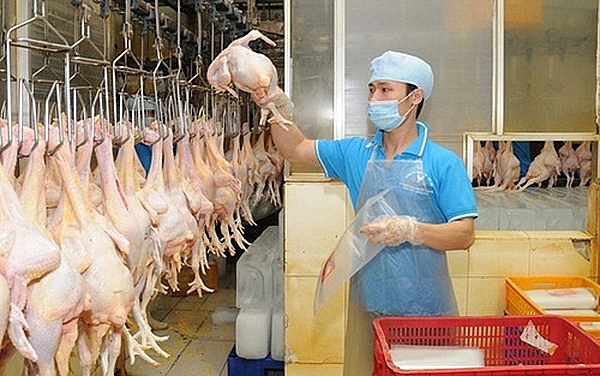 |
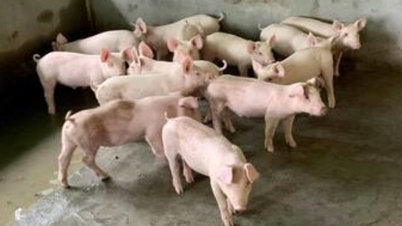
| The units must strictly adhere to Halal standards throughout the entire livestock farming process. |
However, the biggest challenge for the Halal industry is that Halal certification is not permanent, not universally recognized across all countries, and not applicable to all products. This creates significant difficulties for businesses, requiring multiple recertifications and the need to adapt certification applications to suit each export market.
In the field of livestock farming, according to Mr. Tong Xuan Chinh - Deputy Director of the Department of Livestock (Ministry of Agriculture and Rural Development), the food they consume daily must be certified according to Halal standards (Halal means "lawful" in Arabic).
According to Mr. Tong Xuan Chinh, the Halal market has very unique characteristics that Vietnamese export businesses must be aware of, such as: In Southeast Asian countries, Halal product certification, especially for chicken meat, is carried out by state management agencies (in Vietnam, it is certified by private organizations).
All units must strictly adhere to Halal standards throughout the entire breeding and slaughtering process, including: Breeding stock must be certified, with parents raised according to Halal procedures; chickens raised from one day old until slaughter must be fed Halal-certified feed; the slaughtering process must follow Halal regulations, with the most significant requirement being a prayer ceremony before slaughter, in addition to food safety and animal welfare requirements. This process must be supervised and carried out by Muslims; distribution and packaging must also comply with Halal guidelines and standards.
According to Mr. Tong Xuan Chinh, Halal meat differs from regular meat by five key characteristics: The butcher must say "Allah" (meaning God) beforehand; the animal must be slaughtered in the throat with a sharpened instrument to ensure humane treatment; the animal must be alive before slaughter; Halal meat must be bloodless, and after slaughter, the meat must be hung upside down to allow all the blood to drain out. Furthermore, the animals must not be fed food made from other animals. Only animals such as cows, goats, sheep, deer, chickens, birds, and ducks that are slaughtered according to these Islamic rituals can meet Halal standards.
To open up the Halal market for Vietnamese poultry products, the Ministry of Agriculture and Rural Development is currently implementing the tasks assigned in Decision No. 10/QD-TTg dated February 14, 2023, of the Prime Minister approving the Project "Strengthening international cooperation to build and develop the Halal industry in Vietnam until 2030". The Ministry is also coordinating with Vietnamese embassies in Muslim countries, and working with agencies and organizations in these countries to exchange information and develop the Halal food market in Muslim countries.
Deputy Minister Phung Duc Tien emphasized that the requirements for Vietnamese agricultural products, especially livestock products, to enter the Halal market have been clearly defined. Therefore, businesses need to closely coordinate with state management agencies and specialized units of the Ministry of Agriculture and Rural Development to access and gradually improve the process, remove technical barriers, and soon bring Vietnamese livestock products, particularly chicken meat, into the Halal market.
"Although agricultural and aquatic products have been exported to many markets and trade promotion has been effective, Vietnam must enter specialized markets such as the Halal market. Through this, Vietnamese agricultural products will gain access to more segments and markets, increasing the export value of the entire sector," said Mr. Phung Duc Tien.
On October 22, 2024, the National Halal Conference will be held in Hanoi with the theme "Leveraging domestic strengths and promoting international cooperation to build a sustainable Halal industry in Vietnam." The event is chaired by the Ministry of Foreign Affairs, in coordination with the Ministry of Science and Technology and the Ministry of Agriculture and Rural Development. At the conference, businesses, experts, and regulatory agencies will discuss and identify difficulties and obstacles, thereby proposing solutions to strengthen international cooperation and promote the systematic, professional, and comprehensive development of Vietnam's Halal industry. The conference aims to raise awareness among countries and organizations in the region and internationally about the potential, strengths, and opportunities for cooperation in the Halal sector with Vietnam. It also seeks to promote and disseminate information about Halal to Vietnamese localities, businesses, and people. Furthermore, it seeks to strengthen connections between Vietnamese localities and businesses and potential partners in the region and internationally. |
Source: https://congthuong.vn/ban-giai-phap-mo-canh-cua-thi-truong-halal-cho-nong-san-viet-353847.html



































































Comment (0)